
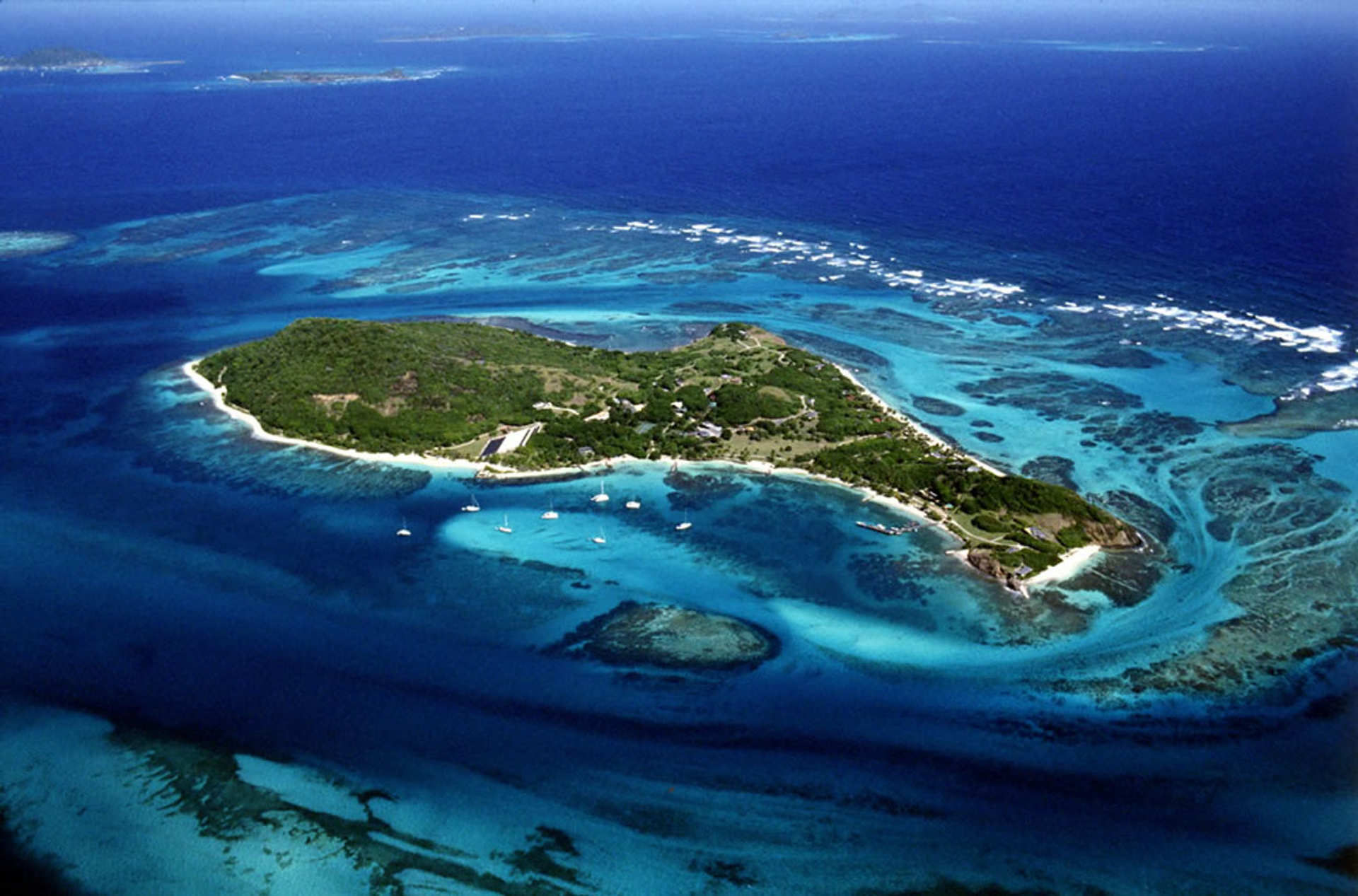
Saint Vincent and the Grenadines (SVG) is preparing for the historic launch of its own Citizenship-by-Investment (CBI) program by mid-2026. Unlike neighboring Caribbean jurisdictions, the new scheme introduces strict physical residence requirements and proof of a “genuine link” with the state, marking the end of the era of “remote passports” in the region.
For a long time, Saint Vincent and the Grenadines remained the only country within the Organisation of Eastern Caribbean States (OECS) that fundamentally refused to trade passports. However, the economic realities of 2026 and the need to finance climate projects have led to a change of course. The government is developing a legislative framework designed to meet the strict requirements of the European Union and the United Kingdom, both of which have criticized traditional “golden passport” programs. The new initiative is positioned not as a sale of status, but as an invitation to residency with subsequent naturalization for investors willing to make a genuine contribution to the islands’ economy.
Fundamental Differences of the New Program
The key feature of the upcoming program is the rejection of the “pay and forget” model. While in previous decades investors could obtain a passport of Dominica or Saint Kitts without ever visiting the Caribbean, Saint Vincent offers a hybrid model. It is closer to European “Golden Visas” than to traditional Caribbean CBI programs. This decision is driven by the desire to avoid sanctions from the OECD and to preserve visa-free access to the Schengen Area.
Important! The 2026 program of Saint Vincent and the Grenadines will become the first in the Caribbean where the Physical Presence requirement will not be formal, but a strictly monitored condition for obtaining and retaining citizenship.
According to preliminary draft legislation, investors’ funds will be accumulated in a sovereign Investment Fund. Capital management is planned to be максимально transparent: funds will be directed toward the development of sustainable energy, tourism, and coastal protection against erosion. Authorities emphasize that the investor becomes not merely the holder of a travel document, but a partner of the state in achieving sustainable development goals.
Comparison of Approaches: Traditional Model vs SVG 2026
To understand the revolutionary nature of Saint Vincent’s approach, it is necessary to compare it with the current rules of other countries in the region. In 2026, the Caribbean CBI market is undergoing transformation, but SVG is setting the highest standard of requirements.
| Criterion | Traditional Programs (Saint Kitts, Antigua, etc.) | Saint Vincent Model (2026 Project) |
|---|---|---|
| Residency Requirement | None or nominal (5 days in 5 years) | Mandatory physical presence (duration to be specified) |
| Connection to the Country | Financial transaction | Proven “Genuine Link” |
| Due Diligence | At application stage and periodic | Multi-layered, including post-monitoring |
| Program Objective | Budget replenishment | Attracting human capital and residents |
The due diligence process is expected to include not only standard criminal background reports, but also an in-depth analysis of the sources of funds with the involvement of independent international agencies. This increases the cost of entry but guarantees the passport holder’s status as a “high-caliber investor,” reducing the risk of citizenship revocation in the future.
Prospects and Risks for Investors
The internal political debate surrounding the launch of the program remains intense. The opposition and part of society express concerns about the sale of national sovereignty. However, the government argues that the program is necessary due to a shortage of external financing. For investors, this means that the rules of the game may be adjusted during the first years of the program’s operation.
Nevertheless, the passport of Saint Vincent and the Grenadines has strong potential. This is a state with a neutral reputation that has not been involved in scandals related to issuing passports to questionable individuals. Entering the program at its launch stage (mid-2026) may provide advantages to early participants, but it requires readiness for real relocation to the islands for at least part of the year.
Investors should view this program not as a way to quickly purchase a second passport, but as a long-term strategy for creating a “backup airfield” in a safe jurisdiction with a high level of privacy and environmental quality.
Frequently Asked Questions
-
When exactly will the Saint Vincent citizenship program start?
The official launch is scheduled for mid-2026. At present, legislative acts are being finalized and the structure of the Investment Fund is being formed.
-
How long will applicants need to live on the islands?
The exact duration will be established in the final version of the law, but experts expect a requirement of 30 to 90 days per year during the first years after obtaining status to confirm a genuine link.
-
What minimum investment threshold is expected?
Taking into account the commitment to “uniform pricing standards” within the OECS, the minimum contribution is likely to be no less than USD 200,000, in line with the regional agreement signed in 2024–2025.
-
Can family members be included in the application?
Yes, the program will provide the possibility to include spouses, children, and likely financially dependent parents. However, due diligence requirements will also apply to each adult family member.
-
Does a Saint Vincent passport provide visa-free access to Schengen?
At present — yes. The strict conditions of the new program (residency and vetting) are specifically designed to preserve the privilege of visa-free access to the EU and the United Kingdom, unlike the more controversial programs of neighboring states.
