
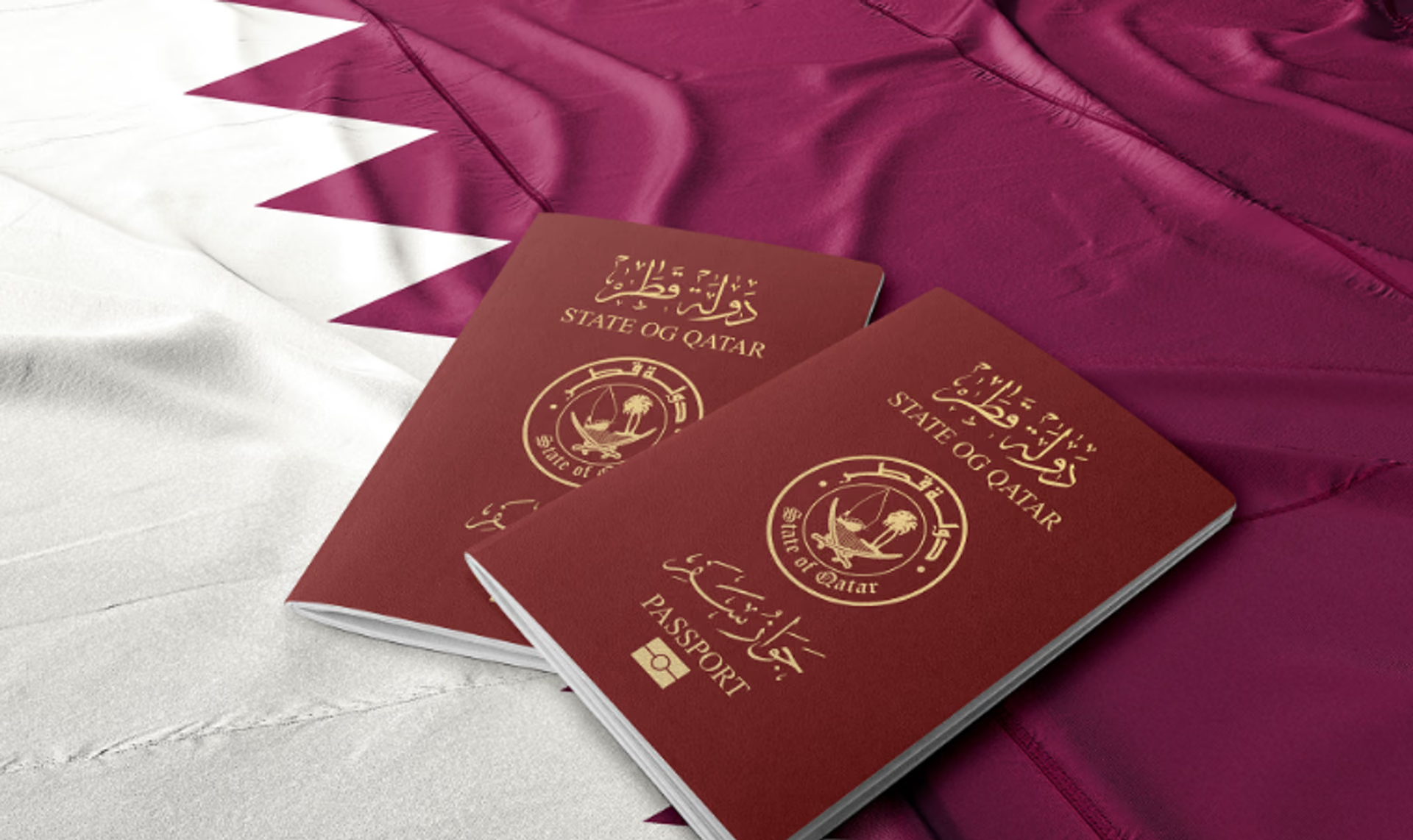
The State of Qatar has officially announced the launch of a new 10-year long-term residency program aimed at entrepreneurs, technology investors, and C-level executives. The initiative, unveiled during Web Summit Qatar 2026, comes in response to growing competition across the Gulf region for global talent and venture capital.
Prime Minister and Minister of Foreign Affairs Sheikh Mohammed bin Abdulrahman bin Jassim Al-Thani emphasized in his address that Qatar is shifting from a labor-attraction model to an innovation-retention model. The new visa category is designed to support the Qatar National Vision 2030 strategy, further solidifying Doha’s position as a technology and financial hub independent of hydrocarbon market fluctuations.
Diversification Strategy and Competitive Edge
For many years, Gulf migration policy was built around the sponsorship (Kafala) system, tightly binding expatriates to their employers. Following the example of the UAE and Saudi Arabia, Qatar is liberalizing its regulations but is focusing on qualitative rather than quantitative growth. While neighboring countries actively grant residency through real estate purchases, Qatar’s 2026 program emphasizes value creation.
The key distinction of Qatar’s new program is its focus on active entrepreneurship. The visa is intended for those who create jobs, introduce technologies, or relocate headquarters to Doha — not passive rentiers.
The program addresses three strategic objectives: strengthening the local startup ecosystem, attracting expertise in fintech and green energy, and improving the country’s position in global ease-of-doing-business rankings.
Key Features of the “Mustadama” Program
The new residence permit (informally referred to as Mustadama, meaning “Sustainability”) grants the right to reside in the country for up to 10 years, with the possibility of renewal. This provides investors with the long-term planning horizon necessary to build substantial businesses.
Target Audience and Eligibility Criteria
Applications are accepted from three main categories of foreign nationals:
- Startup founders: Applicants must demonstrate a minimum viable product (MVP), confirmed venture funding, or accreditation within technology parks such as Qatar Science & Technology Park.
- Investors: Individuals investing capital into operating Qatari companies within strategic sectors (logistics, IT, education).
- Top management: Senior executives (CEO, CTO, CFO) with proven experience managing international corporations relocating operations to Qatar.
The main advantage of the new visa is the self-sponsorship principle. Residents are no longer dependent on a local kafeel (sponsor). This ensures legal flexibility: entrepreneurs may restructure businesses, exit projects, or launch new ventures without risking visa cancellation.
Economic Environment: Why Qatar Is Attractive in 2026
The launch of the 10-year visa complements Qatar’s existing fiscal and infrastructure advantages. In 2026, Qatar offers one of the most favorable tax regimes globally for individuals, along with transparent corporate conditions.
| Parameter | Conditions in Qatar (2026) | Business Advantage |
|---|---|---|
| Personal Income Tax | 0% | Highly attractive for relocating high-earning teams. |
| Corporate Tax | 10% (standard), 0% in Free Zones | Among the lowest rates in the MENA region. |
| Capital Ownership | 100% foreign ownership | No requirement for a local partner in most sectors. |
| Currency Controls | None | Free repatriation of profits and capital. |
The development of platforms such as Qatar Financial Centre (QFC) and the free zones surrounding Hamad International Airport and Hamad Port creates a “state within a state” environment, operating under English law with simplified administration — a critical factor for international holding structures.
Outlook and Regional Competition
Qatar is entering direct competition with the UAE (Golden Visa) and Saudi Arabia (Premium Residency). However, Doha is positioning itself as a premium, boutique jurisdiction. While Dubai represents a mass market, Qatar promotes itself as a high-end hub for technology companies and family offices, offering higher GDP per capita and exceptional levels of safety.
For businesses, this means access not only to sovereign wealth capital (QIA) but also to Asian and African markets through Qatar Airways’ powerful logistics network. Detailed application regulations are expected to be published on the government portal Hukoomi in the coming months.
Frequently Asked Questions
-
Is a local sponsor required to obtain the 10-year visa?
No. The program is based on the self-sponsorship principle. Residency is granted on the basis of your investment or business project, without being tied to an employer or local partner.
-
Can family members relocate under this program?
Yes. The main applicant may sponsor a spouse, children, and in certain cases parents and domestic staff. The validity of family members’ visas is linked to the investor’s visa duration.
-
What is the minimum investment required?
The exact amount depends on the category (investor or startup). For real estate investors, the threshold for permanent residency typically ranges from USD 730,000 to USD 1 million. However, for the entrepreneurial visa, eligibility is more often assessed based on company capitalization or the volume of venture funding raised.
-
Does this residency lead to Qatari citizenship?
Generally, no. Gulf legislation remains highly conservative regarding naturalization. The visa grants long-term residence rights but not a passport. Exceptions are rare and may be granted only by special decree of the Emir for outstanding services to the state.
-
Are residents’ incomes subject to taxation?
Qatar does not levy personal income tax on salaries or dividends. However, if you operate a business, the company may be subject to corporate tax (standard rate of 10%) unless it is registered within a free economic zone.
