
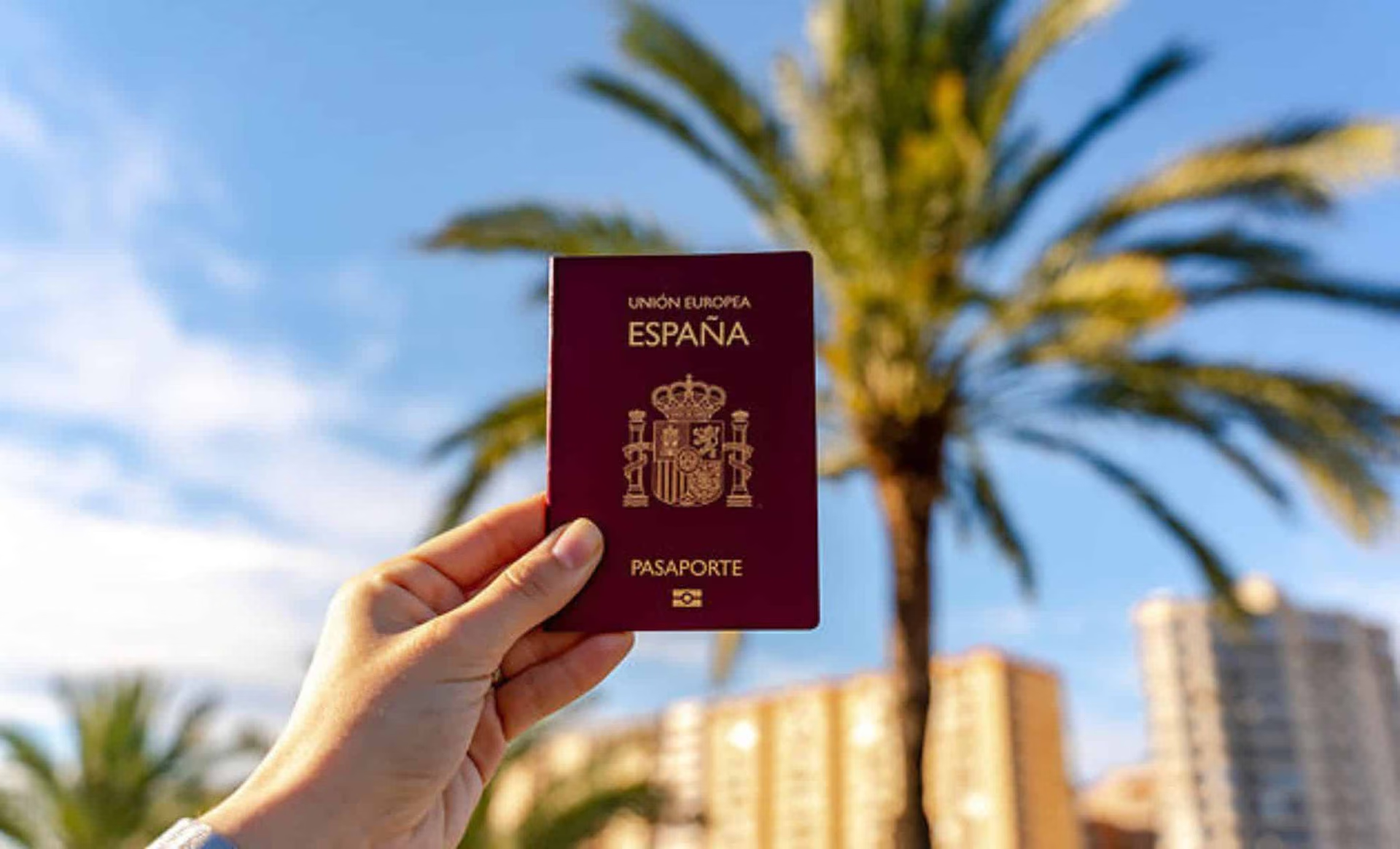
By 2026, the rules governing stays within the Schengen Area remain stringent, and the classic 90/180-day limitation is becoming a formidable impediment for professionals conducting international business. Our client is an independent cybersecurity and development expert from Malaysia. His primary income is entirely derived from remote contracts with technology companies based in Singapore and the European Union.
Working in a B2B consultancy capacity, the client regularly visited Europe for meetings with clients; however, the lack of a permanent residence permit created critical inconveniences. Problems arose not only with visa limitations but also with passing banking compliance in European financial institutions, which, in 2026, demand exhaustive proof of legal residency and the origin of funds from non-residents.
Choosing a Jurisdiction: Why Spain Became the Priority
Before initiating the migration process, we conducted a detailed audit of available European programmes for remote workers. Alongside Spain, Portugal and Croatia were shortlisted. Portugal has historically attracted expats; however, recent changes in tax legislation and the abolition of the NHR (Non-Habitual Resident) regime have diminished its appeal for highly paid professionals. Croatia, on the other hand, offers a nomad visa for merely one year, without a direct path to permanent residency.
Spain's programme perfectly suited the profile of the Malaysian consultant. The state has created advanced infrastructure for technological entrepreneurs: from high-speed internet on the coast to specialised IT hubs in Malaga and Valencia. Moreover, possessing a long-term Spanish resident status automatically resolves the issue of rigid banking control, granting access to mortgage lending, premium residential rentals, and the opening of European brokerage accounts for investment.
Programme Conditions and the Document Processing Procedure
To successfully pass compliance with the Spanish Ministry of Inclusion, Social Security and Migration (UGE-CE), strict adherence to financial and professional criteria is required. In 2026, the baseline income threshold is tethered to the Minimum Interprofessional Wage (SMI) and stands at 200% of this amount for the main applicant (approximately 2600–3000 euros, depending on current indexation), plus additional funds for dependents. We meticulously structured the dossier to prove the client's financial independence.
Important. A digital nomad's income must derive exclusively from foreign companies. The law permits working with Spanish clients, but the revenue from them must not exceed 20% of the applicant's total income. In our client's case, 100% of receipts came from Singapore and other jurisdictions outside Spain, which aligned perfectly with the regulations.
The legalisation process was divided into several sequential steps to minimise the risk of refusal and to meet the deadlines of the client's tourist Schengen visa. It was imperative to ensure the competent translation and legalisation of documents, as any errors in B2B contracts could arouse suspicion among migration officers. Below are the main stages we completed with the client to achieve a positive outcome.
- Financial and Legal Audit: Analysis of contracts with clients. Confirming that the contracts have been valid for at least three months prior to the application date, and that the client possesses the requisite qualifications (IT work experience of over 3 years).
- Collection and Legalisation: Procuring police clearance certificates from Malaysia, affixed with an apostille. Translation of all paperwork into Spanish by a sworn translator (Traductor Jurado).
- Electronic Submission: Submitting the complete package of documents directly from Spanish territory via the UGE portal, which permitted the immediate request for a three-year resident card (TIE), bypassing the need to obtain a one-year D visa at the consulate in the home country.
Thorough preparation averted additional requests (requerimiento) from the migration service. The entire administrative cycle, including the review of the application by officials, took no more than 10 weeks. This timeframe also encompasses the stage of submitting biometric data at the nearest police station (Comisaría de Policía) and the issuance of the physical plastic resident card itself.
The Result: New Prospects for Business and Family
Two and a half months later, the client officially obtained Spanish resident status. The relocation from Malaysia to Europe proceeded according to the planned schedule. The client's spouse and children received equivalent status under the simultaneous family reunification procedure, sparing them the necessity of undergoing a separate, lengthier, and more resource-intensive migration process in the future.
The client not only legalised his residence in the EU but also preserved his current working model. He did not have to open a local legal entity or change counterparties. A well-considered approach to taxes allowed for a substantial reduction in the fiscal burden during the first year of his stay.
It was important for me to obtain a clear and legal status without losing clients or income. The team structured the process with maximum transparency: from document verification to application submission. Everything proceeded without delays, and I received the visa within the expected timeframes. I am now living peacefully in Spain and continuing to work on international projects.
IT Consultant from Malaysia
This case study palpably demonstrates that in 2026, Spain's digital nomad programme remains one of the most reliable and straightforward instruments for global mobility. For highly qualified IT specialists from Asian countries, this is the optimal route for integration into European society, providing a stable foundation for professional growth, borderless travel, and ensuring an absolutely secure future for their family.
Frequently Asked Questions
-
What is the minimum income required for Spain's Digital Nomad Visa in 2026?
The income must be no less than 200% of the Spanish Minimum Interprofessional Wage (SMI). In 2026, this amount is equivalent to approximately 2600-3000 euros per month for the main applicant. When a spouse is added, 75% of the SMI is required, and for each child, an additional 25% of the SMI.
-
Can I apply for the nomad visa while in Spain as a tourist?
Yes, this is the most advantageous route. If you have entered Spain legally (e.g., on a tourist Schengen visa) and there is time remaining on your legal stay, you can submit the documents online to the Ministry of Inclusion (UGE). In this case, you receive a residence permit valid immediately for 3 years.
-
Do I need to pay taxes in Spain if my clients are located in Asia or the USA?
Yes. By becoming a resident of Spain (residing for more than 183 days a year), you are recognised as a tax resident. However, salaried remote employees may request a preferential regime (the Beckham Law) with a flat rate of 24% on income up to 600,000 euros. For freelancers (sole traders), standard progressive rates or concessions for new Autonomos apply.
-
Can my spouse work in Spain on a nomad visa?
Yes. The residence permit issued to family members of a digital nomad in Spain grants the right to both reside in the country and engage in employment (work for hire or as an individual entrepreneur without additional work permits).
-
Does the Digital Nomad status lead to permanent residency and Spanish citizenship?
Yes. The years spent in Spain on a digital nomad residence permit are fully credited. After 5 years of legal and continuous residence, you can request permanent residency (Larga Duracion), and after 10 years (or less for citizens of certain states), you can apply for citizenship.


