No investment
No property purchase, no fund subscription, no company to set up. The requirement is proven regular income and the intention to live in Austria.
An Austrian residence permit for people who live on their own income and do not intend to work in the country: pensions, dividends, rental and capital income. No investment, but an annual quota by province, proven regular income, housing, insurance and A1 German. It suits a family that is genuinely moving to Austria, and it is residence, not citizenship: the Indian passport stays.
Facts verified October 9, 2026 against official sources · Sources
Facts verified October 9, 2026 against official sources · Sources
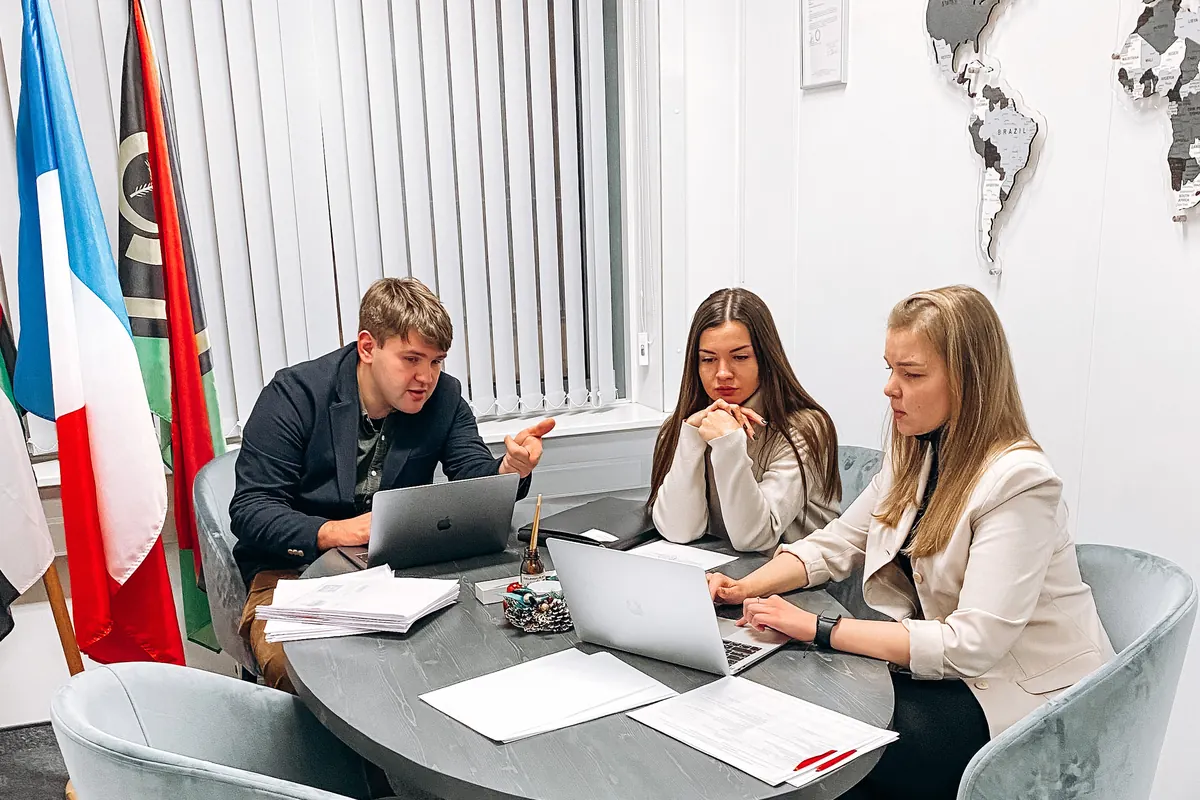
Owner, regional partners, the migration consulting and case management department and senior experts. These are the people you will speak to on the phone and meet in the office.

Founder & Managing Partner

Partner, Middle East & MENA Region

Managing Director, India & South Asia

Partner, Russia & CIS Region

Head of Migration Consulting & Case Management

Immigration & Compliance Specialist
No property purchase, no fund subscription, no company to set up. The requirement is proven regular income and the intention to live in Austria.
With an Austrian residence permit you enter other Schengen countries without a visa and may stay up to 90 days in any 180 — a practical change for Indian passport holders who otherwise need a Schengen visa for every trip.
A spouse or registered partner and minor children receive the same permit. The income threshold rises by a fixed amount for each.
After 5 years of continuous residence and B1 German you can obtain 'Daueraufenthalt – EU': a 5-year document with free access to the labour market.
The family builds a European base while keeping Indian passports. Citizenship is a separate decision ten years away, and it would mean giving up the Indian passport.
Income rates are published each year, quotas by government regulation, and the decision period is capped by law. You can calculate the threshold and plan the filing in advance.
Facts verified October 9, 2026
| Application fee for a temporary permit | EUR 218 per applicant; migration.gv.at |
|---|---|
| Fee for 'Daueraufenthalt – EU' | EUR 275 when moving to permanent status after 5 years |
| Income to prove (applicant) | from EUR 2,616.78 a month couple EUR 4,128.24, plus EUR 403.76 per child; a threshold, not a payment |
| Authority decision | up to 6 months statutory maximum from receipt of the application |
| A1 certificate | exam centre fee no older than 1 year when submitted |
We review income sources and expenses, family composition, business role and police record. We decide whether the permit for the financially independent fits or another route is needed, and in which province to file.
A1 certificates for adults, police certificates, birth and marriage certificates apostilled and translated into German, insurance, proof of income and regular expenses, housing contract.
The first application goes to the Austrian embassy or consulate responsible for your place of residence — for applicants living in India, the Austrian Embassy in New Delhi; for UAE residents, the embassy in Abu Dhabi. The decision is awaited abroad.
The embassy checks completeness and forwards the file to the provincial authority: MA 35 in Vienna, the provincial government office in Lower Austria. The decision is due within 6 months of receipt; we answer requests at once.
You enter Austria, register your address and collect the residence card. The first permit is for 1 year.
Within 2 years you pass Module 1 of the Integration Agreement (A2), otherwise renewal is at risk. We renew before expiry while income, housing and insurance are maintained; after Module 1 and 2 years of residence, for 3 years.
The official conditions are set out above. Below is how the permit works in real life, based on our cases.
Means are not the whole test: the annual quota, housing, insurance and German matter as much. The baseline language level at first filing is A1, unless an exemption applies.
Quota places are allocated under set rules at the start of each year, so preparation should begin well in advance. A quota figure from discussions several years ago cannot be used as the 2026 number.
We consider this route for a family that genuinely wants to live in Austria and understands the work restrictions.
Owning a company, receiving dividends and managing a business day to day are different situations; they must be separated before filing — a distinction that matters for the Indian business families who most often ask about this permit.

Austria's residence permit for the financially independent suits those who can live without taking up employment in the country. What matters is not only means but also the annual quota, housing, insurance and German: the baseline language level at first filing is A1, unless an exemption applies.
Quota places are allocated under set rules at the start of each year, so preparation should begin well in advance. A quota figure from discussions several years ago cannot be used as the 2026 number.
We consider this route for a family that genuinely wants to live in Austria and understands the work restrictions. Owning a company, receiving dividends and managing a business day to day are different situations; they must be separated before filing — a distinction that matters for the Indian business families who most often ask about this permit. Its other advantage for them is structural: it is residence, not citizenship, so the Indian passport stays while the family builds a European base.
Coverage and expert commentary by Garant IN in business media.

You can't leave, you can't stay: how to prepare for obtaining a residence permit and French citizenshipRead on Forbes →

No French, No civic test: France’s exam‑free Visiteur visa Indian HNIs are quietly using as a first step to EU residencyRead on The Economic Times →

Is Dubai’s Property Market Cracking? Middle East conflict hits sales, delays projects and softens pricesRead on Financial Express →

Global Lens I U.S. President Donald Trump's Golden Card Visa: How Can Indians Tap This Programme?Watch on CNBC-TV18 →

Golden visa schemes are response to conflicts, Trump’s decisions on U.S. citizenship: Dubai-based immigration expertRead on The Hindu →

Is Dubai still a safe haven for investors, HNIs despite US-Iran conflict?Read on Business Standard →

Coverage in Moneycontrol: Amid US uncertainty, HNIs choose Caribbean, Gulf, EU residency programmesRead on Moneycontrol →

France, Italy or Grenada? Financial independence can get you settled there with freedom to roam world!Read on PTI →

Why India's wealthy are quietly buying second residencies abroadRead on India Today →
A permit for those who can live in Austria on their own means and do not plan to work there.
You receive a state or private pension from your home country. A pension is the clearest form of regular income for the authority: the amounts and frequency are visible in the documents.
Profits and dividends from companies abroad count as income. But owning a company, receiving dividends and running the business day to day are different situations — a distinction that matters for the Indian business families who most often ask about this permit. We separate them before filing, because you cannot work from Austria on this permit.
Income from rent, securities, deposits and shareholdings. Savings also qualify if you show how they were accumulated.
A spouse and minor children receive the same permit. The income threshold is calculated for the whole family, and each member needs a quota place.
Our fee depends on the family composition and the province of filing. We send the quote in reply to your message.
Main applicant
Fees of licensed local lawyers and authorised agents are charged separately at their rates
Request a quoteApplicant with spouse and children
Fees of licensed local lawyers and authorised agents are charged separately at their rates
Request a quoteFor Garant IN the family is a core value: the permit for the financially independent is arranged for your relatives together with you or later under Section 46(5) NAG. Below are the 2026 conditions from the law and migration.gv.at, without generic phrases.
A spouse or registered partner who is at least 21 on the day of filing (Section 2(1)(9) NAG). They receive the same permit without the right to work and take their own quota place. They need their own A1 certificate and a marriage certificate apostilled and translated into German; if either of you was married before, the divorce documents too.
Unmarried children who are minors on the day of filing, including adopted children and stepchildren. Children under 14 do not need an A1 certificate. If the other parent stays abroad: an order for sole custody or that parent's consent, apostilled and translated.
They are not part of the 'core family' under the NAG, so reunification with you is not available to them. Parents and adult children can obtain the same permit only as applicants in their own right: with their own quota place, their own proven income from EUR 2,616.78 a month, housing, insurance and A1. For multi-generation Indian households this is the key limitation, and we will not promise otherwise.
A couple needs EUR 4,128.24 a month, plus EUR 403.76 per child: a couple with one child EUR 4,532.00, with two EUR 4,935.76. Rent, loans and maintenance are deducted from income, so the real threshold is higher. The application fee is EUR 218 each. Every family member needs a quota place.
Filing is together with the main applicant or later; when filing separately, the quota must still have free places when the family applies. Garant IN's migration programme experts check each member's documents in advance to rule out a refusal for an individual applicant. Verified on 9 October 2026 against the NAG and migration.gv.at.
The permit's conditions are the same for everyone. The difference is whether you make it into the quota and whether your income survives scrutiny once real expenses are deducted.
Places go in order of receipt at the start of the year. We prepare the dossier in advance: the A1 certificate, police certificates, housing contract and proof of income must be ready by January.
The table rate is only the starting point. We deduct rent, loans and maintenance, show the income your family actually needs and how to evidence savings so the authority accepts them.
Owning a company, dividends and day-to-day management are different things. We establish whether your role could look like working from Austria and, if so, propose another route.
Police clearance and civil documents apostilled by the Ministry of External Affairs with German translations; income evidence from Indian pensions, dividends and deposits; transfers to Austria planned within LRS.
Module 1 (A2) within 2 years, a 3-year permit, B1 by year five. We show how to keep the status at renewal and what naturalisation after 10 years would require, including giving up the previous nationality.
Wording pending approval.
‘Residence for the financially independent’ is the everyday name. In law it is the ‘Niederlassungsbewilligung – ausgenommen Erwerbstätigkeit’: a settlement permit excluding gainful employment. It is not an investment programme: there is no contribution to the State and no property purchase is required. You need to show that you and your family will live in Austria on your own regular income without relying on social assistance.
The permit suits retirees, rentiers, investors and owners of businesses outside Austria who receive dividends but do not run the company day to day. The key limitation is that you cannot work in Austria, including remotely for a foreign company. The second is the quota: the number of these permits each year is small and split by province, so preparation starts several months before filing. For Indian families the structural advantage is that this is residence, not citizenship: the Indian passport stays.
It does not suit those who want to work in Austria or run a business from there, or those who expect to keep the permit without moving: renewal, the German language modules and the path to permanent status all require genuinely living in Austria.
The first permit is for 1 year. Renewal is filed before expiry while income, housing and insurance are maintained. Once Module 1 of the Integration Agreement (A2) is complete and you have lived in Austria for 2 continuous years, the permit is issued for 3 years.
'Daueraufenthalt – EU' after 5 years of continuous right of residence, the general conditions and Module 2 (B1 German). The document is issued for 5 years and gives free access to the labour market; the application fee is EUR 275.
Under Section 10 of the Citizenship Act: 10 years of lawful continuous residence, at least 5 of them settled. Austria requires you to give up your previous nationality where this is possible and reasonable, so for Indian citizens naturalisation means surrendering the Indian passport.
This permit carries no right to work. If plans change, you switch to another permit on its own grounds; we choose it in advance so that your period of residence is not interrupted.
 4 offices
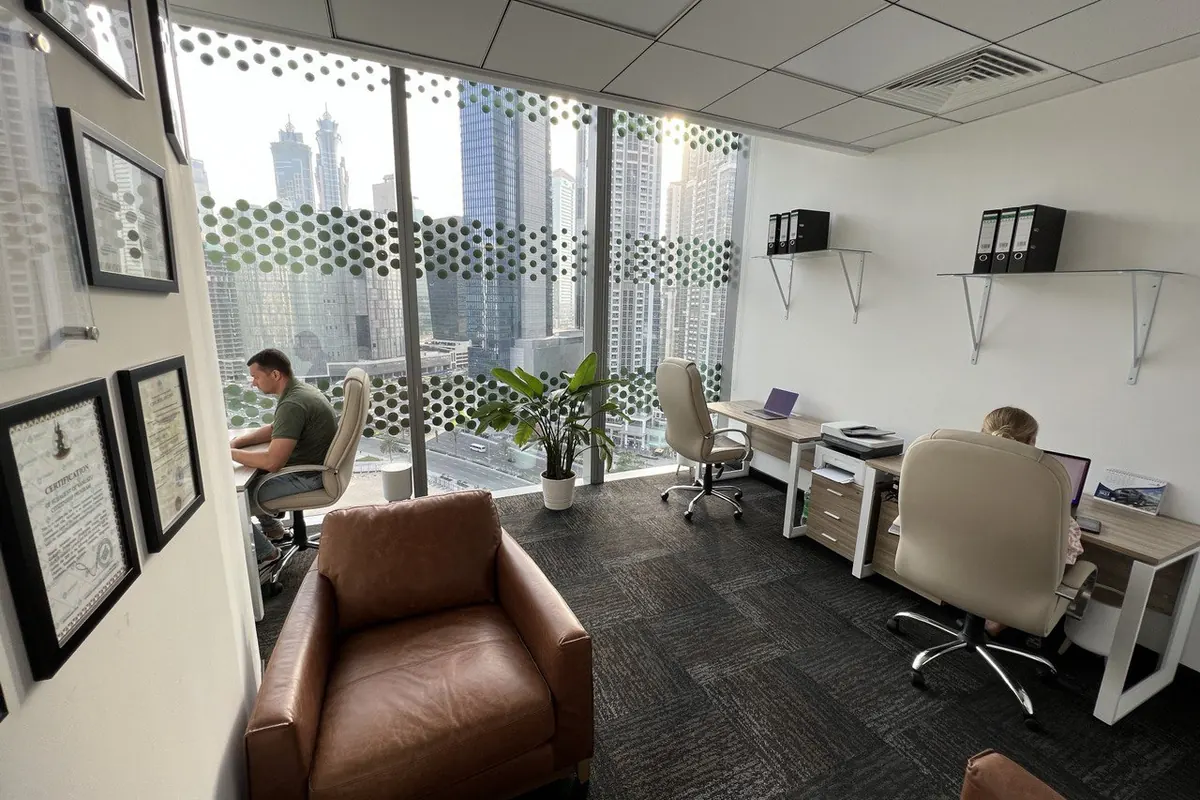
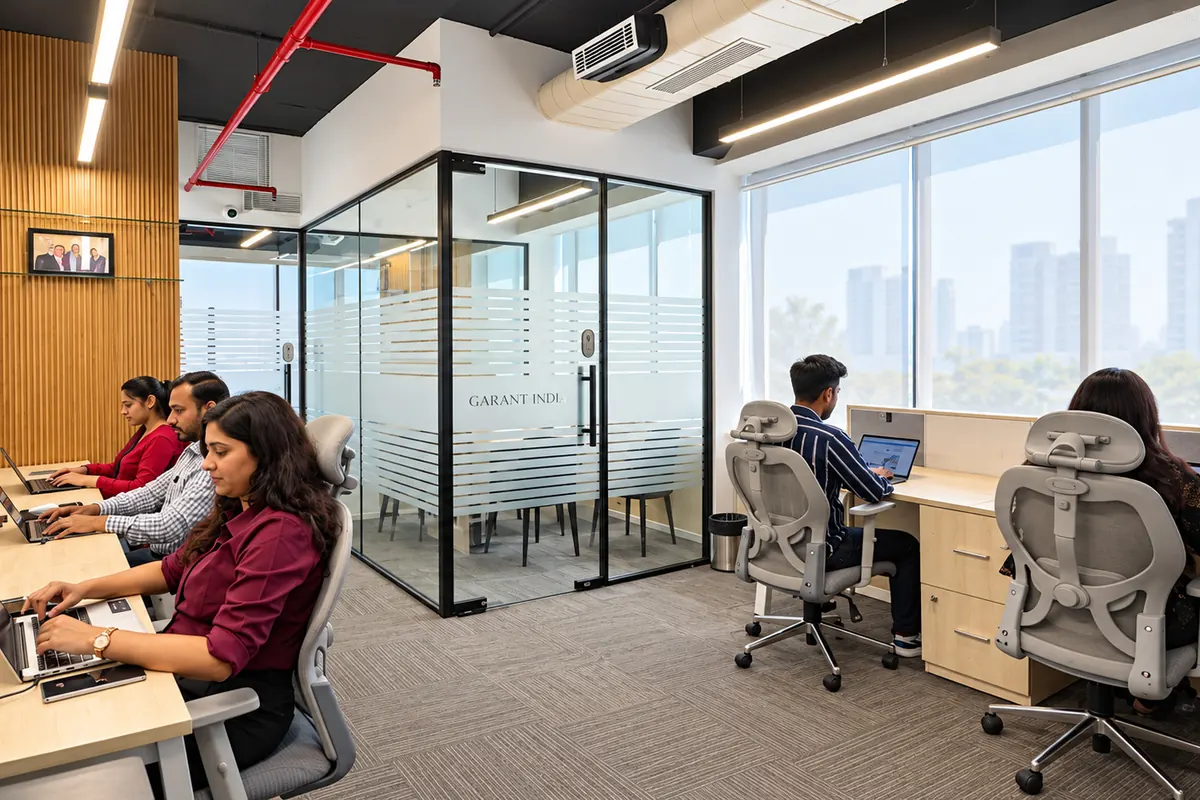
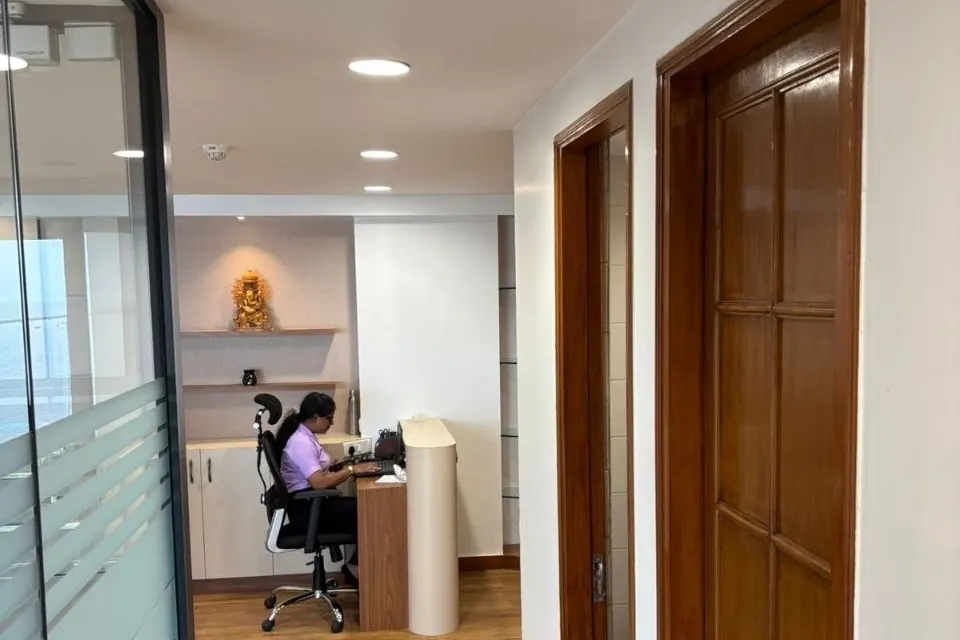
Moscow, Dubai, New Delhi and Mumbai. Visit an office and see who is working with you.

Garant IN is a member of the Investment Migration Council (IMC), the Geneva-based international association of the investment migration industry. investmentmigration.org →

Garant IN is a member of CCI France Russie, the French Chamber of Commerce and Industry in Russia. ccifr.ru →
International migration consultancy since 2015.
Two levels of quality control: Garant IN's migration consulting and case management department runs a rigorous pre-application compliance screening (Pre-Due Diligence) and prepares the document package to 2026 requirements, while the application in Austria is prepared and filed together with licensed local lawyers and authorised agents. This is how we minimise the risk of refusal at the preparation stage, before the documents reach the government authority.
No. The 'Niederlassungsbewilligung – ausgenommen Erwerbstätigkeit' allows you to live in Austria without any gainful activity. The Lower Austria authorities state explicitly that remote work for a foreign company is not allowed either. Receiving a pension, dividends and capital income is fine; if you run a business every day, we work through your situation before filing.
Twice the Section 293 ASVG standard rate: EUR 2,616.78 a month per applicant, EUR 4,128.24 for a married couple or registered partners, plus EUR 403.76 for each child. The income must be regular and your own. Rent, loans and maintenance reduce the income that counts. The rates are revised each year, so we calculate them for the filing date.
Yes, savings are expressly listed among the sources of means. Lower Austria asks you to show how you were able to accumulate them, for example through earlier work abroad, and for funds in a foreign currency a bank confirmation of the conversion into euros. The law does not fix how much savings is enough, so we do not promise a 'permit for a deposit' and calculate a margin for your case. Funds moved from India are planned within the LRS limit of USD 250,000 per person per financial year.
The number of these permits per year is capped by a government regulation (Niederlassungsverordnung) for each province. No regulation has been issued for 2026, so under Section 13(7) NAG the NLV 2025 applies: 385 places nationwide (Vienna 130, Carinthia 45, Salzburg, Styria and Tyrol 40 each, Lower Austria and Vorarlberg 30 each, Upper Austria 25, Burgenland 5), and no more than 1/12 of that number may be granted per month. In Lower Austria places go in order of receipt at the start of the year, with no waiting list. The dossier should be ready before January.
Yes. The first application requires an A1 certificate from ÖSD, the Goethe-Institut, telc or ÖIF, no older than 1 year. Exceptions are children under 14, people whose health prevents it (with a report from a doctor appointed by the embassy) and those who declare in writing that they will stay no longer than 24 months within 3 years. After that: Module 1 of the Integration Agreement (A2) within 2 years and Module 2 (B1) for permanent status. Goethe-Institut (Max Mueller Bhavan) centres in India offer A1 exams.
The first application is filed at the Austrian embassy or consulate responsible for your place of residence, and the decision is awaited abroad. Indian citizens need a visa for Austria, so they file from abroad: residents of India at the Austrian Embassy in New Delhi, UAE residents at the embassy in Abu Dhabi. Nationals of visa-exempt countries may file in Austria, but only while their visa-free stay lasts.
The authority must decide without undue delay and no later than 6 months after receiving the application. Add the time needed for documents and the A1 certificate. We do not promise a decision 'within a month'.
The first permit is for 1 year. Renewal is filed before expiry, and the conditions must still be met: income, housing, insurance. If you have passed Module 1 of the Integration Agreement (A2) and lived in Austria for 2 continuous years, the permit is issued for 3 years. Module 1 must be completed within 2 years; a 12-month extension can be granted on application.
After 5 years of continuous right of residence and Module 2 (B1 German): 'Daueraufenthalt – EU' for 5 years with free access to the labour market; the application fee is EUR 275. Citizenship comes after 10 years of lawful continuous residence, at least 5 of them settled, and requires giving up the previous nationality. India does not allow dual citizenship either, so for most Indian families the permit and later PR are the goal, not the Austrian passport.
Any accommodation to which you hold a legal title and which is suitable for your family by local standards: a lease, sublease, preliminary contract or ownership. Buying property is not required. Rent is deducted from income, so we choose the flat and calculate the threshold together.
Passport, photo, birth certificate, police certificate (recommended no older than 3 months) from the country of nationality and from any country where you lived for more than 6 months, A1 certificate, housing contract, insurance, proof of income and regular expenses, and where relevant marriage and divorce certificates. Indian documents are apostilled by the Ministry of External Affairs; UAE documents are legalised through the UAE Ministry of Foreign Affairs. The authority may ask for German or English translations and certified copies.
Tax residence depends not on the type of permit but on living in Austria and having a home there, and then worldwide income has to be declared. Pensions, dividends and capital income are taxed differently and depend on the double taxation treaty between India and Austria. We run the tax calculation before filing, not after the move.
Not as family members. The NAG limits the family to a spouse or registered partner aged 21 or over and unmarried minor children. Parents and adult children can apply for the same permit as applicants in their own right: with their own quota place and their own income from EUR 2,616.78 a month, housing, insurance and an A1 certificate.
For a married couple the 2026 rate is EUR 4,128.24 a month, plus EUR 403.76 for each child. A couple with two children needs EUR 4,935.76 a month. Regular expenses such as rent, loans and maintenance are deducted from income, so a renting family needs more than the table rate.
Yes. If the application is refused through the fault of our team or an error in building the case, we refund the company's service fee less a minimal retention for costs actually incurred. Refund terms, the payment schedule and the rules on retaining service costs are fixed in the contract before work begins. Before we start, we check your documents and risk history free of charge and tell you about any risks in advance.
Message us in the messenger you prefer and you will receive an estimate for your family and route. We never message first: you send the first message.
Our fee depends on the family composition and the province of filing. We send the quote in reply to your message.
Programme updates and case breakdowns in our channels.
Figures and conditions on this page are checked against legislation and official pages. Last verified: .
Page updated: