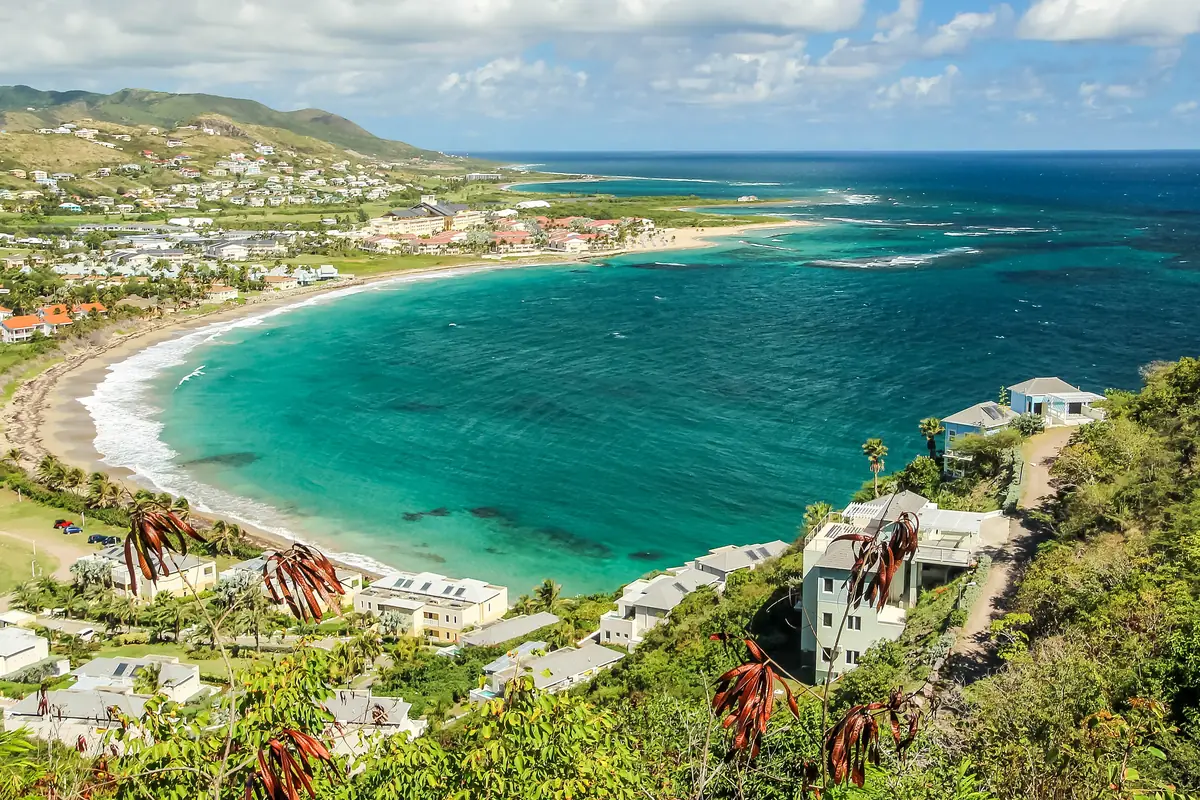
Citizenship without relocation
The CIU does not require you to live in the country before or after the passport is issued. The main applicant's interview is mandatory, but there is no visit to the islands to keep the status.
The oldest citizenship-by-investment programme still running: a passport for the whole family for a non-refundable contribution to the Sustainable Island State Contribution fund from US$250,000, or approved real estate from US$325,000. No requirement to live on the islands. For families in India and the UAE this is a full citizenship, not a visa — and India does not allow dual citizenship, so that question comes first.
Facts verified October 12, 2026 against official sources · Sources
Facts verified October 12, 2026 against official sources · Sources
Founder, regional partners, the migration consulting and case management department and the company’s senior experts.

Founder & Managing Partner

Partner, Middle East & MENA Region
Managing Director, India & South Asia

Partner, Russia & CIS Region

Head of Migration Consulting & Case Management

Immigration & Compliance Specialist
The CIU does not require you to live in the country before or after the passport is issued. The main applicant's interview is mandatory, but there is no visit to the islands to keep the status.
Spouse, children under 18, children aged 18–30 in full-time education, adult children with disabilities, and parents of the applicant or spouse aged 55 and over. There is no cap on the number of dependants.
The SISC contribution or property payment is made after the approval-in-principle letter. Until then you pay only due diligence and processing fees, not the investment.
CIU rules: within 120–180 days of acknowledging your application you receive an answer — approval in principle, refusal, or a notice of delay with the reason.
Citizens of St Kitts and Nevis are listed in Annex II of EU Regulation 2018/1806: entry to the Schengen area without a visa for up to 90 days in any 180. Nobody can promise this regime for years ahead — see the risks section.
Non-refundable contribution, developer real estate, a private home, or a share in an approved public project (Public Benefit Option). Each should be assessed as a standalone asset, not by the difference at entry.
Facts verified October 12, 2026
| SISC contribution (applicant or family of up to 4) | USD 250,000 non-refundable; each further dependant US$25,000 under 18, US$50,000 aged 18+ |
|---|---|
| Due diligence | US$10,000 + US$7,500 US$10,000 for the main applicant, US$7,500 per family member aged 16+ |
| Real estate: minimum investment | US$325,000 / US$600,000 developer project or condominium / private home; held for at least 7 years |
| Government fees on the real estate route (after approval) | USD 25,000 main applicant; spouse US$15,000; dependant under 18 US$10,000; dependant 18+ US$15,000 |
| CIU decision | 120–180 days from acknowledgement; in practice depends on the completeness of the file and the option chosen |
| Passports and certificates | per tariff document issuance fees and agent services are costed separately; exact figures depend on family composition |
Assessment of nationality against the CIU restricted list, criminal records, visa refusals, source of funds and family composition; for Indian nationals, the dual-citizenship question. Choice of option: SISC, real estate or the Public Benefit Option.
CIU forms, passports and certificates with apostille and translation, police certificates for everyone aged 16+, medical forms, proof of source of funds, evidence of children's studies and parents' dependency, LRS planning where the funds come from India.
The application is lodged with the CIU only through an agent on the official register. At filing you pay due diligence and processing fees — not the investment.
The CIU and external providers examine the file. The interview is mandatory for the main applicant; dependants aged 16+ may be called at the CIU's discretion. Document requests should be answered immediately so the file does not go into 'delay for cause'.
Once the approval-in-principle letter arrives, you transfer the SISC contribution or pay for the property and the government fees. The investment is not paid before that point.
The CIU issues the certificate of citizenship, then passports are produced for every family member. The renewal date should be diarised at issuance.
The official conditions are above. Below is how the programme works in practice, from open sources and industry practice.
Open sources include complaints about extra checks at borders, difficulties with work visas and disputes over refunds. These are individual cases, not proof of a general ban — but where the family can actually use the document should be checked before paying.
When a programme closes to citizens of a particular country, getting the money back has repeatedly proved hard or impossible. This risk should be weighed before payment, and the refund terms of every payment checked in the contract with the agent.
The first step is to establish how a change of citizenship affects residency, employment and banking in the Emirates, then to examine the contract, the grounds for refusal and the refund terms. For an Indian family the extra step is the surrender of the Indian passport and the switch to OCI.
Sometimes a higher non-refundable cost is clearer and safer than a formally refundable investment with an uncertain exit. Every property is assessed as a standalone asset: price, upkeep, commissions, 7 years of holding, a real buyer.

The long history of the St Kitts and Nevis programme does not by itself make the passport convenient. Paying for the programme's fame alone is unwise — especially for Indians, who would be giving up the Indian passport to take this one. The decision must rest on concrete rights for the family.
These are individual cases, not proof of a general ban — but they point to a systemic risk of citizenship by investment that should always be named: when a programme closes to citizens of a particular country, getting the money back has repeatedly proved hard or impossible. If the family lives in the UAE, the first step is to establish how a change of citizenship would affect its residency, employment and banking relationships, and then to examine the contract, grounds for refusal and refund terms for every payment.
The sensible approach is to price a possible change to visa-free access into the decision today. If the passport's value exists only while European access stays unchanged, the family must understand exactly what it stands to lose if that regime is revised.
| SISC contribution | Real estate (developer / private) | |
|---|---|---|
| Minimum amount | US$250,000 for a family of up to 4 | US$325,000 condominium or developer project; US$600,000 private home |
| Recoverability | Non-refundable | You keep the property; resale not earlier than 7 years |
| Government fees on top | No separate fee for the main applicant | US$25,000 main applicant, US$15,000 spouse, US$10,000 / US$15,000 per dependant |
| Due diligence | US$10,000 + US$7,500 per family member aged 16+ | US$10,000 + US$7,500 per family member aged 16+ |
| Extra costs | None | Upkeep, insurance, conveyancing, commissions on resale |
| What to check | Refund terms of fees if refused | The developer, the contract, a realistic future buyer, any buy-back promise |
Figures from the CIU St Kitts and Nevis pages as of 2 October 2026; verified again on the filing date.
Coverage and expert commentary by Garant IN in business media.

You can't leave, you can't stay: how to prepare for obtaining a residence permit and French citizenshipRead on Forbes →

No French, No civic test: France’s exam‑free Visiteur visa Indian HNIs are quietly using as a first step to EU residencyRead on The Economic Times →

Is Dubai’s Property Market Cracking? Middle East conflict hits sales, delays projects and softens pricesRead on Financial Express →

Global Lens I U.S. President Donald Trump's Golden Card Visa: How Can Indians Tap This Programme?Watch on CNBC-TV18 →

Golden visa schemes are response to conflicts, Trump’s decisions on U.S. citizenship: Dubai-based immigration expertRead on The Hindu →

Is Dubai still a safe haven for investors, HNIs despite US-Iran conflict?Read on Business Standard →

Coverage in Moneycontrol: Amid US uncertainty, HNIs choose Caribbean, Gulf, EU residency programmesRead on Moneycontrol →

France, Italy or Grenada? Financial independence can get you settled there with freedom to roam world!Read on PTI →

Why India's wealthy are quietly buying second residencies abroadRead on India Today →
Who the programme may suit, based on its terms.
You want a second passport with visa-free Schengen travel and a clear procedure, without relocating. The threshold question is the Indian one: taking this citizenship means surrendering the Indian passport (OCI is a lifelong visa, not dual citizenship), and the money must fit the LRS limit.
A passport as a backup document and a travel tool while the UAE residency stays in place. The first question is how a change of citizenship affects the visa, employment and banking in the Emirates — and the Indian status, if held.
Running since 1984, with a written CIU procedure and timelines. But paying for fame alone is unwise: what matters is which rights the passport actually gives the family.
A non-refundable contribution is easy to evaluate; real estate is formally recoverable but needs 7 years of holding and a real buyer at exit. Both routes are compared by amount, timing and the real exit from the investment.
St Kitts and Nevis citizenship is granted to close relatives in the same application as the main applicant. Below are the 2026 conditions under the CIU criteria, without generic phrases.
A spouse by registered marriage is included. The law of St Kitts and Nevis defines a spouse as a partner of the opposite sex by marriage — same-sex unions and unregistered partners are not covered. In a family of up to 4 the spouse does not raise the SISC contribution; on the real estate route a government fee of US$15,000 applies. Due diligence US$7,500, a police certificate is required, an interview is at the CIU's discretion.
Children under 18 are included on the birth certificate. Children aged 18–30 qualify if in full-time attendance at a recognised secondary or tertiary institution and fully supported by you; the CIU's 2024 brochure gives 25 as the upper age, so older children's eligibility is verified on the filing date. Adult children with physical or mental disabilities are included without the study condition. From age 16: police certificate and due diligence of US$7,500.
Parents of the applicant or spouse aged 55 or over who live with you and are fully supported by you. Proof of dependency is needed: shared residence, transfers, no income of their own. Each parent beyond a family of 4 adds US$50,000 to the SISC contribution or US$15,000 in government fees on the real estate route, plus US$7,500 due diligence. Grandparents are not in the CIU criteria and are not included.
Single applicant: US$250,000 + US$10,000 due diligence. Couple with two children under 16: US$250,000 + US$17,500 due diligence. Couple with three children under 18: US$275,000 + due diligence. Couple with two children and one parent: US$300,000 + US$32,500 due diligence (adults aged 16+). On the real estate route from US$325,000, government fees are added: US$25,000 + US$15,000 + US$10,000 per child under 18 + US$15,000 per adult dependant. Passport fees and agent services are extra. For resident Indians the whole amount must be planned within LRS — USD 250,000 per person per financial year.
All family members are filed in one application and the decision on the family is issued together with the main applicant's. Documents and proof of dependency of each family member are checked against the CIU's 2026 criteria before filing: a refusal for one applicant delays the whole application. Data verified on 2 October 2026 against the CIU Eligibility Criteria and SISC pages and the CIU brochure.
St Kitts and Nevis launched citizenship by investment in 1984 — the oldest programme of its kind still in operation. The state grants citizenship and a passport in exchange for a non-refundable contribution to the Sustainable Island State Contribution fund or the purchase of approved real estate. Applicants are vetted by the Citizenship by Investment Unit, a separate statutory body since July 2024.
The programme suits families who want a second passport without relocating: business owners in India who already hold or plan a Gulf base, Indian and expatriate families living in the UAE, and anyone comparing Caribbean programmes by a written procedure and timeline. The money is transferred only after approval in principle, and under CIU rules the decision arrives within 120–180 days.
It does not suit anyone who wants to keep an Indian passport: this is a full citizenship, and India does not permit dual citizenship — OCI is a lifelong visa, not a second nationality. Nor does it suit those for whom the passport’s only value is visa-free entry to Europe: the EU may revise that regime, and that scenario is part of the decision, not small print.
A passport's validity and the citizenship itself are different things. To replace the document you follow the procedure and show that the obligations accepted at naturalisation have been met. For a family that has surrendered its Indian passport this is now the only passport, so renewal cannot be left to the last months.
A new spouse or a newborn child is added by a separate application with its own fees. The conditions and amounts for adding dependants after citizenship are verified with the CIU at the time of the request.
The property can be sold after the minimum holding period. The exit should be planned in advance: who the buyer will be, whether the unit keeps its approved status, and which taxes and commissions arise on sale.
If the EU revises the visa regime for Caribbean states, the passport does not disappear — its value for travel changes. What the family keeps in that scenario, and how to compensate, should be assessed in advance.
Andrey Boyko on this programme and similar options. The videos are in Russian.

Short videos by Andrey Boyko: the latest from the Garant IN channel. The videos are in Russian.

A second citizenship is a plan B for your family. How to get a second passport

Caribbean passports under EU pressure: what happens to visa-free travel in 2026
 4 offices
Moscow, Dubai, New Delhi and Mumbai: Garant IN office addresses and phone numbers.

Garant IN is a member of the Investment Migration Council (IMC), the Geneva-based international association of the investment migration industry. investmentmigration.org →

Garant IN is a member of CCI France Russie, the French Chamber of Commerce and Industry in Russia. ccifr.ru →
International migration consultancy since 2015.
Applications for citizenship of Saint Kitts and Nevis are accepted only from authorised agents listed in the official register of the CIU St Kitts and Nevis. Applications are prepared and filed together with agents authorised by the government of the country and licensed local lawyers. GARANT IN provides the preliminary case audit (pre-due diligence), document collection and preparation of the international application package. This page is based on official sources and is provided for information only.
No. India does not allow dual citizenship: acquiring another citizenship by choice terminates Indian citizenship, and the Indian passport must be surrendered. The Overseas Citizen of India card then gives a lifelong, multiple-entry visa and parity with NRIs in most economic matters, but no voting or public-office rights. For many families a residence programme solves the task without this trade-off — both options should be compared before any payment.
There is no requirement to reside in the country to obtain or keep the citizenship — the CIU says so directly. Only the main applicant's interview is mandatory; its format and venue are set by the CIU.
Under CIU rules the investment is transferred after the approval-in-principle letter. At filing you pay only due diligence (US$10,000 for the main applicant, US$7,500 per family member aged 16+) and processing fees. Refunds of fees on refusal are not fixed in the rules — refund terms should be checked in the contract with the agent, and the grounds for refusal before filing.
Under CIU rules — 120–180 days from acknowledgement of the application: approval in principle, refusal, or a notice of delay with the reason. In practice the timing depends on the completeness of the file, the option chosen and how fast document requests are answered. A 'passport in 4 months' should not be counted on: the real estate route adds time for the purchase, and the certificate and passports are issued after approval.
The country is listed in Annex II of EU Regulation 2018/1806: visa-free entry to the Schengen area for up to 90 days in any 180. The full list of visa-free countries should be verified on the filing date against official sources, not marketing tables. Caribbean citizenship and visa-free entry to the EU are separate legal questions: travel conditions can change regardless of when the family received the passport.
The EU explicitly links investor-citizenship programmes to security risks: since 31 December 2025 the operation of such a scheme is a stand-alone ground for suspending visa-free travel, and Council documents of January 2026 tell the Eastern Caribbean states to tighten vetting 'pending the discontinuation of those schemes'. By a letter of 25 June 2026 the European Commission asked the five Caribbean states to phase out their programmes by 1 June 2028 and to introduce interim measures by September 2026. This is not the end of visa-free travel but the start of a procedure: the governments are continuing their programmes, talks are under way, and the EU report under the suspension mechanism is expected in December 2026.
A non-refundable contribution is easier to evaluate: US$250,000 is spent on the status and does not come back. With real estate from US$325,000 you must add government fees (from US$25,000 for the main applicant), upkeep, commissions, 7 years of mandatory holding and a realistic future buyer. A developer's promised buy-back is not a guaranteed return. Sometimes a higher non-refundable cost is clearer than a formally refundable investment with an uncertain exit.
Resident Indians remit under the RBI's Liberalised Remittance Scheme — USD 250,000 per person per financial year for any permissible capital-account purpose. A family of 4 at US$250,000 plus fees usually means splitting the remittance between spouses or across two financial years; tax collected at source on large remittances also affects cash flow. Indians resident in the UAE are generally outside LRS, which is why many files start in the Gulf. The payment route should be planned before filing, not after approval.
Due diligence (US$10,000 + US$7,500 per person aged 16+); on the real estate route, government fees after approval, conveyancing and insurance; certificate and passport issuance fees; agent and legal services. The full budget depends on family composition, not the headline 'from US$250,000'.
CIU forms, passports and birth and marriage certificates with apostille and translation, police certificates for everyone aged 16+, medical forms, proof of source of funds, evidence of children's studies and parents' dependency. Preparation usually takes 3–6 weeks and depends on which countries the certificates come from.
Passport validity and citizenship are different things. To replace the document you go through the procedure and show that the obligations accepted at naturalisation have been met. Government fees and services at renewal are costed separately; a single timeline or price cannot be stated in advance, so supporting documents should be collected early and the date diarised. For a family that has given up its Indian passport this is the only passport, so renewal is never left to the last months.
Yes. Parents of the applicant or spouse aged 55 or over, living with you and fully supported by you. Children aged 18 or over — if in full-time education at a recognised institution and fully supported (the current CIU criteria say up to 30, the 2024 brochure says up to 25; verified on the filing date), and adult children with disabilities. There is no cap on the number of dependants.
The SISC contribution of US$250,000 covers a family of up to 4. Each further dependant adds US$25,000 (under 18) or US$50,000 (18 and over). Due diligence is US$10,000 for the main applicant and US$7,500 for everyone aged 16+. On the real estate route the property price does not change, but government fees apply: US$25,000 for the applicant, US$15,000 for the spouse, US$10,000 or US$15,000 per dependant.
Figures and conditions on this page are checked against legislation and official pages. Last verified: .
Page updated: