No investment and no business
No property to buy, no contribution to a fund, no company to set up. One requirement: proven means of living and insurance.
A French residence permit for people who live on their own means and do not work in the country: proven income or savings from EUR 17,735.19 a year per applicant, health insurance and an undertaking not to work. A one-year card renewed annually; after 5 years, the 10-year resident card. No investment, no property purchase, no business.
Facts verified October 8, 2026 against official sources · Sources
Facts verified October 8, 2026 against official sources · Sources
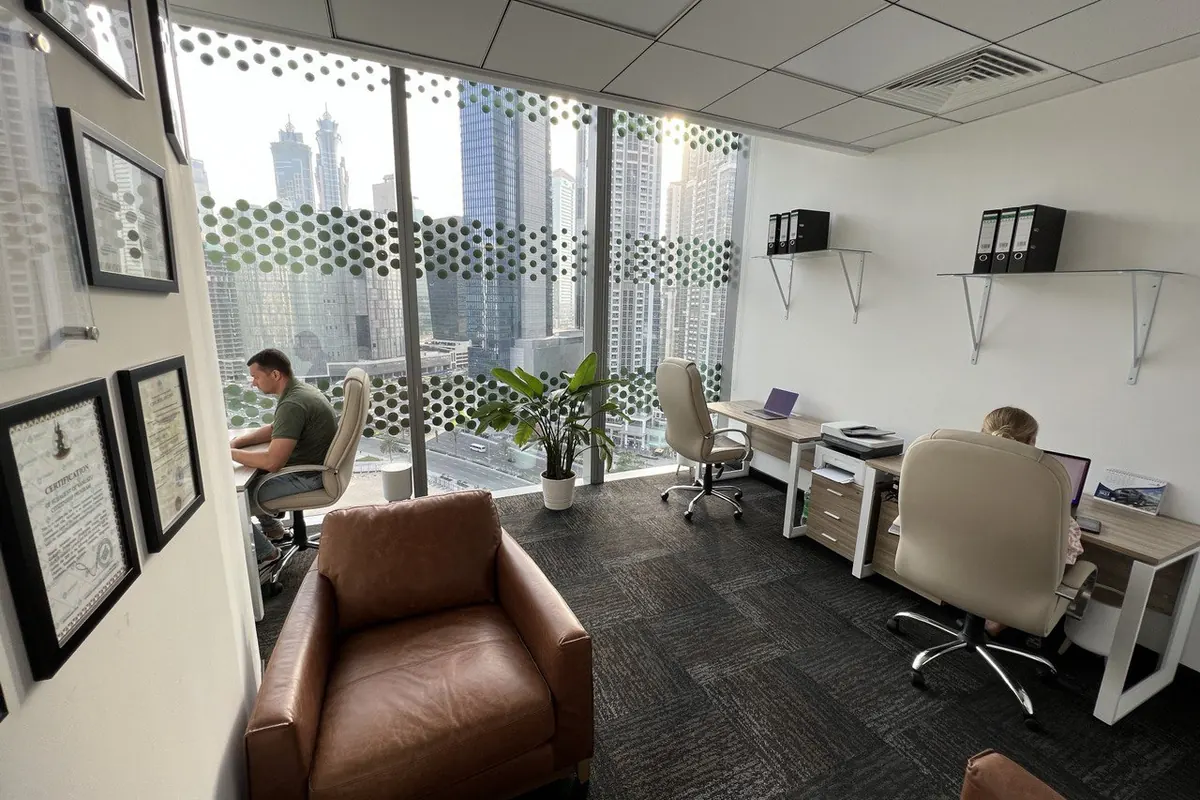
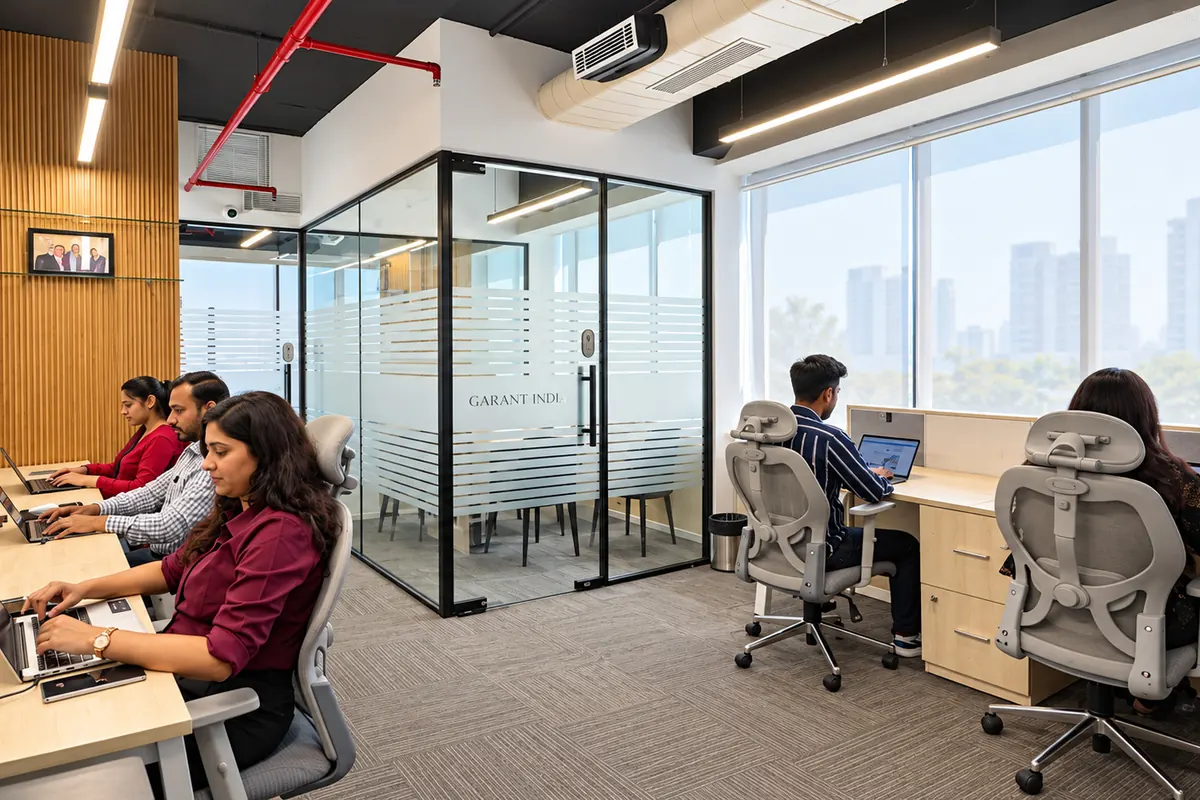
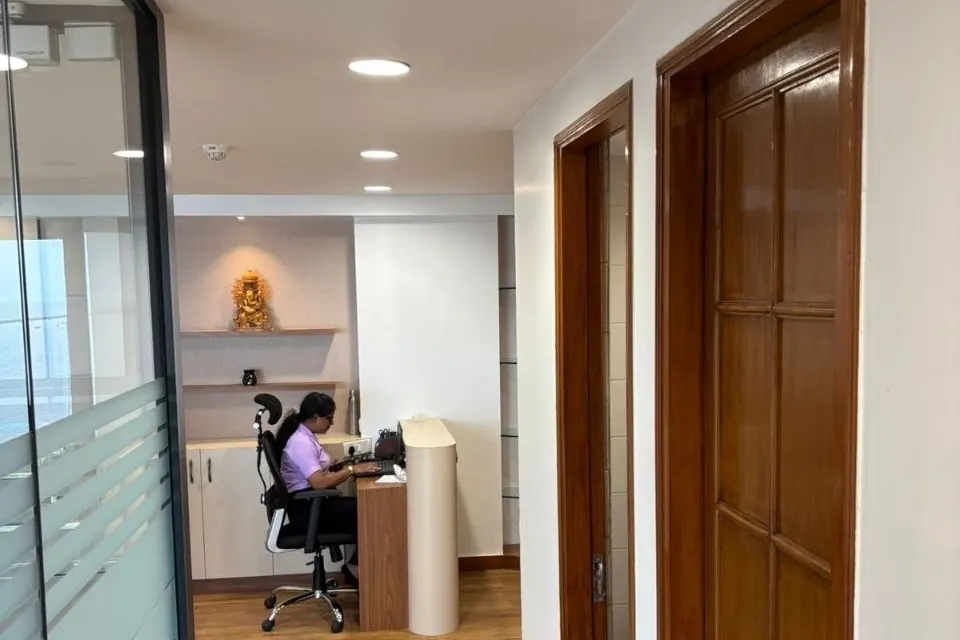
Owner, regional partners, the migration consulting and case management department and senior experts. These are the people you will speak to on the phone and meet in the office.

Founder & Managing Partner

Partner, Middle East & MENA Region

Managing Director, India & South Asia

Partner, Russia & CIS Region

Head of Migration Consulting & Case Management

Immigration & Compliance Specialist
No property to buy, no contribution to a fund, no company to set up. One requirement: proven means of living and insurance.
The logic of the status is simple: you live in France on income earned outside it. Tax residency is determined by Article 4 B of the Tax Code, not by the card's name; we calculate it separately.
The spouse files their own 'visiteur' application; children under 18 need only a visa and a travel document. After a few years in a French school the children speak the language fluently.
With a French residence card you enter other Schengen countries without a visa and spend up to 90 days there in any 180 days.
Years on the 'visiteur' card count towards the 5 years of residence for the 10-year resident card. Service-public expressly names the 'visiteur' card among those that count.
If you later open a business or take a job, you move to a 'talent' or 'salarié' card, and the residence period you have built up is kept.
Facts verified October 8, 2026
| Means of living | from EUR 17,735.19 a year EUR 1,477.93 a month net per applicant; SMIC rate from 1 June 2026 (order of 22 May 2026) |
|---|---|
| 'Visiteur' card, first issue | EUR 350 EUR 300 tax + EUR 50 stamp duty (Articles L436-1 and L436-7 CESEDA, rates from 1 May 2026) |
| Card renewal | EUR 250 EUR 200 tax + EUR 50 stamp duty, every year |
| Consular visa fee | per France-Visas tariff depends on the country of application; confirmed on the appointment date |
| Card application | 4 to 2 months before the visa expires online via ANEF, with a digital receipt |
| Decision on the card | no statutory term silence from the prefecture for 4 months means refusal; real timings depend on the prefecture |
We check the source and stability of income, savings, family composition and the country of application. We decide: 'visiteur' or another basis, for example 'talent' if someone in the family plans a business in France.
Statements and proof of income, insurance for the whole stay, proof of accommodation, the handwritten undertaking not to work, police clearances with apostille or legalisation, sworn translations.
At the French consulate in your country of lawful residence: India, the UAE or elsewhere. The spouse and parents file their own dossiers; children apply for a minor's visa.
The visa has no regulated term; in practice it depends on the workload of the specific consulate and requests for extra documents. We answer requests at once so the term does not stretch.
We validate the long-stay visa online, register the address, arrange the DCEM for the children and enrol them in school.
We file the application online with current proof of means, insurance and accommodation. The digital receipt keeps your stay lawful until the decision; silence for 4 months means refusal, so we file a complete dossier.
The card is renewed for a year while the conditions hold. After 5 years: the 10-year resident card with French at B1, a civic exam and stable means not below the SMIC.
The official conditions are above. Below is how the programme works in real life, from our cases.
The 'visiteur' permit is built on a simple logic: France admits people who live on income from outside, does not require them to work and does not make them tax residents automatically. In our practice it is one of the most underrated European routes for a family with stable income outside France.
The first three years or so: almost nil tax returns; from the fourth or fifth year: tax on worldwide income; then the ten-year card, for which a French language exam is needed. Permanent residence is discussed after five years, citizenship one or two years later. These are guidelines from practice, not statutory terms: the specific conditions of a case are checked on the filing date.
In our practice, from the Emirates it is enough to prove income for the last three months. For clients in India the application goes through the visa application centre, with an apostille on documents and sworn translations.
A separate argument is the children: after a French school they speak the language fluently, and that is a strong result for comparatively little money. But without actually living in France neither the tax plan nor the immigration plan will work; 'visiteur' is not for someone who wants to hold a card 'just in case'.

The French visitor permit (the 'visiteur' residence card) is built on a simple logic: the country invites you to live and spend, does not require you to work in France, and does not make you a tax resident automatically. In our practice it is one of the most underrated European routes for a family with stable income outside France.
The typical scenario we see: the first three years or so, almost nil tax returns; from the fourth or fifth year, tax on worldwide income; then a ten-year card becomes possible, for which you will need a French language exam. Permanent residence is discussed after five years, citizenship one or two years later. A practical nuance: it is often easier to arrange from the UAE; in our practice it is enough to prove three months of income from the Emirates.
A separate argument is the children: after a French school they speak the language fluently, and that is a strong result for comparatively little money. We see the visitor permit as a route for real life in France: without actually living there, neither the tax plan nor the immigration plan will work.
| Visiteur — financially independent | Talent – porteur de projet — business | |
|---|---|---|
| Work | Any activity in France is prohibited, including remote work | Commercial activity under the project; the spouse works without restriction |
| Threshold | from EUR 17,735.19 a year net per applicant | project funding from EUR 30,000 + means from EUR 22,404.20 a year |
| Qualification | not required | master's degree or 5 years' experience, opinion of the Ministry of the Economy |
| First card term | 1 year | up to 4 years |
| Family | separate 'visiteur' applications for adults; children under 18: visa and DCEM | 'talent (famille)' card at once, with the right to work |
| Card cost | EUR 350; renewal EUR 250 | EUR 350 |
| 10-year resident card | after 5 years | after 5 years |
Figures as of 2 October 2026 under CESEDA and service-public.gouv.fr; checked on the filing date.
Coverage and expert commentary by Garant IN in business media.

To France via Dubai: how to get a European residence permit without any problemsRead on Forbes →

No French, No civic test: France’s exam‑free Visiteur visa Indian HNIs are quietly using as a first step to EU residencyRead on The Economic Times →

Is Dubai’s Property Market Cracking? Middle East conflict hits sales, delays projects and softens pricesRead on Financial Express →

Global Lens I U.S. President Donald Trump's Golden Card Visa: How Can Indians Tap This Programme?Watch on CNBC-TV18 →

Golden visa schemes are response to conflicts, Trump’s decisions on U.S. citizenship: Dubai-based immigration expertRead on The Hindu →

Live in France: Earn Rs 2.7 lakh/month? This visa lets you stay for a yearRead on Business Standard →

Coverage in Moneycontrol: Amid US uncertainty, HNIs choose Caribbean, Gulf, EU residency programmesRead on Moneycontrol →

France, Italy or Grenada? Financial independence can get you settled there with freedom to roam world!Read on PTI →

Why India's wealthy are quietly buying second residencies abroadRead on India Today →
Who this programme suits in our practice.
Your company operates in India, the UAE or elsewhere and pays dividends, and you do not intend to manage it from France. You show stable income and undertake not to carry out any activity in France.
Income from rent, securities, deposits or the sale of a business. You prove the inflows with statements and contracts; savings also count if they cover a year of living.
One or both spouses do not work, the children go to a French school. Each adult files their own application; children under 18 do not need a residence permit.
A pension, rent or savings cover the threshold of EUR 1,477.93 a month. A year in France with no obligation to work, with the right to renew the status and build up residence time.
Our fee depends on the family composition and the country of application. We send the quote in reply to your message.
Main applicant
Fees of licensed local lawyers and authorised agents are charged separately at their rates
Request a quoteApplicant with spouse, children or parents
Fees of licensed local lawyers and authorised agents are charged separately at their rates
Request a quoteFor Garant IN the family is a core value: the 'visiteur' permit is arranged for your loved ones under the same rules of Article L426-20 CESEDA, in separate files and one plan. Below are the 2026 rules from the law and service-public documents, without generic phrases.
The 'visiteur' status has no separate 'family' card: the spouse files their own visa and card application on the same conditions, with means not below EUR 17,735.19 a year, insurance and an undertaking not to work. The family budget is shown in both files. If the spouse plans to work in France, they need another basis: 'talent', 'salarié' or their own business.
Children under 18 do not need a residence permit in France (Article L411-1 CESEDA): a long-stay visa for a minor is needed for entry, and a DCEM document (Article L414-4) for travel. School enrolment follows the address of residence. At 18 the child obtains their own basis: student or 'visiteur' with proven means.
Parents file separate 'visiteur' applications on the same conditions: means not below EUR 17,735.19 a year per person (pension, rent, a guarantee from their children), insurance, an undertaking not to work. There is no minimum age. Parents are not covered by family reunification, which is for the spouse and minor children only.
The law sets the threshold per applicant: EUR 1,477.93 a month net. There is no fixed supplement for children; the consulate assesses whether the means are sufficient for everyone living with you. A couple: two files at EUR 17,735.19 a year each; a couple with two children: the same two files plus proof of the children's expenses. Cards: EUR 350 for the first issue and EUR 250 for renewal per adult. An alternative after 18 months of residence is family reunification: means from EUR 1,867.02 a month for a family of 2 or 3, EUR 2,053.72 for 4 or 5, EUR 2,240.42 for 6 or more, plus housing-size rules.
The family files together with you or joins later; each adult has their own file, children get a visa and a DCEM. Garant IN's migration programme experts check every family member's documents in advance against 2026 requirements to rule out a refusal for an individual applicant. Verified on 2 October 2026 against CESEDA (Articles L426-20, L411-1, L414-4, L434-1 et seq.) and service-public.gouv.fr.
The conditions of Article L426-20 are the same for everyone. The difference is how a particular family's income is packaged so that the consulate sees stability, and the tax plan does not become a surprise in year three.
Dividends, rent, a pension and savings are proven differently. We build the evidence so that both the source and the regularity are visible: statements for the right period, contracts, tax returns, guarantees.
If you live in the UAE, India or another country, we file in your country of lawful residence. In our practice, from the UAE it is enough to prove income for the last three months. We know the requirements of specific consulates: freshness of certificates, apostille and legalisation, sworn translations.
The 'visiteur' status does not make you a tax resident automatically; residency follows the criteria of Article 4 B of the Tax Code. We work out when and under which criteria it arises, what happens to worldwide income and how the double-taxation agreements with India or the UAE apply.
We show how the 5 years of residence add up, which renewals are needed, when to start French towards B1 and what the civic exam requires. We plan the route from the first renewal, not six months before the application.
The spouse and parents file their own 'visiteur' applications, the children get visas and a DCEM. We prepare all files at once so the family obtains status in one go and renews it in step.
Wording pending approval.
‘Visiteur’ is the everyday name; in the law it is the temporary residence card marked ‘visiteur’ under Article L426-20 CESEDA. It is issued to people who prove they can live in France on their own means, hold health insurance and undertake not to carry out any professional activity in the country. The logic is simple: France invites you to live and spend without requiring you to work.
The programme suits three types of applicant. The first is a business owner or investor whose income arises outside France: dividends, rent, securities, including income from a company in India or the UAE. The second is a family moving for the school and the language for the children, where the adults do not plan to work in France. The third is a retiree or someone taking a break who lives on savings or rent.
It does not suit anyone who intends to work, whether employed, self-employed or remotely for a foreign company: Article L426-20 expressly prohibits any professional activity in France. For a business there is the ‘talent – porteur de projet’ card, which we compare below. Nor does it suit anyone who wants to hold a card ‘just in case’ without living in France: without actual residence neither the renewal nor the path to the resident card will work.
Filed 4 to 2 months before the card expires via ANEF. The conditions must hold: means not below the threshold on the renewal date, insurance, accommodation, no work in France. Renewal costs EUR 250.
After 5 years of continuous legal residence: the EU long-term resident card, with stable and regular means not below the SMIC (EUR 1,867.02 gross a month), French at B1 and a civic exam. A 10-year card, renewable.
Naturalisation by decree after 5 years of residence in France, with proof of French, a civic exam, stable income and an interview at the prefecture. France does not require renunciation of a previous citizenship; Indian law does not allow dual citizenship, so an Indian citizen would move to OCI status, and we discuss this openly.
If you decide to open a business or take a job, you move to a 'talent' or 'salarié' card before the current card expires. The residence period is not lost.
Short videos by Andrey Boyko: the latest from the Garant IN channel. The videos are in Russian.

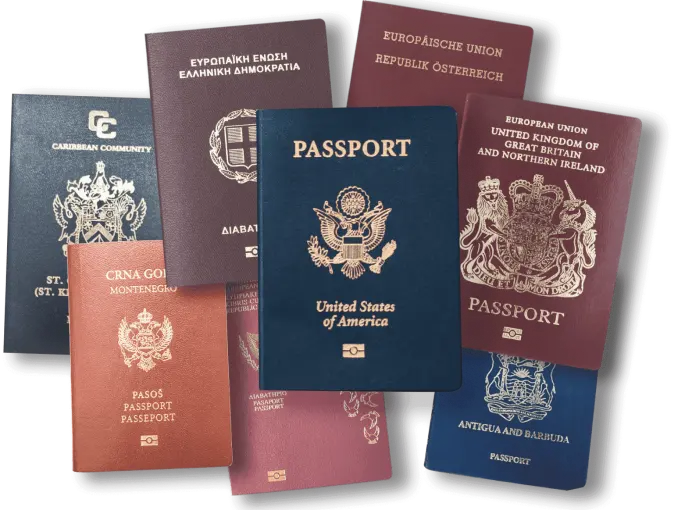
Covering Europe with a second passport: residence in Spain and France, Greece's golden visa
 4 offices
Moscow, Dubai, New Delhi and Mumbai. Visit an office and see who is working with you.

Garant IN is a member of the Investment Migration Council (IMC), the Geneva-based international association of the investment migration industry. investmentmigration.org →

Garant IN is a member of CCI France Russie, the French Chamber of Commerce and Industry in Russia. ccifr.ru →
International migration consultancy since 2015.
Two levels of quality control: Garant IN's migration consulting and case management department runs a rigorous pre-application compliance screening (Pre-Due Diligence) and prepares the document package to 2026 requirements, while the application in France is prepared and filed together with licensed local lawyers and authorised agents. This is how we minimise the risk of refusal at the preparation stage, before the documents reach the government authority.
It is the only status that requires neither work, nor a business, nor investment: only means, insurance and an undertaking not to work. The flip side: the card is issued for 1 year and renewed annually, there is no right to work and no family card. For a business there is the 'talent' card, for employment the 'salarié' card.
The annual net SMIC: EUR 17,735.19 a year, or EUR 1,477.93 a month per applicant at the rate from 1 June 2026. Pension, dividends, rent, rental income, savings in an account and guarantees from solvent persons count. Disability allowance and the social top-up do not. The threshold is tied to the SMIC and changes when it is revised, so we calculate it on the filing date.
No. Article L426-20 CESEDA requires an undertaking not to carry out any professional activity in France, and remote work performed from French territory is activity in France. If you plan to keep working, we check other bases; 'working quietly' on a 'visiteur' card is a bad idea that puts the renewal and the future resident card at risk.
The status itself does not. Tax domicile is determined by Article 4 B of the Tax Code: a household or main place of stay in France, main professional activity or centre of economic interests, subject to double-taxation agreements, including those with India and the UAE. If the family really lives in France, the criteria apply over time; in our practice the first years' returns are almost nil, and from the fourth or fifth year worldwide income is taxed. That is a guideline from practice, not a rule: we build the plan for your case before the move.
Buying is not required. For the visa it is enough to show where you will live: a lease, a property or a letter from a host. For the card at the prefecture you need proof of residence less than 6 months old.
A policy covering the whole period of stay in France; this is an express condition of Article L426-20. Short travel insurance is not enough. We arrange a policy to the requirements of the consulate and the prefecture; the question of joining the public system after the move is handled separately for each case.
The visa has no statutory term: it depends on the workload of the specific consulate and document requests. For the card in France the rule is: no answer from the prefecture within 4 months means refusal, which can be appealed within 2 months. The digital receipt keeps your stay lawful while the application is processed. We do not promise 'two weeks'.
We file 4 to 2 months before the card expires via ANEF with current proof of means, insurance and accommodation; renewal costs EUR 250. If income has dropped below the threshold, before filing you must either restore it (savings also count) or switch to another basis.
Yes. Service-public expressly names the 'visiteur' card among the statuses that count towards the 5 years of residence for the EU long-term resident card for 10 years: stable means not below the SMIC, French at B1, a civic exam. Naturalisation by decree is possible after 5 years of residence, with proof of language, a civic exam and stable income. France does not require renunciation of a previous citizenship; India does not allow dual citizenship.
You apply at the French consulate in your country of lawful residence. In our practice, from the UAE it is enough to prove income for the last three months. UAE documents are legalised through the UAE Ministry of Foreign Affairs, Indian documents with an apostille; everything is translated by a sworn translator.
Means are assessed in euros: statements from your Indian accounts for the relevant period are enough, with a translation where needed. A French bank account is not required for the visa. Transfers for living in France are planned under the Liberalised Remittance Scheme, and the double-taxation agreement between India and France is part of the tax plan.
With document preparation, the consulate appointment, the visa and arrival, a realistic path from the first meeting to the move takes several months and depends on the workload of the specific consulate. The 'visiteur' card is issued in France, before the visa expires. We do not promise 'within a month'.
There is no single 'family' application for 'visiteur', but parents and adult children can obtain the same status in separate files: each proves means of at least EUR 17,735.19 a year, insurance and an undertaking not to work. For parents a pension, rent and a guarantee from their children are suitable. Children under 18 do not need a residence permit, only a visa and a DCEM.
The threshold is set per applicant, EUR 1,477.93 a month net (EUR 17,735.19 a year), and each adult shows it in their own file. The law sets no fixed supplement for children: the consulate assesses whether the means are sufficient for the whole family. If the spouse comes later through family reunification (after 18 months of your residence), the threshold is calculated differently: from EUR 1,867.02 a month for a family of 2 or 3.
Yes. If the application is refused through the fault of our team or an error in building the case, we refund the company's service fee less a minimal retention for costs actually incurred. Refund terms, the payment schedule and the rules on retaining service costs are fixed in the contract before work begins. Before we start, we check your documents and risk history free of charge and tell you about any risks in advance.
Message us in the messenger you prefer and you will receive an estimate for your family and route. We never message first: you send the first message.
Our fee depends on the family composition and the country of application. We send the quote in reply to your message.
Programme updates and case breakdowns in our channels.
Figures and conditions on this page are checked against legislation and official pages. Last verified: .
Page updated: