No investment and no business
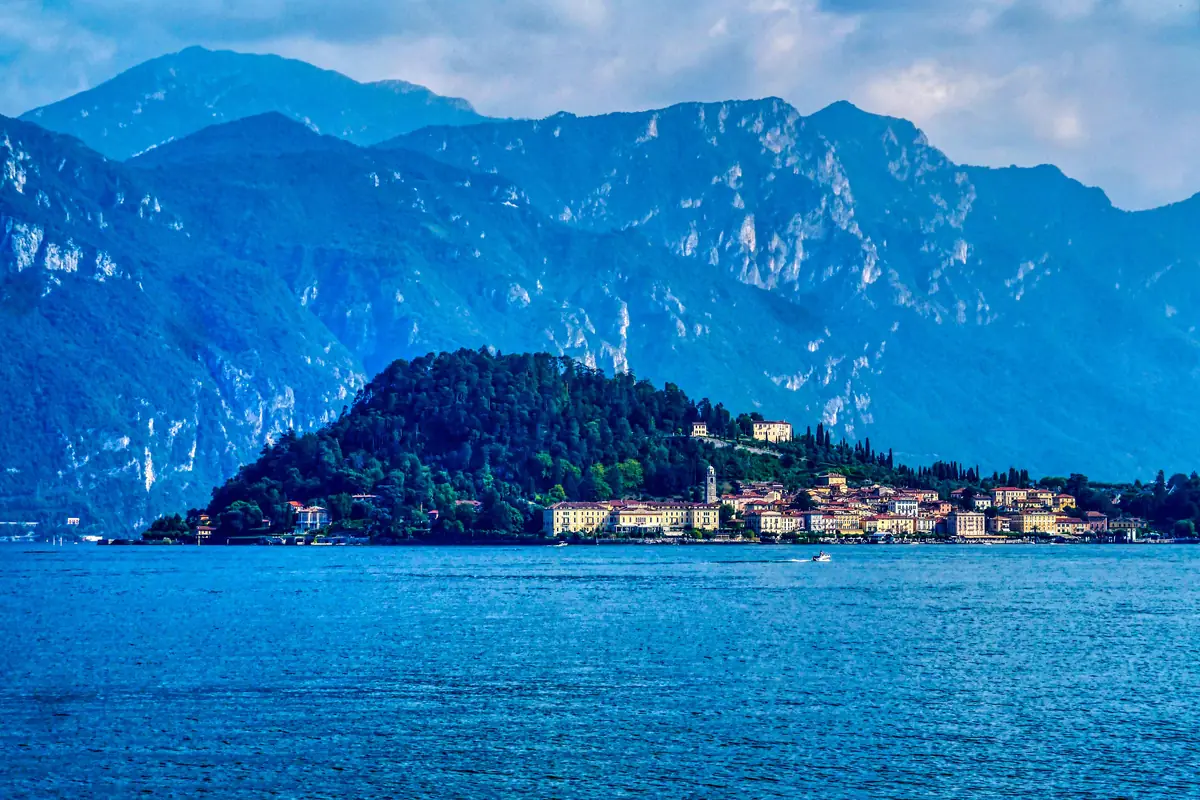
No bonds to buy, no fund contribution, no company to open. Two requirements: proven passive income and a home in Italy, owned or rented.
An Italian residence permit for those who live on passive income and do not work in the country: regular income from EUR 31,000 a year per applicant, a home in Italy owned or on a registered lease, a national D visa decided within 90 days. The permit is issued by the Questura and renewed while the income and the home remain; after 5 years, EU long-term residence; after 10 years, the right to citizenship. No investment and no business in Italy.
Facts verified October 12, 2026 against official sources · Sources
Facts verified October 12, 2026 against official sources · Sources
Owner, regional partners, the migration consulting and case management department and senior experts. These are the people you will speak to on the phone and meet in the office.

Founder & Managing Partner

Partner, Middle East & MENA Region

Managing Director, India & South Asia

Partner, Russia & CIS Region

Head of Migration Consulting & Case Management

Immigration & Compliance Specialist
No bonds to buy, no fund contribution, no company to open. Two requirements: proven passive income and a home in Italy, owned or rented.
The decree expressly allows the same visa for the cohabiting spouse, minor children and adult dependent children living with you, if the financial means are judged adequate for them too.
With an Italian residence permit you enter other Schengen countries without a visa and stay there for up to 90 days in any 180 days.
Years on a residenza elettiva permit count towards the 5 years for EU long-term residence and the 10 years for naturalisation, provided you actually live in Italy.
Those who move from 1 January 2026 may elect a flat tax of EUR 300,000 a year on all income from abroad (Art. 24-bis TUIR), plus EUR 50,000 for each family member included, for up to 15 years. Earlier movers keep the previous rates: EUR 200,000 or EUR 100,000, and EUR 25,000 per family member. We calculate whether it pays for you before the move.
Unlike some programmes, residenza elettiva has no nationality restrictions. The filing is at the Italian consulate for your place of legal residence: New Delhi or Mumbai for India, Dubai or Abu Dhabi for UAE residents.
Facts verified October 12, 2026
| Consular fee for the D visa | EUR 116 national visa tariff of the Italian Ministry of Foreign Affairs; paid at filing |
|---|---|
| Permit for up to 1 year | EUR 116.46 EUR 30.46 card + EUR 16 stamp duty + EUR 30 postage + EUR 40 contribution; for 1 to 2 years the contribution is EUR 50, total EUR 126.46 |
| Consulate decision on the visa | up to 90 days Art. 5(8) of D.P.R. 394/1999; the passport stays at the consulate until the decision |
| Permit request after entry | 8 working days Art. 5(2) TUI; the Questura issues the permit within 90 days of filing (para. 9) |
| Renewal of the permit | 90 days before expiry Art. 5(4) TUI in the 2026 wording; the renewal term may not exceed the initial one |
| Optional tax (Art. 24-bis TUIR) | EUR 300,000 a year flat tax on foreign income for those who move from 1 January 2026 (Law 199/2025); EUR 50,000 per family member; up to 15 years. Those who moved between 10.08.2024 and 31.12.2025 pay EUR 200,000 and EUR 25,000; before 10.08.2024 — EUR 100,000 and EUR 25,000 |
We check the source, nature and stability of income, the family composition and the country of filing. We decide: residenza elettiva or another ground, for instance the Investor Visa if someone in the family plans to work.
Purchase through a notary, or a lease registered with the Italian authorities. Without an executed deed the consulate will not accept the application.
Statements and proof of income for the year, documents on assets, declaration of intent to live in Italy, legalisation or apostille, translations into Italian, photo, copies of previous visas.
At the Italian consulate for your place of legal residence, through its outsourced centre where applicable, no earlier than 6 months and no later than 15 days before travel. Minors and both parents attend in person.
The consulate decides within 90 days (Art. 5 of D.P.R. 394/1999). A request for further documents lengthens the path; we respond at once. The D visa is issued for 91 to 365 days with multiple entries.
Within 8 working days of entry we file for the residence permit; the Questura issues the card within 90 days. In parallel: tax code, registration of residence and, where needed, the tax regime ruling request.
Renewal is requested 90 days before expiry while the income and the home remain. After 5 years, EU long-term residence; after 10 years, the right to citizenship.
The official conditions are set out above. Below is how the programme works in real life, from our cases.
Consulates examine the source and stability of income under a magnifying glass: not only the amount, but where it comes from and whether it will continue. We prepare the application with a margin on the amount and the quality of documents, not 'just at the threshold'.
Salary and active business revenue usually do not qualify: you need dividends, rent, a pension or other demonstrably passive income. The decree allows income from shares in a stable business, but the consulate checks that you do not work in that business.
Italy has strong tenant protection, and evicting a non-paying tenant through the courts can take years. Rental income is therefore unstable both in the consulate's eyes and in practice; we do not recommend building the whole application on it.
The regulation expressly provides for refusal of renewal if you were absent from Italy for more than 6 months at a stretch or more than half the permit term. We calculate the tax consequences of Italian residence before the move, not after.

The Italian residence permit for the financially independent (residenza elettiva) suits those who can live on passive income without working in Italy. In our experience it is one of the most demanding programmes: consulates examine the source and stability of income under a magnifying glass.
The key nuance is the nature of the income. Salary and active business revenue usually do not qualify: you need dividends, rent, a pension or other demonstrably passive income. A separate risk is building the application on income from letting property: Italy has strong tenant protection, and evicting a non-paying tenant through the courts can take years, so such income is unstable both in the consulate's eyes and in practice.
We prepare such applications with a margin on the amount and the quality of documents, and we calculate the tax consequences of Italian residence in advance.
| Residenza Elettiva — financially independent | Investor Visa — investors (Art. 26-bis) | |
|---|---|---|
| Money | Passive income from EUR 31,000 a year; no investment | Investment from EUR 250,000 to EUR 2,000,000, held for at least 2 years |
| Work | Any work activity prohibited | Allowed: business, directorships, employment |
| First term | Visa up to 365 days, then a renewable permit | Permit for 2 years, renewed for 3 years |
| Presence in Italy | You must live there: absence over 6 months means refusal of renewal | Continuous-presence requirement does not apply |
| Indian and UAE nationals | Eligible | Eligible |
| Decision | Consulate, up to 90 days | Committee, 30 days, then the consulate |
| Family | Spouse and dependent children in the same visa | Visa for family reasons, conditions of Art. 29 |
| Time towards EU residence and citizenship | Counts | Counts |
Conditions verified on 6 October 2026 against D.M. 850/2011, D.Lgs. 286/1998 and D.P.R. 394/1999; checked again on the date of filing.
Coverage and expert commentary by Garant IN in business media.

You can't leave, you can't stay: how to prepare for obtaining a residence permit and French citizenshipRead on Forbes →

Italy's golden visa: Investment routes, tax benefits and residency rules for Indian investorsRead on The Economic Times →

Italy Golden Visa Program: Investment options for foreign investors applying for a residence permitRead on Financial Express →

Global Lens I U.S. President Donald Trump's Golden Card Visa: How Can Indians Tap This Programme?Watch on CNBC-TV18 →

Golden visa schemes are response to conflicts, Trump’s decisions on U.S. citizenship: Dubai-based immigration expertRead on The Hindu →

Is Dubai still a safe haven for investors, HNIs despite US-Iran conflict?Read on Business Standard →

Coverage in Moneycontrol: Amid US uncertainty, HNIs choose Caribbean, Gulf, EU residency programmesRead on Moneycontrol →

France, Italy or Grenada? Financial independence can get you settled there with freedom to roam world!Read on PTI →

Why India's wealthy are quietly buying second residencies abroadRead on India Today →
Who this programme suits in our practice.
The company operates in India, the UAE or elsewhere and pays dividends, and you do not intend to run it from Italy. The decree allows income from shares in a stable business, but the consulate checks that you do not work in it: distributed profit, yes; a director's salary, no.
Coupons, interest, dividends on a portfolio, rental income from property abroad. You prove the inflows for the past year with statements, contracts and accounts; the consulate cross-checks them against each other.
The spouse and children are included in the same visa if the means suffice for each of them. The adults do not work in Italy, the children go to an Italian school, the family lives on income from outside.
A pension is named in the decree as a suitable source. You cover the threshold of EUR 31,000 a year with a pension and annuities, prove a home, and live in Italy with no obligation to work.
Our fee depends on the family composition and the country of filing. We send the quote in reply to your message.
Main applicant
Fees of licensed local lawyers and authorised agents are charged separately at their rates
Request a quoteApplicant with spouse, children or parents
Fees of licensed local lawyers and authorised agents are charged separately at their rates
Request a quoteFor Garant IN family is a core value: Decree 850/2011 expressly allows a residenza elettiva visa for the spouse and dependent children living with you, and their permits are issued by the Questura together with yours. Below are the 2026 rules, without generic phrases.
A cohabiting spouse receives the same visa if the financial means are judged adequate for him or her too (Annex A, point 13). Marriage certificate no more than 6 months old, legalised or apostilled and translated. Consulates calculate the spouse's threshold differently: some require the full EUR 31,000 a year for each adult applicant, including the spouse. The spouse may not work in Italy either.
Minor children, and adult children living with you and dependent on you, are included in the same visa. For children under 18 both parents sign the application in person at the consulate; the birth certificate shows the parents' names, legalised and translated. The decree sets no age ceiling of 'under 25'; the single criterion is cohabitation and dependence.
Parents are not in the decree's list, and family reunification under Art. 28 of the Consolidated Act is open to holders of permits for work, study, asylum, religious and family reasons; the residenza elettiva permit is not named there, so we do not promise parents this path. The working route is their own residenza elettiva application on their own income from EUR 31,000 a year: a pension and annuities qualify directly.
The decree has no fixed 'plus a percentage per family member' formula: the means must be judged adequate for the relatives too. Consular practice differs; we work to EUR 31,000 per adult and calculate a margin for the specific consulate. Fees per person: EUR 116 for the visa and EUR 116.46 for the first permit card. If the flat tax is elected, EUR 50,000 a year for each relative included for those who move from 1 January 2026 (previously EUR 25,000).
The family files with you at the same consulate; family members' permits are issued by the Questura together with yours and renewed in sync. Garant IN's migration programme experts check each family member's documents against the 2026 requirements in advance to rule out a refusal for an individual applicant. Data verified on 6 October 2026 against D.M. 850/2011, consular guidance on esteri.it and D.Lgs. 286/1998 (Arts. 28–30).
The decree's conditions are the same for everyone. The difference is how to package a specific family's income so the consulate sees stability rather than a sum, and so that tax residence does not come as a surprise.
The consulate reconciles statements, securities, shares and balance sheets against each other for the past year. Dividends, coupons, a pension and annuities are proven differently; we build the evidence so that the source, the regularity and the fact that you do not work are all visible.
Italy has strong tenant protection, and evicting a non-paying tenant through the courts can take years, so the consulate, and we, treat rental income as unstable. If it is your main source, we add others and prepare the application with a margin on the amount.
The consulate is the one for your place of legal residence: New Delhi, Mumbai, Dubai, Abu Dhabi or elsewhere. We know what each requires on housing, document age, legalisation and translation, and prepare the dossier for the specific consulate rather than 'in general'.
We calculate when Italian tax residence arises, what happens to worldwide income, whether the flat tax of EUR 300,000 a year (for those who move from 1 January 2026) pays, which requires a prior ruling request to the Agenzia delle Entrate and suits only large foreign income, and how transfers for the Italian lease or purchase are planned under India's Liberalised Remittance Scheme.
We show how the 5 and 10 years of residence add up, which absences are permitted (no more than 6 months at a stretch) and what each step requires: income not below the social allowance, an Italian test, level B1 for citizenship.
Wording pending approval.
Residenza elettiva, ‘elective residence’, is Italy’s national visa and residence permit for those who can support themselves and do not intend to work in the country. The basis is point 13 of Annex A to Interministerial Decree 850/2011: the foreigner shows a home in Italy and ‘ample, autonomous, stable and regular’ resources whose continuation can reasonably be assumed. Consulates translate this into a concrete figure, EUR 31,000 a year per applicant, and check the source of income for the past year.
The programme suits three types of applicant. The first is a business owner or investor whose income arises outside Italy: dividends, coupons, income from property in India, the Gulf or elsewhere. The second is a family moving to live in Italy and to put the children through an Italian school, where the adults do not plan to work. The third is a pensioner: a pension is named in the decree as a suitable source.
It does not suit those who intend to work, whether employed, self-employed or remotely for a foreign company: the visa is issued to someone who supports himself ‘without carrying out any work activity’. For investors who want the right to work there is the Investor Visa, which we compare below. Nor does it suit those who want to hold a card ‘just in case’ without living in Italy: an absence of more than 6 months at a stretch is a ground for refusing renewal, and without actual residence neither the tax plan nor the immigration plan will work.
Application to the Questura at least 90 days before the permit expires (Art. 5(4) TUI). Same conditions: income not below the threshold on the renewal date, the home, no work in Italy. The renewal term may not exceed the initial one. Absence of more than 6 months at a stretch or more than half the permit term is a ground for refusal (Art. 13(4) of D.P.R. 394/1999).
After 5 years of legal residence, open-ended EU long-term resident status (Art. 9 of D.Lgs. 286/1998): income not below the annual social allowance (EUR 7,101.12 in 2026 per INPS), suitable housing, an Italian language test.
Law 91/1992 (Art. 9) gives the right to naturalisation after 10 years of legal residence; Italian at level B1 is required (Art. 9.1). The procedure takes up to 24 months, extendable to 36 (Art. 9-ter).
If you decide to work or open a business, we switch to another type of permit at the Questura before the current one expires. The accumulated residence time is not lost.
 4 offices
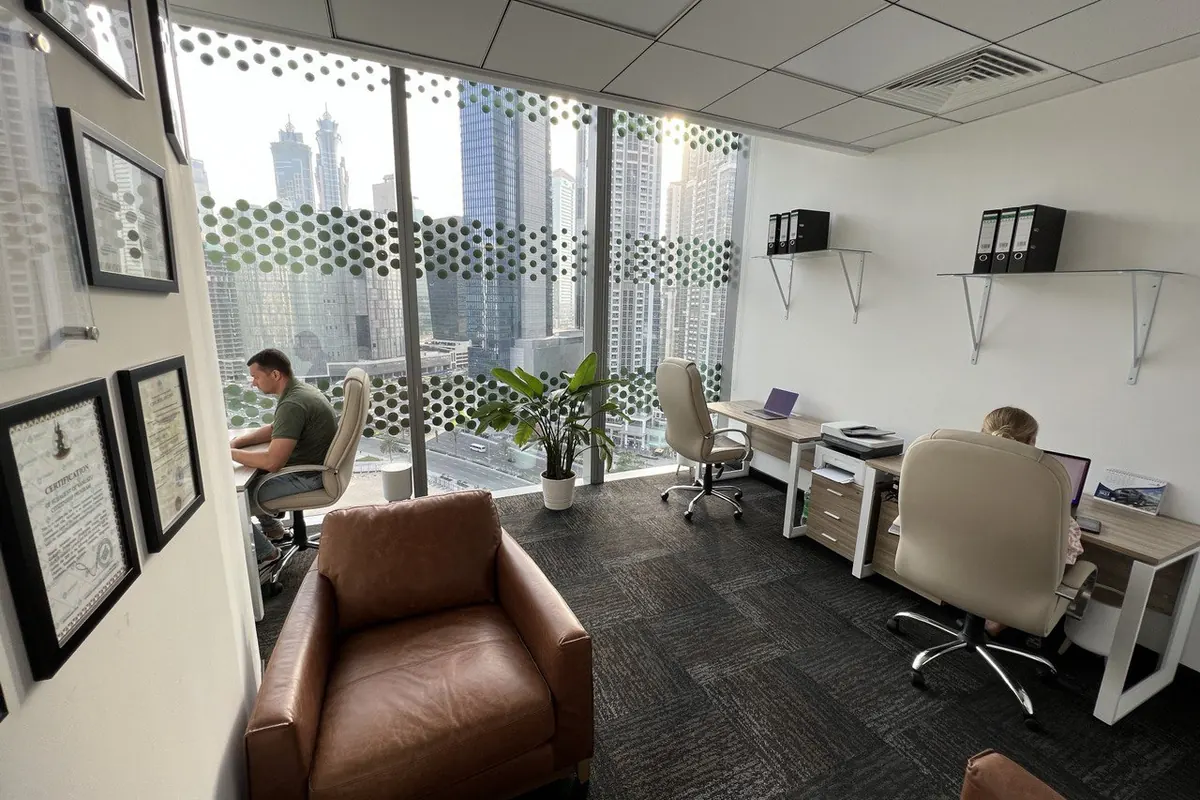
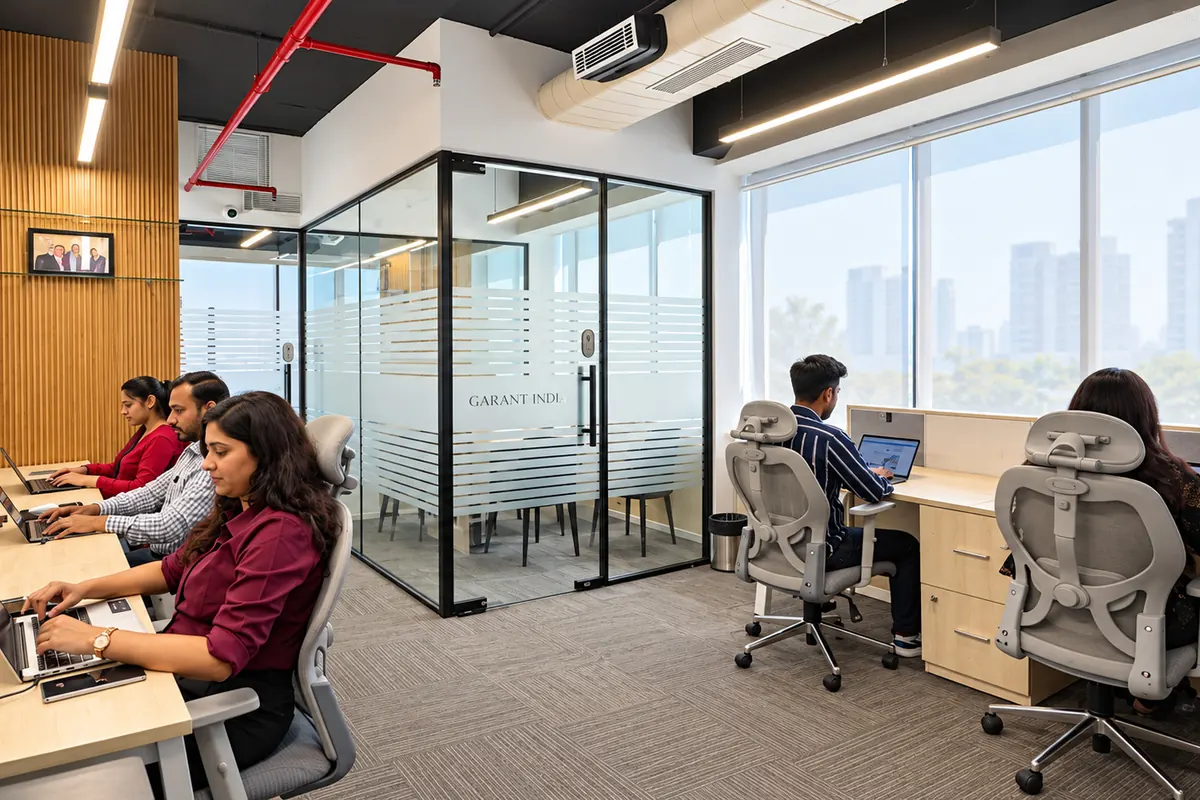
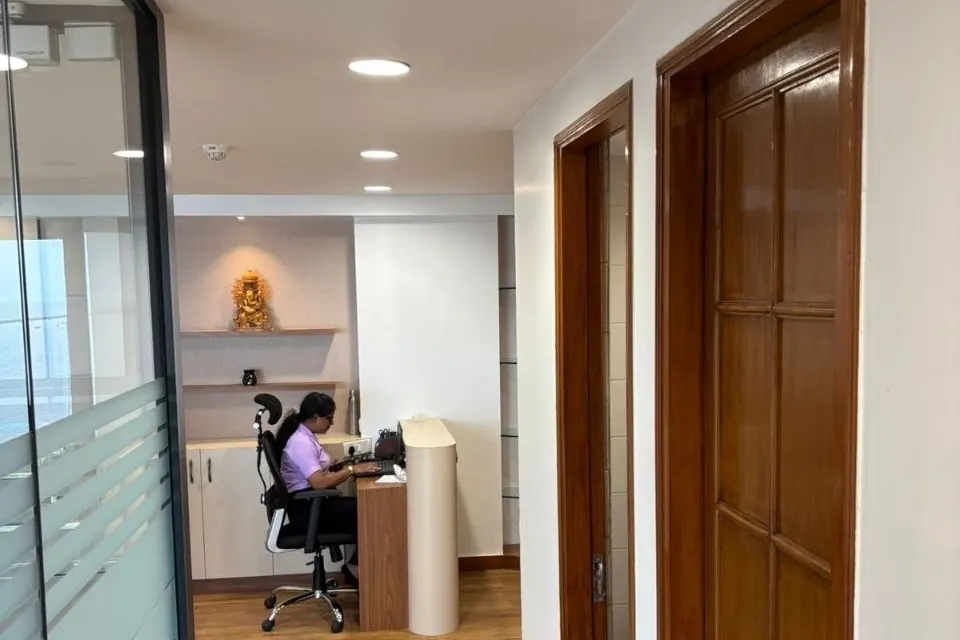
Moscow, Dubai, New Delhi and Mumbai. Visit an office and see who is working with you.

Garant IN is a member of the Investment Migration Council (IMC), the Geneva-based international association of the investment migration industry. investmentmigration.org →

Garant IN is a member of CCI France Russie, the French Chamber of Commerce and Industry in Russia. ccifr.ru →
International migration consultancy since 2015.
Two levels of quality control: Garant IN's migration consulting and case management department runs a rigorous pre-application compliance screening (Pre-Due Diligence) and prepares the document package to 2026 requirements, while the application in Italy is prepared and filed together with licensed local lawyers and authorised agents. This is how we minimise the risk of refusal at the preparation stage, before the documents reach the government authority.
It is the only route that requires neither work, nor business, nor investment: only passive income from EUR 31,000 a year, a home and the intention to live in Italy. The flip side: no work at all, and renewal depends on keeping the income, the home and genuine residence. Investors have the Investor Visa; business owners, the self-employment permit.
Decree 850/2011 requires resources of not less than three times the annual amount in Table A of the Ministry of Interior directive of 1 March 2000; consulates state EUR 31,000 a year, or EUR 2,583 a month per applicant. Counted: pensions and annuities, income from real estate, shares in a stable business, other sources other than employment. Not counted: salary. Documents for at least the past year, cross-checked across statements, securities and accounts.
No. The visa is issued to someone who supports himself 'without carrying out any work activity', and remote work from Italian territory is work in Italy. If you plan to keep working, we check other grounds; 'working quietly' on residenza elettiva puts renewal and future EU residence at risk.
Buying is not compulsory, but you must have a home by the time of filing: a notarial deed of purchase or a lease signed by both parties and registered with the Italian authorities. An intention to rent after approval is not accepted by the consulate.
If you live in Italy for most of the tax year you become a tax resident and declare worldwide income. New residents who were not Italian tax residents in 9 of the previous 10 years may elect the regime of Art. 24-bis TUIR: a flat tax of EUR 300,000 a year on all foreign income and EUR 50,000 for each family member included, for those who move from 1 January 2026 (2026 Budget Law 199/2025). Those who moved between 10 August 2024 and 31 December 2025 pay EUR 200,000 and EUR 25,000; before 10 August 2024, EUR 100,000 and EUR 25,000. The regime lasts up to 15 years and requires a ruling request to the Agenzia delle Entrate. With moderate income the ordinary scale may be cheaper; we calculate before the move.
By regulation the consulate decides within 90 days, and the passport stays at the consulate until the decision. After entry: 8 working days to request the permit and up to 90 days for the Questura to issue the card. With the home and the dossier to prepare, a realistic path from the first meeting to the move takes several months; we do not promise a month.
An application to the Questura at least 90 days before the permit expires, with current proof of income and housing; the renewal term may not exceed the initial one. If income has fallen below the threshold, before filing you must either restore it or switch to another ground. Absence from Italy of more than 6 months at a stretch is a separate ground for refusal.
Yes. After 5 years of legal residence, EU long-term residence (income not below the social allowance, housing, an Italian test). After 10 years, the right to citizenship with Italian at level B1; the procedure takes up to 24 months, extendable to 36.
At the Italian consulate for your place of legal residence: New Delhi or Mumbai for India, through the consulate's outsourced visa centre; Dubai or Abu Dhabi for UAE residents. Indian documents are apostilled and translated into Italian; UAE documents are legalised through the UAE Ministry of Foreign Affairs and the Italian consulate. The application is accepted no earlier than 6 months and no later than 15 days before travel.
Pension statements, rental agreements with bank credits, dividend statements and demat holdings, fixed deposit interest, audited accounts and tax returns for the past year. The consulate cross-checks them against each other, so the sources must reconcile. Transfers for the Italian lease or purchase from India are planned under the Liberalised Remittance Scheme, with the bank's remittance records kept for the file.
The decree allows income from real estate, but we advise against building the whole application on it: Italy has strong tenant protection, evicting a non-paying tenant through the courts can take years, and the consulate treats such income as unstable. Better to combine rent with a pension, dividends or coupons and show a margin on the amount.
Adult children, yes, if they live with you and depend on you: the decree expressly allows the same visa for them. Parents are not mentioned in the decree, and family reunification under Art. 28 of the Consolidated Act is tied to permits for work, study and family reasons, so for parents we propose their own residenza elettiva application on their own income from EUR 31,000 a year; a pension and annuities qualify directly.
The decree requires the means to cover family members too but sets no percentage. Consulates apply their own practice: some require EUR 31,000 a year for each adult applicant, including the spouse. We calculate the threshold for the specific consulate and prepare the application with a margin, not at the limit. Fees grow per person: EUR 116 for the visa and EUR 116.46 for the permit.
Yes. If the application is refused through the fault of our team or an error in building the case, we refund the company's service fee less a minimal retention for costs actually incurred. Refund terms, the payment schedule and the rules on retaining service costs are fixed in the contract before work begins. Before we start, we check your documents and risk history free of charge and tell you about any risks in advance.
Message us in the messenger you prefer and you will receive an estimate for your family and route. We never message first: you send the first message.
Our fee depends on the family composition and the country of filing. We send the quote in reply to your message.

Programme updates and case breakdowns in our channels.
Figures and conditions on this page are checked against legislation and official pages. Last verified: .
Page updated: