No compulsory investment
No property to buy and no contribution to the State. The conditions are housing, funds and good character; the money in the bank remains yours.
Monaco residence is not granted for an investment but on the facts of living in the Principality: a home in Monaco, proven funds, a clean record and, for non-EEA nationals including Indian passport holders, a French long-stay type D visa. The first card is valid for 1 year, then 3 and 10 years. Residents pay no income tax, with one exception for French nationals. This is residence, not citizenship: the Indian passport stays.
Facts verified October 8, 2026 against official sources · Sources
Facts verified October 8, 2026 against official sources · Sources
Owner, regional partners, the migration consulting and case management department and senior experts. These are the people you will speak to on the phone and meet in the office.

Founder & Managing Partner

Partner, Middle East & MENA Region
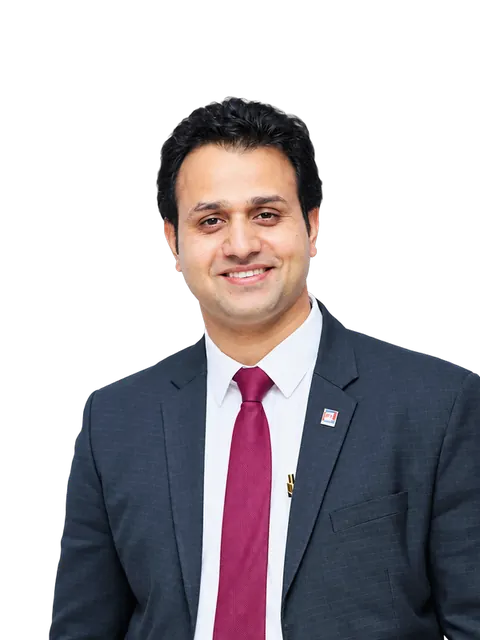
Managing Director, India & South Asia

Partner, Russia & CIS Region

Head of Migration Consulting & Case Management

Immigration & Compliance Specialist
No property to buy and no contribution to the State. The conditions are housing, funds and good character; the money in the bank remains yours.
Monaco residents pay no income tax, no annual property tax and no wealth tax. The only exception is French nationals.
After 10 years of residence the carte de séjour privilégié is issued for 10 years; after 3 years an ordinaire card for 3 years. The first card is for one year.
Spouse, children and parents qualify under the same conditions: housing sized for the family, a type D visa and a card for everyone over 16. Children under 16 receive a travel document.
Inheritance and gifts between spouses, parents and children on assets situated in Monaco are taxed at 0%; between siblings at 8%.
Naturalisation is possible after 10 years of residence in the Principality after the age of 18, at the discretion of the Prince. It is a long road, and we say so.
Facts verified October 8, 2026
| First temporaire card | EUR 80 renewal EUR 40 (Ministerial Order 2020-814) |
|---|---|
| Ordinaire card | EUR 100 renewal EUR 50; issued after 3 years of residence for 3 years |
| Privilégié card | EUR 160 renewal EUR 80; after 10 years of residence for 10 years |
| Funds placed with a Monaco bank | bank’s condition indicatively from EUR 500,000, at some banks up to EUR 1,000,000; not set by law |
| Residence certificate | EUR 5 stamp duty; the certificate is valid for 6 months |
| Certificate of tax domicile | EUR 12 issued by the tax department on proof of actual residence; valid for 3 years |
| Timeline | 2–5 months indicative, from our practice, including the type D visa; no statutory term |
We check nationality, source of funds, family composition and criminal record. We cost housing, bank, fees and relocation, and decide whether Monaco or a neighbouring jurisdiction fits.
We find a rental or purchase through agencies of the Chambre Immobilière Monégasque. We open an account with a Monaco bank, prepare proof of origin of funds (including LRS remittance records for Indian residents) and obtain the reference letter.
We file the long-stay visa application for settling in Monaco at the French Consulate in your country of residence, for you and your minor children. Timing depends on the consulate.
Online via the teleservice or in person at 9 rue Suffren-Reymond. Passport with visa, certificates, criminal record extracts, housing, bank, sworn statement.
The Residents Section checks the file, sends an appointment for a personal interview and issues the temporaire card for 1 year. The EUR 80 fee is paid on collection.
We renew the card by its expiry date: electricity bill, proof of funds, rent receipt. After 3 years the ordinaire card, after 10 years the privilégié card.
The official conditions are above. Below is how it works in real life, from our cases and research.
Monaco does not sell status for a contribution. The card goes to people who genuinely settle: rented or bought a home, opened an account, came to live. So we start with the cost of living, not with a ‘programme price’.
The EUR 500,000–1,000,000 figures come not from the law but from the internal rules of the banks that issue reference letters. Different banks have different expectations of the amount, the source of funds and the client profile. This is discussed before filing, not after a refusal.
The residence card and tax status are not the same thing. The certificate of tax domicile is issued by the tax department, which checks actual residence, and is valid for 3 years. A flat ‘for the record’ does not pass this test.
Under the 1963 convention French nationals who move to Monaco pay French income tax as if they lived in France. If there is a French passport in the family, we cost this in advance.
Coverage and expert commentary by Garant IN in business media.

You can't leave, you can't stay: how to prepare for obtaining a residence permit and French citizenshipRead on Forbes →

No French, No civic test: France’s exam‑free Visiteur visa Indian HNIs are quietly using as a first step to EU residencyRead on The Economic Times →

Is Dubai’s Property Market Cracking? Middle East conflict hits sales, delays projects and softens pricesRead on Financial Express →

Global Lens I U.S. President Donald Trump's Golden Card Visa: How Can Indians Tap This Programme?Watch on CNBC-TV18 →

Golden visa schemes are response to conflicts, Trump’s decisions on U.S. citizenship: Dubai-based immigration expertRead on The Hindu →

Is Dubai still a safe haven for investors, HNIs despite US-Iran conflict?Read on Business Standard →

Coverage in Moneycontrol: Amid US uncertainty, HNIs choose Caribbean, Gulf, EU residency programmesRead on Moneycontrol →

France, Italy or Grenada? Financial independence can get you settled there with freedom to roam world!Read on PTI →

Why India's wealthy are quietly buying second residencies abroadRead on India Today →
Who this programme suits in our practice.
You run your companies remotely and live on dividends. For the card it is enough to prove funds with a Monaco bank reference: you do not have to work in the Principality or set up a business there.
Income from capital, property and funds. Monaco has no income tax and no wealth tax, but the tax status only works with genuine residence, which the tax department checks.
Spouse, children and parents qualify under the same rules: housing sized for the family, a French type D visa for each person and a card of their own for everyone over 16.
Zero tax against the cost of living and housing in the Principality and the funds placed with a bank. For Indian families the remittance of those funds needs LRS planning. We cost the full price of holding the status, not the tax rate.
Our fee depends on the family composition and the bank file. We send the quote in reply to your message.
Main applicant
Fees of licensed local lawyers and authorised agents are charged separately at their rates
Request a quoteApplicant with spouse, children or parents
Fees of licensed local lawyers and authorised agents are charged separately at their rates
Request a quoteFor Garant IN family is a core value: the Monaco residence card is arranged for your relatives on the same conditions as for you. Below are the rules under Ordinance 3.153 and the official guidance of the Residents Section, without generic phrases.
The spouse files their own application with the marriage certificate; non-EEA nationals need their own French type D visa. Housing and funds can be proved by the main applicant: the official conditions expressly allow living with a spouse or partner and support from a spouse. An unmarried partner qualifies as the person you live with as a couple, with proof of the shared life.
Children under 16 are not issued a card: they are entered in your file (passport and birth certificate) and receive a travel document for foreign minors (document de circulation). The type D visa is needed for them too. From 16 a card of their own on the same conditions; adult children file separately, and a parent can prove housing and support.
There is no age or dependency test in the conditions: a parent files their own application, with housing proved by living with a close relative (certificate of accommodation) and funds by your undertaking of support (attestation de prise en charge) backed by your income. A criminal record extract and a type D visa for each parent.
There is no fixed amount per family member. Two things are checked: whether the funds are sufficient for everyone and whether the home matches the household. One bank letter, for the main applicant, can suffice. Fee: EUR 80 for the first card of each person over 16, renewal EUR 40. Family documents: apostille (MEA for Indian certificates) and translation, criminal record extracts for adults.
Filing is together with the main applicant or later. Garant IN's migration programme experts check each family member’s documents against the Residents Section’s requirements in advance to rule out a refusal for an individual applicant. Verified on 2 October 2026 against Ordinance 3.153 and the official MonServicePublic portal.
The conditions are the same for everyone. The difference is whether someone told you up front that there is no investment programme, and whether the bank file was built before you signed a lease and booked the consulate.
We do not sell ‘Monaco residence for EUR 500,000’. We show what the law requires, what a particular bank asks for and how the two differ. You know the budget before the first payment.
The Monaco bank reference is the key document in the file and the longest part of the road. We choose the bank for your profile and source of funds before the French type D visa application.
The Residents Section checks whether the home matches the household. We select a flat with future renewals in mind, not just the first card.
Monaco’s zero rate does not cancel the rules of the country you lived in before, and does not work for French nationals. We work out when and how your previous tax residence ends, including Indian residential status under the Income-tax Act.
The card is renewed every year, and residence and tax-domicile certificates are issued only on genuine residence. We plan life in Monaco so that renewal is never a problem.
Wording pending approval.
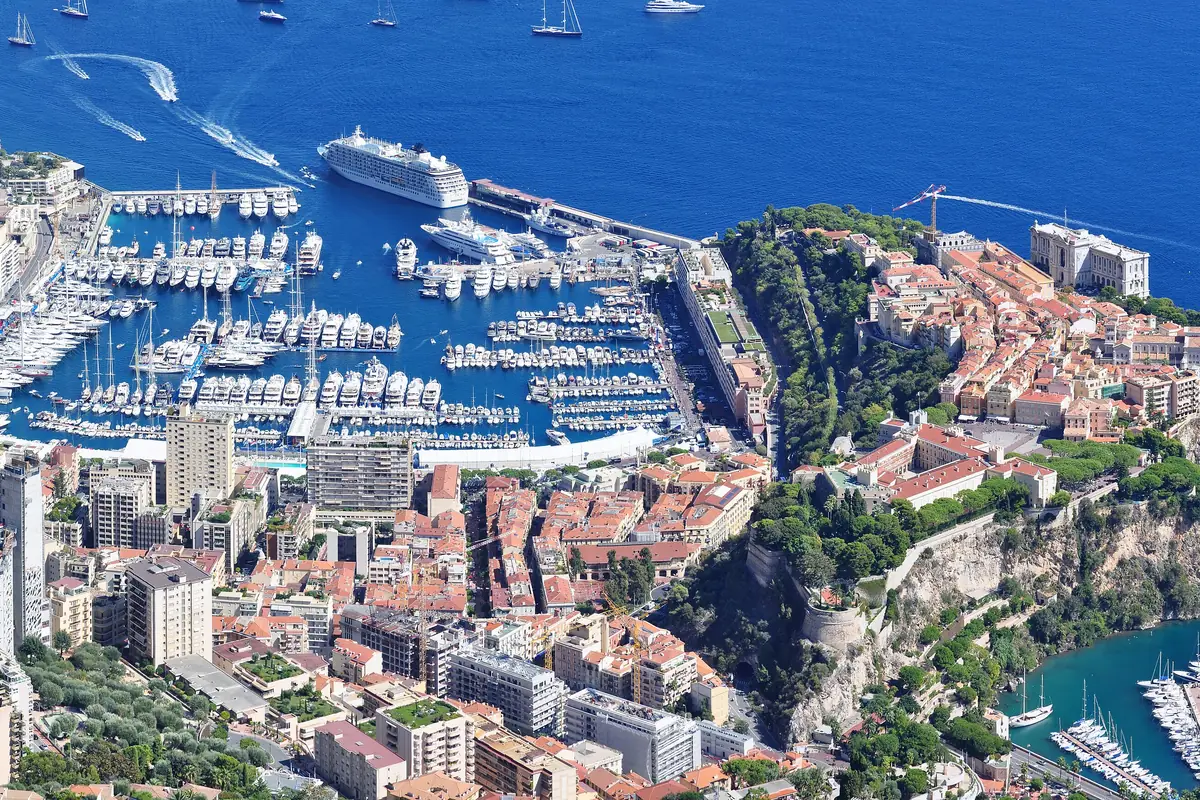
The Monaco residence card (carte de séjour) is the only basis for living in the Principality for more than three months a year. It is not bought: under Sovereign Ordinance 3.153 of 19 March 1964 the card is issued to a foreigner over 16 who has shown a home in Monaco, sufficient funds and a clean record. There is no ‘by investment’ programme with a threshold and a contribution to the State — that is the first thing to know before talking to any consultant.
It suits people who genuinely intend to live in Monaco: owners of businesses outside the Principality, rentiers and investors with proven capital, families choosing safety, schools and zero income tax. The money stays yours, on an account with the Monaco bank that issues the reference letter for the file. For Indian families this is a residence, not a second passport: the Indian citizenship stays, and the move is planned around LRS remittances and the French type D visa.
It does not suit those looking for a ‘card just in case’ without moving, French nationals, for whom the zero tax does not apply under the 1963 convention, or anyone counting on a passport: naturalisation in Monaco is a separate road of ten years or more, at the discretion of the Prince.
The temporaire card is renewed by its expiry date: passport, sworn statement, latest electricity bill, rent receipt, proof of funds. Fee EUR 40.
After more than 3 years of residence a card for 3 years is issued (first issue EUR 100, renewal EUR 50). Same conditions: housing, funds, genuine residence.
After 10 years of residence a card for 10 years (EUR 160, renewal EUR 80). In special circumstances the period may be shortened by decision of the authorities.
Law 1.155 on nationality: naturalisation is possible after 10 years of residence in the Principality after the age of 18, with renunciation of the previous nationality, by decision of the Prince. It is discretionary; timing and outcome are not guaranteed.
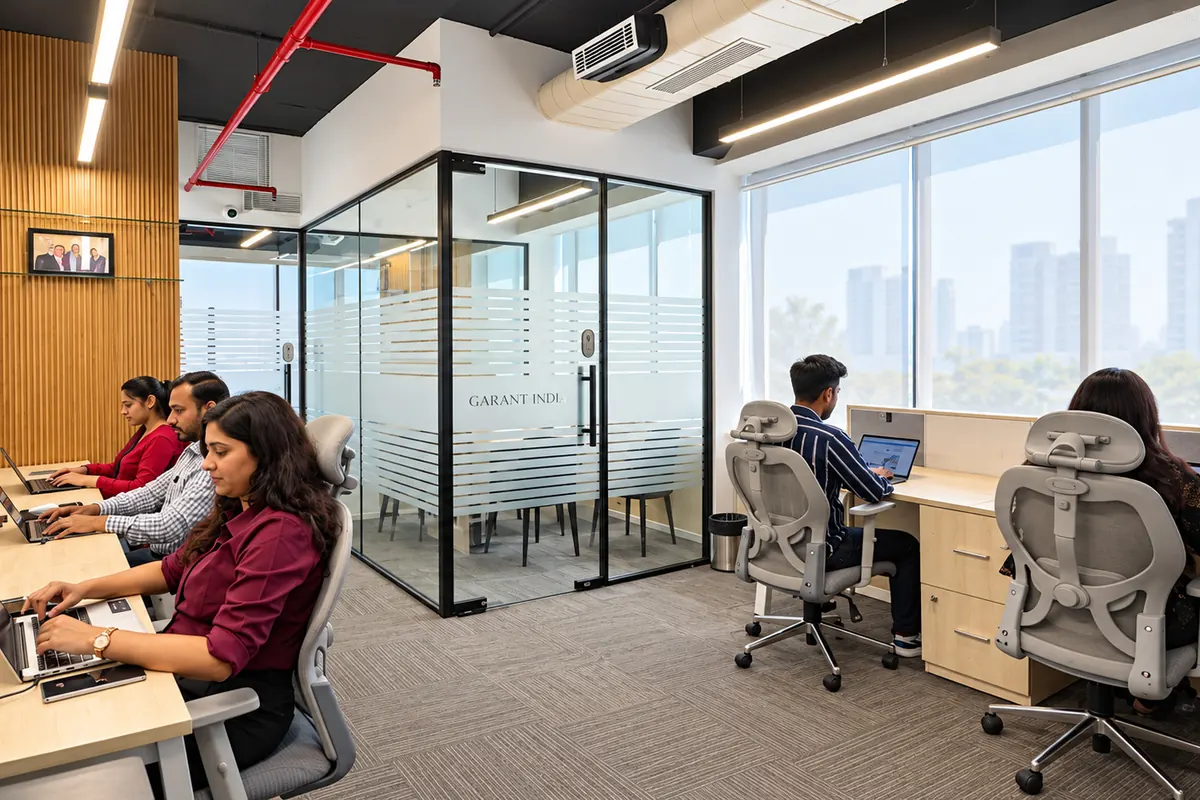
 4 offices
Moscow, Dubai, New Delhi and Mumbai. Visit an office and see who is working with you.

Garant IN is a member of the Investment Migration Council (IMC), the Geneva-based international association of the investment migration industry. investmentmigration.org →

Garant IN is a member of CCI France Russie, the French Chamber of Commerce and Industry in Russia. ccifr.ru →
International migration consultancy since 2015.
Two levels of quality control: Garant IN's migration consulting and case management department runs a rigorous pre-application compliance screening (Pre-Due Diligence) and prepares the document package to 2026 requirements, while the application in Monaco is prepared and filed together with licensed local lawyers and authorised agents. This is how we minimise the risk of refusal at the preparation stage, before the documents reach the government authority.
No. The law sets no investment threshold and no contribution to the State. The basis for the residence card is Sovereign Ordinance 3.153 of 19 March 1964: housing in the Principality, sufficient funds, a clean record and, for non-EEA nationals, a French type D visa. Offers of ‘Monaco residence for EUR 500,000’ describe not a programme but a bank’s requirement for funds placed.
The official conditions speak only of ‘sufficient savings’, and what is sufficient is decided by the bank issuing the reference letter. In practice Monaco banks ask for funds of indicatively EUR 500,000, at some banks up to EUR 1,000,000. That is the condition of a particular bank, not a threshold set by law; banks differ in what they expect of the amount, the source of funds and the client profile. For Indian residents the remittance must be planned under the Liberalised Remittance Scheme.
Non-EEA nationals, including Indian citizens, do: before any step in Monaco you need a long-stay type D visa for settling in Monaco, issued by the French Consulate in your country of residence (in India through the French consulates and their visa centres; UAE residents apply in the UAE), including for minor children. If you have lived in France lawfully for over a year, a transfer of residence is arranged through the French Embassy in Monaco. EEA nationals need only a passport.
Monaco sets no statutory term: the Residents Section checks the file, then schedules an interview and issues the card. In our practice the whole path with housing, bank and the type D visa takes roughly 2–5 months, and the longest parts are the bank and the consulate. This is a guide, not a promise.
The card is compulsory for anyone living in the Principality for more than 3 months a year and is renewed annually on electricity bills and proof of funds. The residence certificate is issued only for a principal residence in Monaco, and the certificate of tax domicile is issued by the tax department for 3 years after checking actual residence. Without real life there the status does not work.
Three main types under Article 5 of Ordinance 3.153: temporaire for 1 year, for new residents; ordinaire after more than 3 years of residence, for 3 years; privilégié after 10 years of residence, for 10 years. Fees: EUR 80 / 100 / 160 for first issue and EUR 40 / 50 / 80 for renewal.
No income tax, no wealth tax and no annual property tax for individuals. The exception is French nationals: under the 1963 convention they pay French income tax as if they lived in France. Inheritance and gift tax applies only to assets situated in Monaco: 0% in the direct line and between spouses, 8% between siblings, 10% for uncles and nephews, 13% for other relatives, 16% for unrelated persons. VAT follows French rates. Your Indian tax position depends on residential status under the Income-tax Act and must be planned separately.
The residence card is not in itself a work permit: employment and business activity in the Principality are authorised separately. For the card itself you do not have to work — proving funds is enough. If you plan a business in Monaco, we cost that route separately.
In theory yes, but it is a long and discretionary road: under Law 1.155 on nationality naturalisation is possible after 10 years of residence in the Principality after the age of 18, with renunciation of the previous nationality, and the decision rests with the Prince. We do not offer Monaco as a route to a passport — it is a status for living. India does not allow dual citizenship in any case.
Monaco is not an EU member and is not formally a party to the Schengen Agreement. Travel with a Monaco residence card depends on your nationality and on Monaco’s arrangements with France; we check this for your specific passport and do not promise ‘free Schengen’ in advance.
Monaco banks check the origin of funds to international standards, and for some nationalities the check is stricter and longer. We plan the account opening and the transfer before filing: the right bank for your profile, a document pack on the origin of capital, the remittance route (LRS for Indian residents, documented transfers for UAE residents). This is the main driver of timing for Monaco.
With a free audit: nationality, source of funds, family composition, criminal record. You then receive a budget (housing, bank, fees) and a step-by-step plan: bank, housing, type D visa, filing with the Residents Section.
Yes. Each adult files their own carte de séjour application, and the conditions are the same: housing (it can be with you, under a certificate of accommodation), funds (your undertaking of support backed by proof of income) and a criminal record extract. There is no age limit or dependency test in the published conditions. Non-EEA nationals need a French type D visa each.
The law sets no amount either for the applicant or for a family member. Two things grow: the bank’s expectations of the funds placed, if you are supporting several people, and the housing requirement, since the home must match the household. Fees: EUR 80 for the first card of each person over 16. Children under 16 receive no card and pay no fee.
Yes. If the application is refused through the fault of our team or an error in building the case, we refund the company's service fee less a minimal retention for costs actually incurred. Refund terms, the payment schedule and the rules on retaining service costs are fixed in the contract before work begins. Before we start, we check your documents and risk history free of charge and tell you about any risks in advance.
Message us in the messenger you prefer and you will receive an estimate for your family and route. We never message first: you send the first message.
Our fee depends on the family composition and the bank file. We send the quote in reply to your message.
Programme updates and case breakdowns in our channels.
Figures and conditions on this page are checked against legislation and official pages. Last verified: .
Page updated: