No investment
No property purchase, no fund, no business. The single requirement is a proven, stable income of at least EUR 920 a month for the applicant.
A Portuguese residence permit for people who live on a pension, dividends, interest, rent or royalties. No investment and no obligation to work: a 4-month visa, then a 2-year residence card renewed for 3 years, the whole family alongside you and visa-free Schengen travel.
Facts verified October 9, 2026 against official sources · Sources
Facts verified October 9, 2026 against official sources · Sources
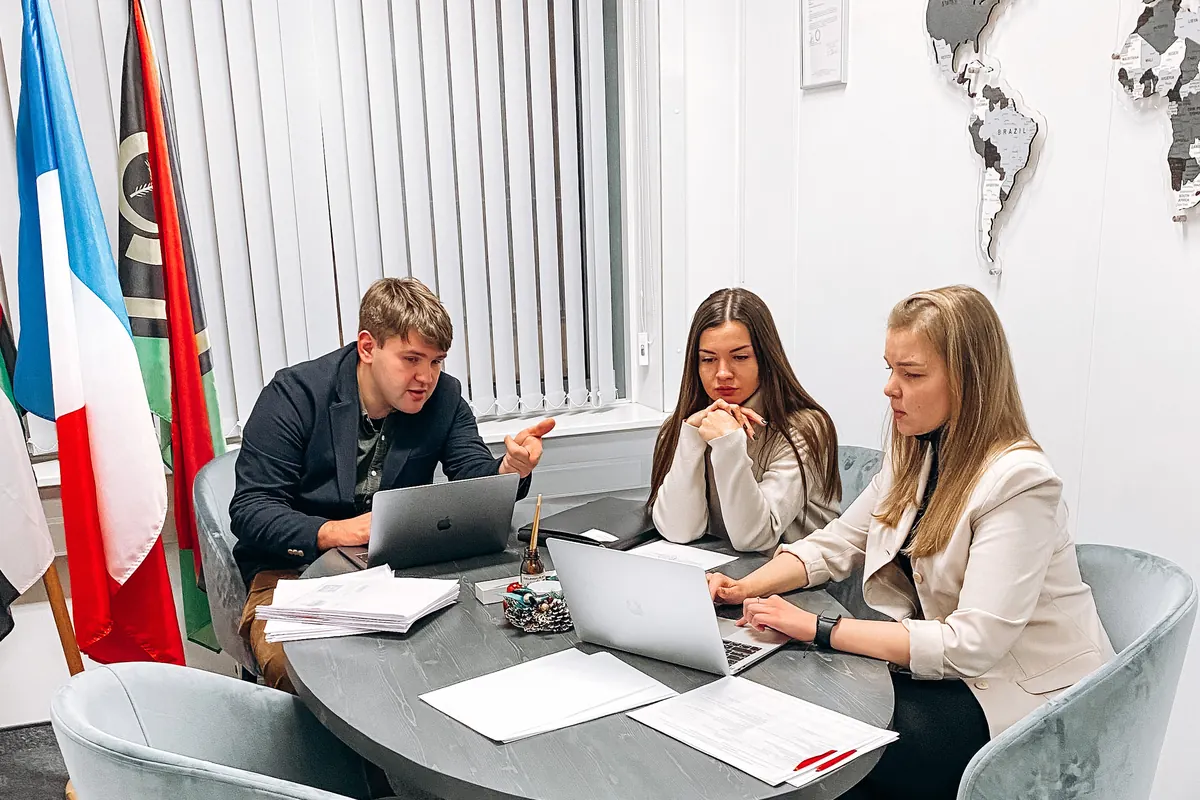
Owner, regional partners, the migration consulting and case management department and senior experts. These are the people you will speak to on the phone and meet in the office.

Founder & Managing Partner

Partner, Middle East & MENA Region

Managing Director, India & South Asia

Partner, Russia & CIS Region

Head of Migration Consulting & Case Management

Immigration & Compliance Specialist
No property purchase, no fund, no business. The single requirement is a proven, stable income of at least EUR 920 a month for the applicant.
By law a residence-permit holder may take employment or work independently without a separate authorisation (art. 83 of Lei 23/2007). What matters is that at renewal your passive income still covers the threshold.
Your spouse, children and dependent parents receive accompanying visas at the same time as you. The threshold grows moderately: +50% per adult and +30% per child.
With a Portuguese residence card you enter other Schengen countries and stay there up to 90 days in any 180.
The visa comes with a pre-authorisation carrying provisional tax, social-security and national health service (SNS) numbers. Children attend Portuguese schools on the same terms as residents.
Time on the card counts as legal residence: permanent residence after 5 years, the right to apply for citizenship after 10 years with language and culture knowledge.
Facts verified October 9, 2026
| Consular visa fee | EUR 110 per applicant; children up to 6 are exempt (Portuguese Ministry of Foreign Affairs) |
|---|---|
| Receipt and review of the permit application (AIMA) | EUR 133.00 AIMA fee table, update of 26.02.2026; the same fee applies to renewal and PR |
| Issue or renewal of the temporary permit | EUR 114.30 per person, family members included |
| Permanent residence | EUR 351.10 issue; the PR card is replaced every 5 years — EUR 61.90 |
| Extension of stay on the visa | EUR 106.10 up to 90 days if the permit has not been issued before the visa expires |
| AIMA decision on the permit | 90 days statutory; +30 days in exceptional cases; card renewal — 60 days |
| Consular decision on the visa | 60 days statutory (art. 58 of Lei 23/2007) |
We check the nature and size of your income, the family, the country of filing and your goals. We decide: D7, D8 for remote work, or the Golden Visa for status without relocation.
We obtain the tax number, open a Portuguese bank account, transfer funds within LRS limits and find housing with a lease. Timing depends on the bank — this is practice, not a statutory term.
Income and availability documents, apostilled police clearance, insurance, translations. Filed at the consulate or visa application centre for your place of legal residence.
The statutory term. The consulate may request further documents. With the visa comes a pre-authorisation with provisional NIF, social-security and SNS numbers.
You enter Portugal, file for the residence permit and give biometrics. AIMA's statutory term is 90 days. If the AIMA appointment falls after the visa expires, we arrange an extension of stay.
A 2-year card, then a 3-year renewal while income, housing and tax compliance are maintained. File the renewal no later than 30 days before the card expires. After 5 years — permanent residence.
The official conditions are set out above. Below is what we watch for in real files.
The D7 is only the entrance. Next come the AIMA appointment and the card, and research on Portugal shows multi-month waits and rent paid long before the process ends. We budget time and money with a margin.
If you keep working for a foreign company, the D7 is not your route even if the amount qualifies. Remote work has its own visa, the D8, with a different threshold. Swapping one for the other risks refusal and trouble at renewal.
The threshold is read as regular income, not a one-off sum. Savings help show that funds are available in Portugal, but the core of the file is a stable source: pension, dividends, rent.
A residence permit carries no tax relief by itself, and under the 2026 law citizenship takes 10 years — after which an Indian applicant would have to give up the Indian passport. We assess the D7 as a way to live in Portugal, not as a promise of a fast passport.

Citizenship needs its own horizon: the law of 18 May 2026 set a general term of ten years (seven for EU and Portuguese-speaking-country citizens), with transition rules for pending applications.
| D7 — passive income | D8 — remote work | Golden Visa (ARI) | |
|---|---|---|---|
| Basis | pension, dividends, rent, royalties | employment or freelancing for foreign clients | investment in a fund, culture, research or business |
| Threshold 2026 | from EUR 920 a month for the applicant | from EUR 3,680 a month (4 minimum wages) | from EUR 250,000 or EUR 500,000 |
| Stay | live in the country; no more than 6 consecutive months away | live in the country | 7 days in the first year, then 14 days per 2 years |
| AIMA fees per person | EUR 133 + EUR 114.30 | per the general AIMA table | EUR 842.80 + EUR 8,418.90 |
| First permit term | 2 years, then 3 years | 2 years, then 3 years | 2 years, then 2-year renewals |
| PR and citizenship | 5 years / 10 years | 5 years / 10 years | 5 years / 10 years |
D8 threshold — 4 minimum wages (Portuguese Ministry of Foreign Affairs, EUR 920 × 4); Golden Visa fees — AIMA table of 26.02.2026. Checked on 9 October 2026, re-checked at the date of filing.
Coverage and expert commentary by Garant IN in business media.

You can't leave, you can't stay: how to prepare for obtaining a residence permit and French citizenshipRead on Forbes →

Portugal doubles citizenship timeline: Lisbon citizenship moat turns HNIs to friendlier climesRead on The Economic Times →

Is Dubai’s Property Market Cracking? Middle East conflict hits sales, delays projects and softens pricesRead on Financial Express →

Global Lens I U.S. President Donald Trump's Golden Card Visa: How Can Indians Tap This Programme?Watch on CNBC-TV18 →

Golden visa schemes are response to conflicts, Trump’s decisions on U.S. citizenship: Dubai-based immigration expertRead on The Hindu →

Is Dubai still a safe haven for investors, HNIs despite US-Iran conflict?Read on Business Standard →

Coverage in Moneycontrol: Amid US uncertainty, HNIs choose Caribbean, Gulf, EU residency programmesRead on Moneycontrol →

France, Italy or Grenada? Financial independence can get you settled there with freedom to roam world!Read on PTI →

Why India's wealthy are quietly buying second residencies abroadRead on India Today →
A visa for people who do not need to earn in Portugal: the income already exists and arrives steadily.
A state, employer or private pension of at least EUR 920 a month. You need a statement of the pension amount from the paying body and proof that the money will be available in Portugal.
Dividends, interest on deposits and bonds, income from mutual funds. Proven by a document from the bank or asset manager, not just by a balance on an account.
Steady rent from a flat or commercial property, in India, the UAE or elsewhere. You need lease agreements and the rent credited to your account over recent months.
Royalties from books, music, patents or software. The rules name income from intellectual property as a basis for the D7 in so many words.
Our fee depends on the family composition and the country of filing. We send the quote in reply to your message.
Main applicant
Fees of licensed local lawyers and authorised agents are charged separately at their rates
Request a quoteApplicant with spouse, children or parents
Fees of licensed local lawyers and authorised agents are charged separately at their rates
Request a quoteFor Garant IN, family is a core value: with the D7 your family travels with you on accompanying visas (art. 58 of Lei 23/2007) or joins later through reunification (arts. 98–100). Below are the 2026 conditions under the law and the Portuguese consular service, without boilerplate.
A marriage or de facto union that is valid and recognised under Portuguese law; both partners at least 18 on the date of application (Lei 61/2025). The spouse needs no separate income: the main applicant meets the threshold, and the second adult adds 50% (EUR 460 a month).
Minor children of the couple or of either spouse, including children adopted under a decision recognised by Portugal; for a child of one spouse, the other parent's consent. Adult children only if unmarried, dependent and studying in Portugal. Each child adds 30% (EUR 276 a month).
Parents of the applicant or the spouse, if supported by them; there is no minimum age. Dependency must be shown: transfers, shared household, no income of their own. For the threshold each parent counts as an adult, +50% (EUR 460 a month). Siblings only if minors under the applicant's guardianship.
EUR 920 a month for the applicant + EUR 460 for each further adult + EUR 276 for each child. A couple — EUR 1,380 a month (EUR 16,560 for 12 months), a couple with a child — EUR 1,656, a couple with two children — EUR 1,932 a month (EUR 23,184 a year). Fees per person: EUR 110 for the visa (children up to 6 exempt), EUR 133 for the application and EUR 114.30 for the AIMA card.
Accompanying visas are filed at the same time as yours. If the family follows later, Lei 61/2025 requires you to have held the permit for 2 years before reunification (15 months for a spouse who lived with you for 18 months before the move); the wait does not apply to minor children or to a spouse who is the other parent of those children. Garant IN's migration programme experts check every family member's documents against 2026 requirements in advance. Data checked on 9 October 2026 against Lei 23/2007 and the Portuguese consular service.
The D7 threshold is low and the same for everyone. Refusals come not from the amount but from how the income is proven and what the consulate sees in the file.
Pension, dividends, interest, rent and royalties are proven with different documents. Salary and active business revenue do not qualify for the D7: if you keep working remotely, the D8 is the honest and safer route. We separate these cases before filing.
The consulate checks not just the amount but that the money is reachable in Portugal. We obtain the NIF and the Portuguese account early and plan the transfer within the Liberalised Remittance Scheme, so the file reads unambiguously.
We file at the competent Portuguese mission for your place of legal residence — the Embassy in New Delhi for residents of India, the mission in the UAE for UAE residents — and handle MEA apostille or UAE legalisation and Portuguese translations.
Accompanying-family visas are filed alongside yours, which avoids the 2-year wait that Lei 61/2025 introduced for later reunification. The threshold for every family member is in the budget from the start.
We track permitted absences, renewal deadlines (30 days before the card expires) and the language requirement for PR. No promise of a fast passport: under the 2026 law it is 10 years, and it would mean giving up Indian citizenship.
Wording pending approval.
‘D7’ is the everyday name. Officially it is the residence visa for retirees, religious ministers and people living on their own income (article 58 of the Portuguese Aliens Act, Lei 23/2007). It lets you enter Portugal and obtain the residence permit from AIMA on arrival. No investment is required: the basis is a stable income that arrives whether or not you work in Portugal.
The programme suits three types of applicant. First, retirees with a state, employer or private pension. Second, people living on capital: dividends, interest, fund income or rent from property in India, the UAE or elsewhere. Third, authors and rights holders with royalties. In every case the income must be at least the Portuguese minimum wage — EUR 920 a month for the applicant in 2026 — shown for a year ahead.
It does not suit those who keep working remotely for a foreign employer or clients: that is what the D8 is for. Nor those who want a European status without moving: the D7 assumes life in Portugal, while a reserve status with 7 days a year in the country is the Golden Visa.
Filed no later than 30 days before the card expires. Conditions: means under Portaria 1563/2007, housing, taxes and contributions paid, no conviction over one year. Statutory decision term — 60 days.
After 5 years of temporary residence — an application for permanent residence: means, housing and basic Portuguese. The status has no expiry; the card is replaced every 5 years.
Law of 18 May 2026: 10 years of legal residence (7 for EU and Portuguese-speaking-country citizens), a language and culture test, transition rules for pending applications. India does not permit dual citizenship, so naturalisation means surrendering the Indian passport.
If life changes — you take a job in Portugal or open a business — we move you to another residence basis. The years of residence already accrued are kept.
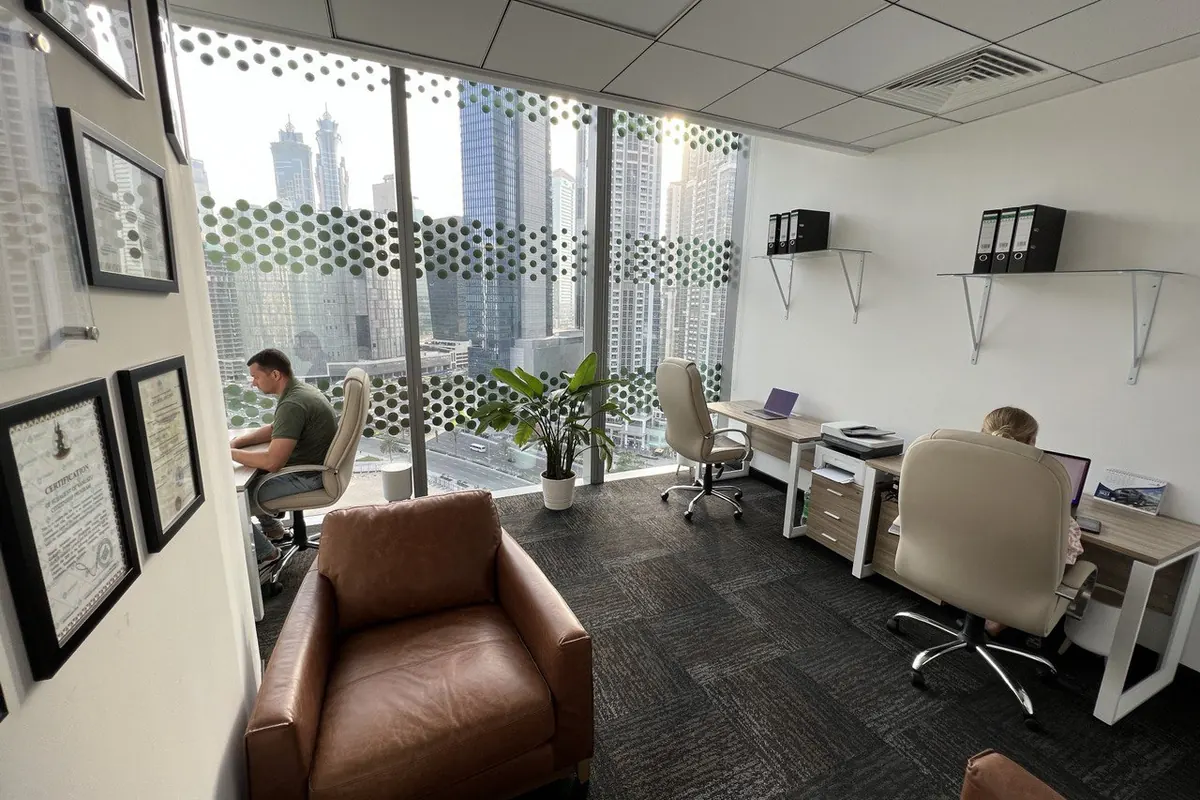
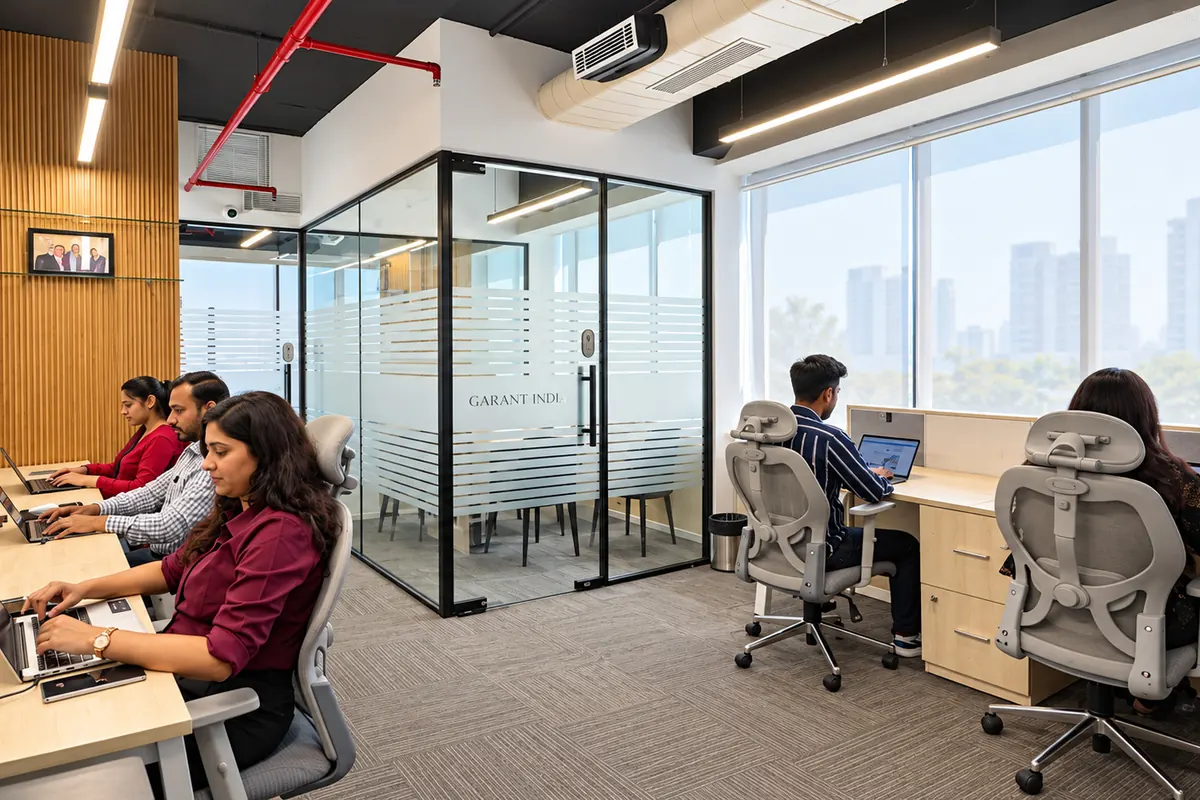
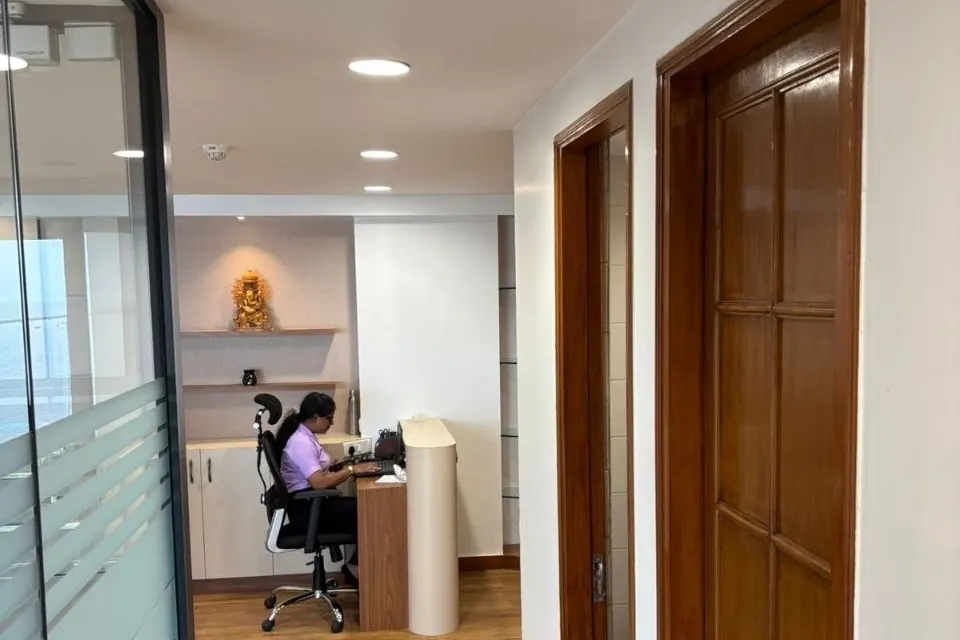
 4 offices
Moscow, Dubai, New Delhi and Mumbai. Visit an office and see who is working with you.

Garant IN is a member of the Investment Migration Council (IMC), the Geneva-based international association of the investment migration industry. investmentmigration.org →

Garant IN is a member of CCI France Russie, the French Chamber of Commerce and Industry in Russia. ccifr.ru →
International migration consultancy since 2015.
Two levels of quality control: Garant IN's migration consulting and case management department runs a rigorous pre-application compliance screening (Pre-Due Diligence) and prepares the document package to 2026 requirements, while the application in Portugal is prepared and filed together with licensed local lawyers and authorised agents. This is how we minimise the risk of refusal at the preparation stage, before the documents reach the government authority.
The D7 is a consular residence visa for retirees and people living on their own income. It is valid for 4 months with two entries: in that time you travel to Portugal and apply to AIMA for the residence permit. The permit is issued for 2 years and renewed for 3 years. Without the D7 visa this permit cannot be obtained through the standard route.
100% of the Portuguese minimum wage: in 2026 that is EUR 920 a month (Decree-Law 139/2025). For a residence visa the means are shown for at least 12 months, i.e. EUR 11,040 for the applicant. A second adult adds 50%, a child 30%. We recommend filing with headroom: the consulate looks at stability and regularity, not only the amount.
A pension, dividends, interest on deposits and bonds, mutual-fund income, rent, royalties from intellectual property. Salary and active business revenue do not qualify for the D7 — remote work has the D8 visa, with a threshold of 4 minimum wages (EUR 3,680 a month).
The rule speaks of income from property and financial investments and its availability in Portugal. Savings on an account help show that 12 months of means are in the country, but consulates look at the source and regularity. A file built only on a balance without income carries a higher refusal risk, so we assess such cases individually.
Yes, the D7 is a relocation visa. The temporary permit can be cancelled if, without good reason, you are away for more than 6 consecutive months or 8 months in total during the card's validity. For permanent residence the limit is 24 consecutive months or 30 months within 3 years. If you need status without relocating, look at the Golden Visa.
Yes. Article 83 of Lei 23/2007 gives a permit holder the right to take employment and work independently without a separate authorisation. But renewal requires proof of means again, so it is wise to keep the main passive income in place.
A pension statement from the paying body, dividend and interest statements from the bank or depository, lease agreements with rent credited to your account, royalty statements — plus income-tax returns as supporting evidence. The money then has to be available in Portugal: we open the Portuguese account and plan the transfer within the Liberalised Remittance Scheme limits.
The consular fee for a national visa is EUR 110. At AIMA, under the fee table (update of 26.02.2026): EUR 133.00 for receipt and review of the application and EUR 114.30 for the issue or renewal of the temporary permit; permanent residence costs EUR 351.10. Each family member pays; children up to 6 are exempt from the visa fee.
By law the consulate decides on the visa in 60 days and AIMA on the permit in 90 days, extendable by 30 days; renewals in 60 days. In practice the AIMA appointment and card issue take longer than the statutory terms — this is not a statutory term, and we will not promise 'one month'. If the visa runs out before the permit is issued, we arrange an extension of stay.
At the Portuguese mission or visa application centre for your place of legal residence: the Embassy of Portugal in New Delhi for residents of India, the mission in the UAE for UAE residents. You need proof of legal residence valid beyond the requested visa. Police clearance comes from your country of nationality or the country where you have lived for more than a year — MEA-apostilled for India, legalised through the UAE Ministry of Foreign Affairs for the UAE.
If Portugal becomes your place of habitual residence, you generally become its tax resident and declare worldwide income. The residence permit carries no preferential regime by itself: the IFICI regime is granted on its own conditions, not by type of permit. We run the tax calculation before the move, taking the India–Portugal double tax treaty into account.
Permanent residence — after 5 years of temporary residence with means, housing and basic Portuguese; the status has no expiry, the card is replaced every 5 years. Citizenship — under the law of 18 May 2026, after 10 years of legal residence (7 for EU and Portuguese-speaking-country citizens), with a language and culture test. India does not permit dual citizenship, so a Portuguese passport would replace the Indian one.
Yes. Lei 23/2007 counts as family the spouse, minor children, dependent adult children who are unmarried and studying in Portugal, and dependent parents of the applicant or the spouse. They can file at the same time as you on accompanying visas — then there is no 2-year wait. Filing later through reunification, adult family members face a 2-year wait (Lei 61/2025).
On top of EUR 920 a month for the applicant you add 50% of the minimum wage (EUR 460) for each further adult and 30% (EUR 276) for each child. A couple — EUR 1,380 a month, a couple with two children — EUR 1,932 a month, or EUR 23,184 for 12 months. The main applicant proves the income.
Yes. If the application is refused through the fault of our team or an error in building the case, we refund the company's service fee less a minimal retention for costs actually incurred. Refund terms, the payment schedule and the rules on retaining service costs are fixed in the contract before work begins. Before we start, we check your documents and risk history free of charge and tell you about any risks in advance.
Message us in the messenger you prefer and you will receive an estimate for your family and route. We never message first: you send the first message.
Our fee depends on the family composition and the country of filing. We send the quote in reply to your message.

Programme updates and case breakdowns in our channels.
Figures and conditions on this page are checked against legislation and official pages. Last verified: .
Page updated: