France · Residence permit · Talent – porteur de projet

France residence permit for entrepreneurs and business founders (the 'talent – porteur de projet' card)

A multi-year French residence card for up to 4 years for people who set up a real business in France: project funding from EUR 30,000, a master's-level degree or 5 years of professional experience, and a favourable opinion from the Ministry of the Economy. Spouse and children receive a 'talent (famille)' card for the same term with the right to work. This is the official basis of Article L421-16 CESEDA, not the 'start-up visa' of the adverts.

Facts verified October 8, 2026 against official sources · Sources

Conditions in brief

Facts verified October 8, 2026 against official sources · Sources

Permit term
up to 4 yearsa multi-year card from the start, with no one-year 'trial' card; renewal while the project is alive and the conditions are met
Right to work
Business under the projectthe card allows commercial activity linked to the project it was issued for. A spouse holding the 'talent (famille)' card may work without restriction under the general rule of Article L414-10 CESEDA
Requirements
master's or 5 years' experience + EUR 30,000a degree at least at master's level or 5 years of comparable experience, a real and serious project, funding of at least EUR 30,000, means of at least EUR 22,404.20 a year
Processing
no statutory termneither the ministry's opinion nor the visa has a regulated term. For the card in France the rule is: no answer from the prefecture within 4 months means refusal. Real timings depend on the prefecture's workload, and we do not promise them
  • The 'talent – porteur de projet' card is a multi-year French residence permit under Article L421-16 CESEDA for people who create a company in France, carry out an innovative economic project or make a direct investment. It is issued for up to 4 years at once and allows commercial activity under the project.
  • The 'création d'entreprise' track: a degree at least at master's level or 5 years of comparable professional experience, a real and serious project confirmed by an opinion of the Ministry of the Economy, project funding of at least EUR 30,000, and means of living not below the annual gross SMIC, EUR 22,404.20 (rate from 1 June 2026).
  • A spouse aged 18 or over and minor children receive a 'talent (famille)' card for the remaining term of your card, with no family reunification procedure; the spouse may work.
  • The first card costs EUR 350 (EUR 300 tax + EUR 50 stamp duty) per holder. There is no statutory decision term: silence from the prefecture for 4 months on a card application counts as refusal, so we assemble the file to keep requests to a minimum.
  • After 5 years of continuous legal residence you can apply for the 10-year resident card (French at B1, a civic exam, stable means) and for citizenship.

What you get

A multi-year card from day one

Unlike the 'entrepreneur / profession libérale' card, which is first issued for one year only, the 'talent' card is issued for up to 4 years at once. Fewer renewals, fewer prefecture visits, more predictability for the family and the bank.

A clear entry threshold

The law names the figures: project funding from EUR 30,000 and means of living from EUR 22,404.20 a year. It is not an 'investment programme' with a contribution to a fund; it is a permit for a real business.

Family with the right to work

The spouse and children receive a 'talent (famille)' card for the same term without family reunification and without an 18-month wait. The spouse may take a job or start their own business.

Free movement in Schengen

With a French residence card you enter other Schengen countries without a visa and spend up to 90 days there in any 180 days.

Children and the language

Children go to a French school and within a few years speak the language fluently. For a family this is one of the most tangible results of the move.

Time counts towards the resident card and citizenship

Years on the 'talent' card count towards the 5 years of residence for the 10-year resident card and for naturalisation.

Official requirements

Facts verified October 8, 2026

Qualification: master's or 5 years' experience
A degree at least at master's level (5 years of higher education) or professional experience of at least 5 years at a comparable level. The degree is proven with a translation; experience with employment contracts, registry extracts and references. Indian degrees are accepted with an apostille and a sworn translation.
A real and serious project
Before the visa application you request the opinion of the Ministry of the Economy on the real and serious nature of the company creation project (Article R421-33 CESEDA). The basis is the business plan: market, model, funding, jobs, the founder's experience. The opinion is attached to the file.
Project funding from EUR 30,000
Article R421-33-2 CESEDA requires proof of project funding of at least EUR 30,000, own or borrowed. Bank statements, a loan agreement or proof of a transfer into the company's capital are accepted.
Means of living: the annual SMIC
Resources for yourself and your family members not below the annual gross SMIC for full-time work: EUR 22,404.20 at the rate from 1 June 2026 (Article R421-33-1 CESEDA). The law sets no separate supplement per family member, but the means must cover the whole family.
Company registration in France
When applying for the card in France you need the registration documents: articles of association, the K / K-bis extract or the SIREN number, or proof of affiliation to the self-employed social scheme. We register the company right after arrival, before the card application.
Compatibility with public order
The prefecture checks that the activity is compatible with security, public health and public order (Article R421-34 CESEDA). A criminal record extract is attached to the first application.
Commitment to the principles of the Republic
Since 2024 the card application includes a signed commitment to respect the principles of the French Republic: a formal but mandatory document.
The long-stay 'talent' visa
If the planned stay is longer than a year, the consulate issues a 3-month visa marked 'talent', and the card is requested online via ANEF within 2 months of arrival. For a stay of up to 12 months a VLS-TS is issued and validated online within 3 months.

Government fees and timelines

Project fundingfrom EUR 30,000
own or borrowed funds, invested in the company
Means of livingfrom EUR 22,404.20 a year
annual gross SMIC, rate from 1 June 2026 (order of 22 May 2026)
'Talent' card, first issueEUR 350
EUR 300 tax + EUR 50 stamp duty (Articles L436-1 and L436-7 CESEDA, rates from 1 May 2026)
'Talent (famille)' cardEUR 350 each
the same rate for a spouse and for a child holding a card
Consular visa feeper France-Visas tariff
depends on the country of application; confirmed on the appointment date
Card application after arrival2 months
online via ANEF with a 3-month visa
Decision on the cardno statutory term
silence from the prefecture for 4 months means refusal; real timings depend on the prefecture

How the process works

  1. Diagnostics and choice of track1–2 days

    We check the qualification (degree or experience), the budget, the origin of funds, the family composition and the country of application. We decide: 'talent – création d'entreprise', 'projet innovant', 'investisseur' or the 'entrepreneur / profession libérale' card.

  2. Business plan and funding3–6 weeks

    We prepare the business plan and financial model, collect proof of funding from EUR 30,000 and means of EUR 22,404.20 a year, and translate and legalise degrees and certificates.

  3. Opinion of the Ministry of the Economyno statutory term

    We request the opinion on the real and serious nature of the project, answer clarifying questions, and attach the favourable opinion to the visa file.

  4. 'Talent' visa via France-Visasby appointment

    Filing at the French consulate in your country of lawful residence: India, the UAE or elsewhere. The family applies for 'talent (famille)' visas at the same time.

  5. Arrival, company registration, card application2 months after arrival

    We register the company (articles, K-bis / SIREN), open the account and pay in the funding. We apply for the card online via ANEF within 2 months; with a VLS-TS we validate the visa within 3 months.

  6. Processing and the cardno statutory term

    On filing you receive a digital receipt. We answer the prefecture's requests; silence for 4 months means refusal, so we file a complete file from the start. The card is issued for up to 4 years.

  7. Life in status, renewal, resident card4 years → 5 years

    You run the company, file accounts and keep the conditions. Renewal is filed 4 to 2 months before expiry. After 5 years of residence: the 10-year resident card with French at B1 and a civic exam.

How people actually use it

The official conditions are above. Below is how the route works in real life, from our cases and the logic of the French authorities.

The main filter is the ministry's opinion, not the prefecture

Most problems arise at the first step: the project is described as an idea rather than a business, or the EUR 30,000 is shown 'in principle' rather than documented. We bring the plan to a state where an official can readily say 'real and serious'.

A real company, not a shell

The card is tied to the project: at renewal the prefecture looks at whether the company operates, with transactions, accounts and contributions. Registering a legal entity does not by itself hold the status. We plan a business that genuinely lives in France.

Without actually living in France the plan does not work

Like any French residence permit, the 'talent' card is designed for real life in the country: school for the children, taxes, the director's social contributions. Tax residency is determined by Article 4 B of the Tax Code (household, main place of stay, professional activity, centre of economic interests), not by the card's name; we work this out before the move.

Children and the language: a tangible result

After a French school, children speak the language fluently. For many families from India and the Gulf this is as strong an argument for France as the business itself.

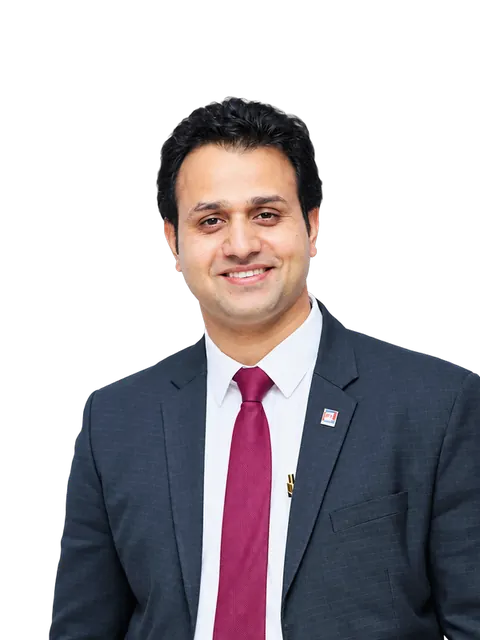
Andrey Boyko

A separate argument is the children: after a French school they speak the language fluently, and that is a strong result for comparatively little money.

Without actually living in France, neither the tax plan nor the immigration plan will work.

Andrey Boyko, Founder & Managing Partner · September 11, 2026

Three routes for a business in France: 'talent – création d'entreprise', 'talent – investisseur' and 'entrepreneur / profession libérale'

Talent – création d'entrepriseTalent – investisseurEntrepreneur / profession libérale
Legal basisArticle L421-16 CESEDA, company creation trackArticle L421-16 CESEDA, direct economic investmentArticle L421-5 CESEDA
Thresholdfunding from EUR 30,000 + means from EUR 22,404.20 a yearinvestment from EUR 300,000 in fixed assets + creation or preservation of jobs within 4 yearseconomically viable activity, income from EUR 1,867.02 a month
Qualificationmaster's degree or 5 years' experiencenot requiredactivity must match qualification and experience
First card termup to 4 yearsup to 4 years1 year, then a card for up to 4 years
Family'talent (famille)' card at once, with the right to work'talent (famille)' card at once, with the right to workfamily reunification after 18 months of residence
Card costEUR 350EUR 350EUR 350; renewal of the one-year card EUR 250

Figures as of 2 October 2026 under CESEDA and service-public.gouv.fr; checked on the filing date.

Who the programme is for

Who this programme suits in our practice.

Owners of an existing business

You open a French subsidiary or a new line of business. Five or more years of running your own company replace the degree, and the EUR 30,000 is evidenced by a transfer to the French company's account or a loan. Statements from Indian or UAE banks are accepted with translation; for Indian residents the outward transfer is planned under the LRS.

Founders of new projects and start-ups

You launch a company from scratch: a restaurant, a clinic, an agency, an IT product, a workshop. You need a business plan the Ministry of the Economy will find real and serious, and funding from EUR 30,000.

Professionals with a master's degree

Lawyers, doctors, engineers, finance professionals with a master's-level degree who want to work for themselves in France. The degree closes the qualification requirement; what remains is the project and the funding.

IT and digital entrepreneurs

Development, marketing, consulting, online services: any profile where the company genuinely operates from France and pays tax there. For innovative projects there is a parallel 'projet économique innovant' track with recognition by a public body.

Service packages

Our fee depends on the track and the family composition. We send the quote in reply to your message.

Turnkey filing

Main applicant

  • Free preliminary audit: qualification, source of funds, refusal risks
  • Business plan and financial model built to the Ministry of the Economy's criteria
  • Request for the ministry's opinion on the real and serious nature of the project
  • 'Talent' visa via France-Visas, company registration in France, card application via ANEF
  • Tax and social plan: director's status, contributions, tax residency

Fees of licensed local lawyers and authorised agents are charged separately at their rates

Request a quote

Turnkey filing + family

Applicant with spouse and children

  • Everything in the Turnkey filing package
  • 'Talent (famille)' visas and cards for the spouse and minor children, with no family reunification procedure
  • Marriage and birth certificates: apostille or legalisation, sworn translations
  • School for the children and the spouse's right to work in one plan
  • Renewal of the whole family's cards in step with yours

Fees of licensed local lawyers and authorised agents are charged separately at their rates

Request a quote

Residence for the whole family: who can be included

For Garant IN the family is a core value: the 'talent' card extends to your loved ones under Article L421-22 CESEDA without a family reunification procedure. Below are the 2026 rules from the law and service-public documents, without generic phrases.

  • Spouse

    A spouse aged 18 or over receives the multi-year 'passeport talent (famille)' card for the remaining term of your card. The spouse needs no separate income: the main applicant shows the means. The card gives the right to work as an employee or self-employed under the general rule of Article L414-10 CESEDA. An unmarried partner is not mentioned in this provision; for a partner we choose another basis.

  • Children

    The couple's minor children enter with you on a 'talent (famille)' visa: under 18 no residence permit is required in France (Article L411-1 CESEDA), and a DCEM travel document is issued. Within a year of turning 18, a child who entered as a minor receives their own 'talent (famille)' card for the remaining term of yours. Adult children are not covered; for them there is a separate basis: student or 'visiteur'.

  • Parents

    The 'talent (famille)' card does not extend to parents, and they are not covered by family reunification either. The working route is a separate 'visiteur' application for each parent: proven means not below the annual net SMIC (EUR 17,735.19 a year per person), insurance and an undertaking not to work. We do not promise what the law does not provide.

  • Family calculation

    The means threshold of EUR 22,404.20 a year is set by law for the applicant together with family members, with no fixed supplement per person; the prefecture assesses sufficiency for everyone. The EUR 30,000 project funding does not change with family size. Each card costs EUR 350 per holder (spouse, child over 18). Family documents: marriage and birth certificates with an apostille (India) or legalisation (UAE) and a sworn translation, photos, insurance for the first period.

The family applies for 'talent (famille)' visas together with you or joins later; the cards are issued via ANEF after arrival. Garant IN's migration programme experts check every family member's documents in advance against 2026 requirements to rule out a refusal for an individual applicant. Verified on 2 October 2026 against CESEDA (Articles L421-16, L421-22, L414-10, R421-33 et seq.) and service-public.gouv.fr.

Garant IN

What we do that others will not

The conditions of Article L421-16 are the same for everyone. The difference is whether your project passes the Ministry of the Economy's review the first time, and whether the file holds together on company registration and source of funds.

  1. A business plan for the ministry, not for an investor

    The opinion on a 'real and serious' project is given by officials, not venture funds. We write the plan in their language: the French market, the legal form, a 3-year budget, jobs, the founder's role, where the EUR 30,000 comes from. That removes the main cause of refusal at the first step.

  2. The right track: création, innovant or investisseur

    The 'talent – porteur de projet' card has three entrances: company creation (EUR 30,000), an innovative project recognised by a public body, and a direct investment from EUR 300,000 with job creation. Plus the alternative of the one-year 'entrepreneur / profession libérale' card. We work out which one fits you before preparing documents.

  3. Source of funds and the money transfer

    The funding and the means of living must be traceable: origin, transfer route, legalised statements. For Indian residents we plan the outward remittance under the Liberalised Remittance Scheme; for the UAE, legalisation through the UAE Ministry of Foreign Affairs and translations.

  4. Company registration at the right moment

    The articles, K-bis or SIREN are needed for the card application, not for the visa. We prepare the incorporation documents in advance so you file within 2 months of arrival and do not miss the deadline.

  5. Family and school in one plan

    We file the 'talent (famille)' cards for the spouse and children together with yours: visas, apostilles, translations, school enrolment. The spouse has the right to work from day one.

Wording pending approval.

What this permit is and who it suits

In the law this status is called the multi-year residence card marked ‘talent – porteur de projet’ (Article L421-16 CESEDA). Adverts often call it a ‘start-up visa’ or ‘talent passport’, but legally it is one card with three entrances: company creation, an innovative economic project and a direct investment. On this page we cover the first track, company creation, because it suits most of the entrepreneurs who come to us from India and the Gulf.

The programme suits three types of applicant. The first is the owner of an existing business who opens a French subsidiary or a new line of business: their management experience replaces the degree. The second is the founder of a new project with a master’s-level degree and a business plan that will stand up to the Ministry of the Economy’s review. The third is a qualified professional who wants to work for themselves in France and is ready to put EUR 30,000 or more into the business.

It does not suit those who want to live in France on passive income without a business; for that there is the ‘visiteur’ permit, which we describe separately. Nor does it suit anyone who expects to ‘register a company for form’s sake’: the card is tied to the project, and at renewal the prefecture looks at whether the business really operates.

What comes next

Renewal of the 'talent' card

Filed 4 to 2 months before expiry via ANEF. The conditions must hold: the company operates, the activity matches the project, means are not below the threshold. The card is renewed for up to 4 years.

10-year resident card after 5 years

After 5 years of continuous legal residence: the EU long-term resident card, with stable means not below the SMIC, French at B1 and a civic exam. A 10-year card, renewable.

Citizenship

Naturalisation by decree is possible after 5 years of residence in France (2 years with a French higher-education degree after two years of study). It requires proof of French, a civic exam, stable income and an interview at the prefecture. France does not require you to give up your previous citizenship; Indian law, however, does not allow dual citizenship, and we discuss this openly.

Change of basis

If the business closes but you stay in France, you move to a 'salarié', 'entrepreneur / profession libérale' or 'visiteur' card with proven means. The accumulated residence period is kept.

Second citizenship and residence in short

Short videos by Andrey Boyko: the latest from the Garant IN channel. The videos are in Russian.

  • In Russian Covering Europe with a second passport: residence in Spain and France, Greece's golden visa

All shorts on YouTube →

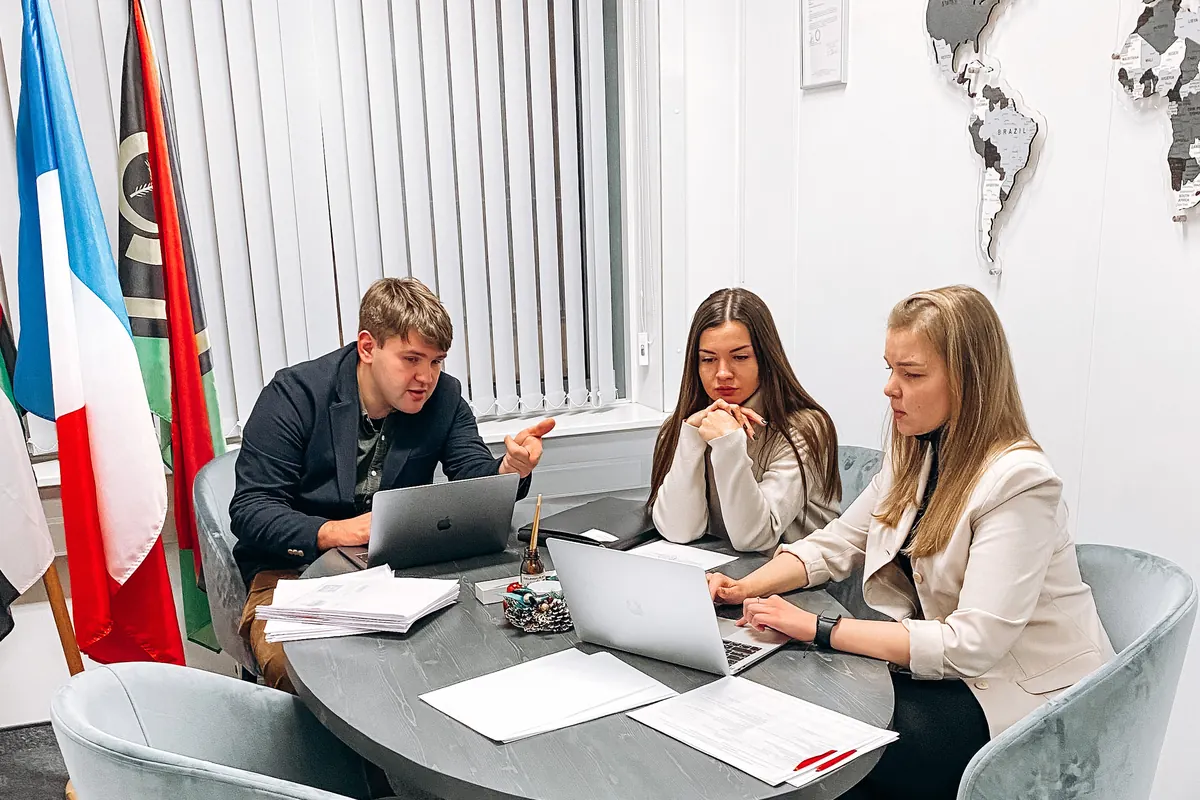
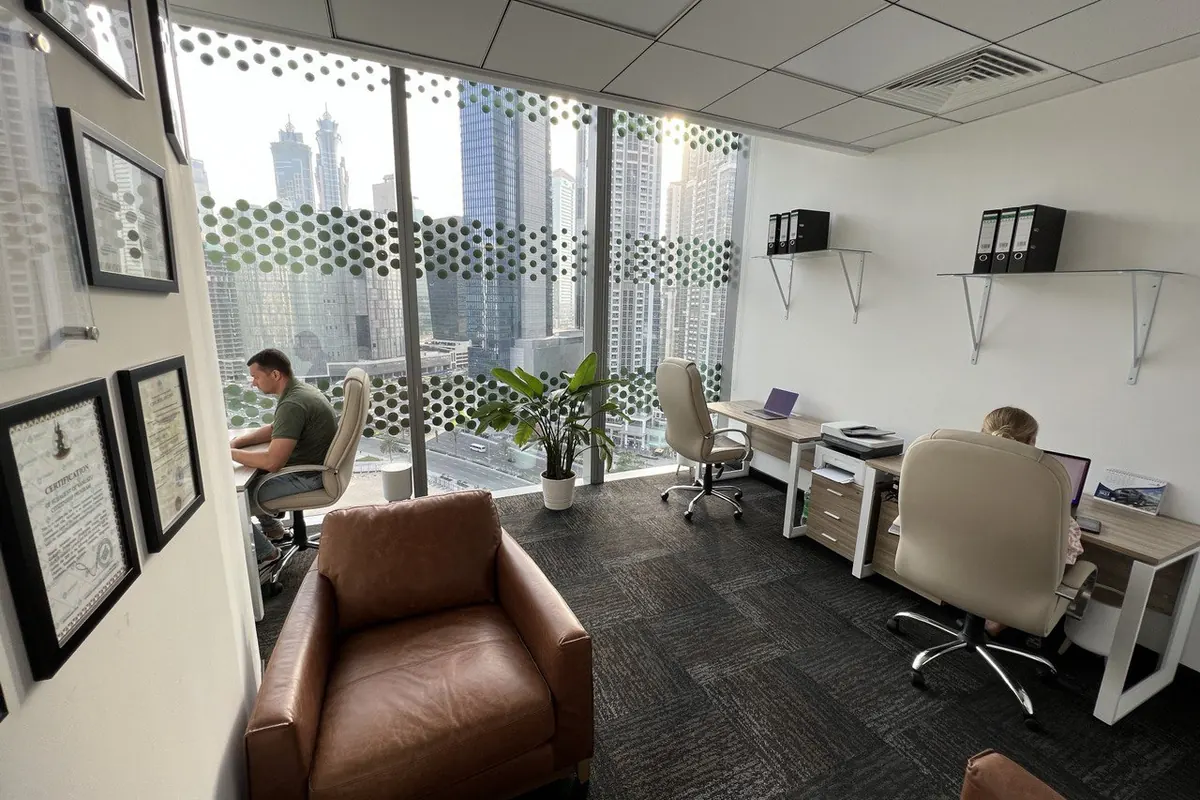
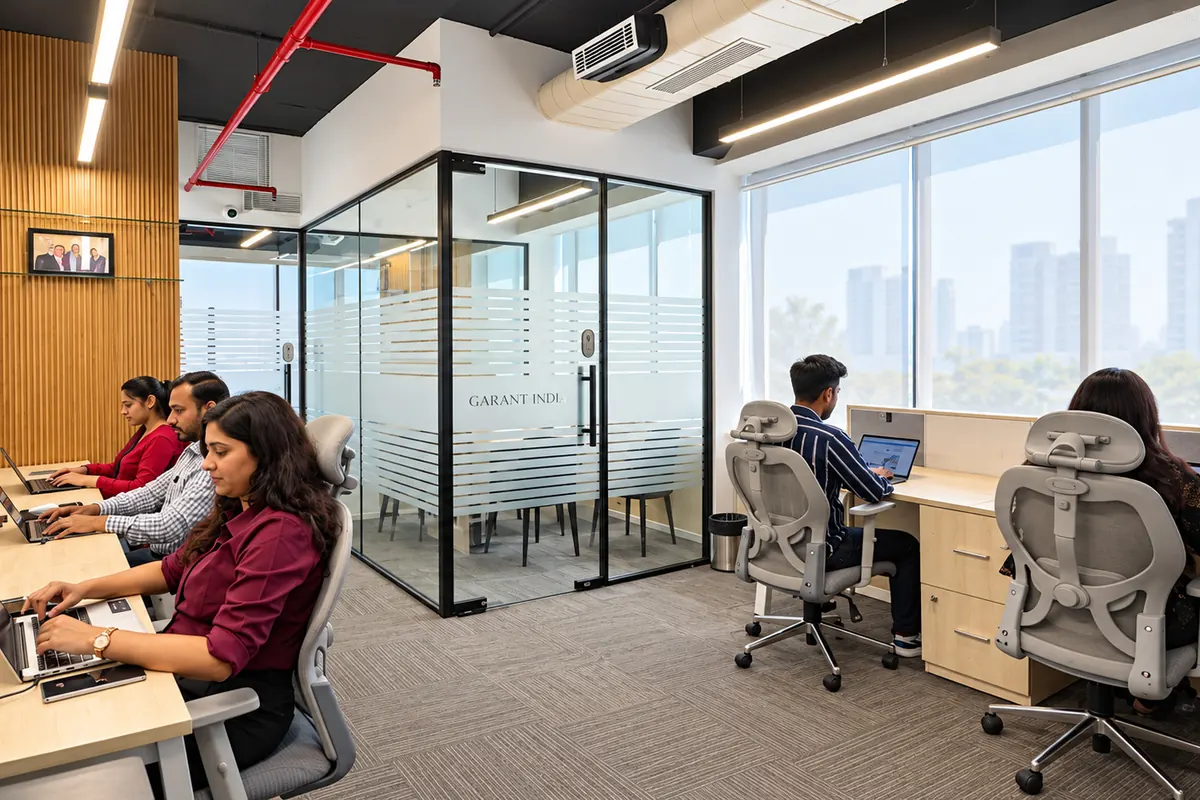
4 offices

Moscow, Dubai, New Delhi and Mumbai. Visit an office and see who is working with you.

Membership

  • Garant IN is a member of the Investment Migration Council (IMC), the Geneva-based international association of the investment migration industry. investmentmigration.org →

  • Garant IN is a member of CCI France Russie, the French Chamber of Commerce and Industry in Russia. ccifr.ru →

  • International migration consultancy since 2015.

Who files your application

Two levels of quality control: Garant IN's migration consulting and case management department runs a rigorous pre-application compliance screening (Pre-Due Diligence) and prepares the document package to 2026 requirements, while the application in France is prepared and filed together with licensed local lawyers and authorised agents. This is how we minimise the risk of refusal at the preparation stage, before the documents reach the government authority.

Frequently asked questions

How does the 'talent – porteur de projet' card differ from a 'start-up visa'?

'Start-up visa' is a marketing name; it does not exist in the law. The official basis is Article L421-16 CESEDA: the multi-year 'talent – porteur de projet' card with three tracks. Company creation requires a master's degree or 5 years' experience, a real project with the opinion of the Ministry of the Economy and funding from EUR 30,000. An innovative project requires recognition by a public body (for example through French Tech). Investment means EUR 300,000 or more in fixed assets with the creation or preservation of jobs.

Do I have to invest exactly EUR 30,000, and in what?

The law (Article R421-33-2 CESEDA) requires proof of project funding of at least EUR 30,000: own or borrowed funds paid into the company's capital or directed to the project. The form of the investment follows the business plan. Separately you need means of living of at least EUR 22,404.20 a year.

What is the Ministry of the Economy's opinion and how long does it take?

It is a mandatory step for the 'création d'entreprise' and 'projet innovant' tracks (Articles R421-33 and R421-34-1 CESEDA): the ministry assesses whether the project is real and serious, and its opinion is attached to the file. The procedure has no statutory term, so we request the opinion before booking the visa appointment and do not promise a number of weeks.

Can I apply without a master's degree?

Yes, if you have professional experience of a comparable level of at least 5 years: running a company, a senior position, work in the project's field. We prove it with contracts, registry extracts and references. With neither a degree nor 5 years of experience, we look at the 'entrepreneur / profession libérale' card or the investor track.

Where do I apply and where is the company registered?

The 'talent' visa is requested at the French consulate in your country of lawful residence via France-Visas; applications from India and the UAE go through the visa application centres. The company is registered in France after arrival: the articles, the K / K-bis extract or the SIREN number are needed for the card application via ANEF within 2 months of arrival. We prepare the incorporation documents in advance to meet the deadline.

How long does the card take, and what if the prefecture is silent?

There is no statutory term. After filing online you receive a digital receipt that confirms your lawful stay. If the prefecture has not answered within 4 months, that counts as a refusal, which can be appealed. In practice timings depend on the specific prefecture and the completeness of the file, which is why we file a complete set at once.

Can my spouse work?

Yes. The spouse receives the 'passeport talent (famille)' card (Article L421-22 CESEDA), and a multi-year card gives the right to professional activity under the general rule of Article L414-10; the family card is not in the list of exceptions in Article L414-11. The spouse may take a job, register as self-employed or open a company.

Do I have to pay tax in France?

The card by itself does not create tax residency: under Article 4 B of the Tax Code a resident is someone whose household or main place of stay, main professional activity or centre of economic interests is in France. The director of a French company living in France with the family will normally meet these criteria. We calculate the company's and the director's taxes, social contributions and the double-taxation agreements with India or the UAE before the move, not after.

What about renewal if the business does not take off?

The card is tied to the project: at renewal the prefecture checks that the company actually operates and the conditions hold. If the project has closed, before the card expires we switch to another basis: 'salarié', 'entrepreneur / profession libérale' or 'visiteur' with proven means. The residence period is not lost.

How many years to the resident card and to citizenship?

The 10-year resident card comes after 5 years of continuous legal residence with stable means not below the SMIC, French at B1 and a civic exam. Citizenship by decree comes after 5 years of residence (2 years with a French higher-education degree), with proof of language, a civic exam and stable income. France does not require renunciation of a previous citizenship; India does not allow dual citizenship, so an Indian citizen naturalising in France would move to OCI status.

I live in the UAE. Where do I apply and which documents do I need from where?

You apply at the French consulate in your country of lawful residence. UAE documents are legalised through the UAE Ministry of Foreign Affairs, Indian documents with an apostille, and everything is translated by a sworn translator. The funding and means are assessed in euros: statements from your UAE or Indian accounts are enough for the application; the transfer to France is planned for the company's registration.

How long does the whole process take?

There are no statutory terms for the ministry's opinion, the visa or the card. With the business plan, the opinion, the visa, arrival and company registration, a realistic path from the first meeting to the card takes several months and depends on the workload of the consulate and the prefecture. We do not promise 'within a month'.

Can I include parents or adult children in a French entrepreneur residence permit application?

No. Article L421-22 CESEDA gives the 'talent (famille)' card only to a spouse aged 18 or over and to the couple's children who entered as minors (they receive their own card within a year of turning 18). Parents and adult children apply separately: parents for a 'visiteur' permit with means from EUR 17,735.19 a year per person, adult children as students or 'visiteur'. We prepare those files in parallel with yours.

How does the threshold change when applying with a family in France?

The project funding stays at EUR 30,000. The means of living must be at least the annual gross SMIC, EUR 22,404.20, and the law requires them to cover the applicant and the family members; there is no fixed supplement per person, the prefecture assesses sufficiency. Each 'talent (famille)' card costs EUR 350. The spouse's income is not a condition, but it supports the family's stability.

Do you offer a refund if the application is refused?

Yes. If the application is refused through the fault of our team or an error in building the case, we refund the company's service fee less a minimal retention for costs actually incurred. Refund terms, the payment schedule and the rules on retaining service costs are fixed in the contract before work begins. Before we start, we check your documents and risk history free of charge and tell you about any risks in advance.

Personal cost estimate

An estimate for your family

Message us in the messenger you prefer and you will receive an estimate for your family and route. We never message first: you send the first message.

Our fee depends on the track and the family composition. We send the quote in reply to your message.

Or leave a request

Not ready yet? Stay in touch

Programme updates and case breakdowns in our channels.

Sources

Figures and conditions on this page are checked against legislation and official pages. Last verified: .

  1. CESEDA, Articles L421-7 to L421-25 (the 'talent' card, including L421-16 'talent – porteur de projet'), Légifrance · October 2, 2026
  2. CESEDA, Articles R421-11 to R421-37-7 ('talent' card conditions: R421-33 ministry opinion, R421-33-1 means, R421-33-2 funding of EUR 30,000, R421-35 investment of EUR 300,000, R421-37-6 family), Légifrance · October 2, 2026
  3. CESEDA, Articles L421-22 to L421-25 (family members of a 'talent' card holder), Légifrance · October 2, 2026
  4. CESEDA, Book IV: Articles L411-1 (residence permit only from age 18), L414-4 (DCEM), L414-10 and L414-11 (right to work under residence cards), Légifrance · October 2, 2026
  5. CESEDA, Articles L436-1 to L436-13 (EUR 300 tax on first issue, EUR 200 on renewal, EUR 50 stamp duty; version under Law 2026-103 from 1 May 2026), Légifrance · October 2, 2026
  6. Service-public.gouv.fr — Carte de séjour « talent » (création d'entreprise track conditions, documents, cost EUR 350, 'Talent-famille' card), verified 01.06.2026 · October 2, 2026
  7. Service-public.gouv.fr — Carte de séjour « entrepreneur / profession libérale » (alternative one-year card, income from EUR 1,867.02 a month) · October 2, 2026
  8. Service-public.gouv.fr — SMIC: EUR 12.31 an hour, EUR 1,867.02 gross a month, EUR 22,404.20 a year, EUR 1,477.93 net (verified 01.06.2026) · October 2, 2026
  9. Arrêté du 22 mai 2026 relatif au relèvement du salaire minimum de croissance (SMIC from 1 June 2026), Légifrance · October 2, 2026
  10. Service-public.gouv.fr — Visa de long séjour (3-month visa and card within 2 months, VLS-TS and its validation within 3 months) · October 2, 2026
  11. Service-public.gouv.fr — Carte de résident de longue durée-UE (5 years, means not below the SMIC, French B1, civic exam, 10-year card) · October 2, 2026
  12. Service-public.gouv.fr — Naturalisation par décret (5 years of residence, 2 years with a French degree, language, civic exam) · October 2, 2026
  13. Code général des impôts, Article 4 B — criteria of tax domicile in France · October 2, 2026
  14. Regulation (EU) 2016/399 — Schengen Borders Code, Article 21 (stays of up to 90 days in 180 with a member state residence permit) · October 2, 2026
  15. France-Visas — official French visa portal (application, fees by country) · October 2, 2026

Page updated:

Request a consultation

+971 54 237 1924

4 offices

Moscow, Dubai, New Delhi and Mumbai. Visit an office and see who is working with you.

Request a consultation