Legal work from Spain
You live in Spain and keep working for your foreign employer or clients. No separate work permit is needed: the right to work remotely is part of the status.
Spanish residence for 3 years when filing from inside the country, or a 1-year visa through the consulate, with the right to work remotely for foreign companies and clients, for the whole family. Suits remote employees, freelancers, sole proprietors and owners of a foreign business.
Facts verified October 8, 2026 against official sources · Sources
Facts verified October 8, 2026 against official sources · Sources
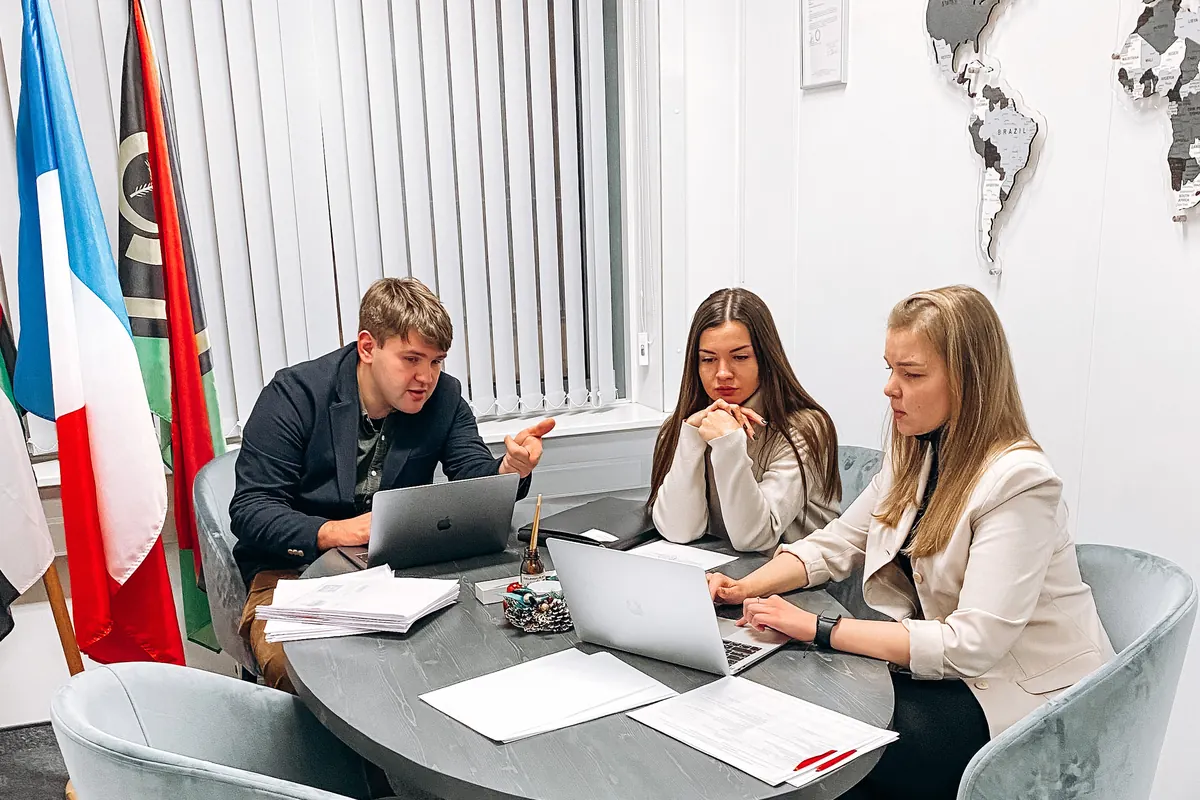
Owner, regional partners, the migration consulting and case management department and senior experts. These are the people you will speak to on the phone and meet in the office.

Founder & Managing Partner

Partner, Middle East & MENA Region
Managing Director, India & South Asia

Partner, Russia & CIS Region

Head of Migration Consulting & Case Management

Immigration & Compliance Specialist
You live in Spain and keep working for your foreign employer or clients. No separate work permit is needed: the right to work remotely is part of the status.
No property purchase, no fund contribution. One requirement: proven income from remote work.
Your spouse or partner, children and dependent parents apply with you or later. Decisions on the family are issued at the same time as yours.
With a Spanish residence permit you enter other Schengen countries without a visa and stay there for up to 90 days in any 180 days.
A special regime for relocated workers: 24 % on income up to EUR 600,000 a year instead of the progressive scale, for 6 tax periods.
Time on the visa and on the permit counts towards legal residence. After 5 years, permanent residence; after 10, the possibility of citizenship.
Facts verified October 8, 2026
| Consular visa fee | EUR 90 Order AUC/891/2024; paid in local currency (INR, AED) at the consulate's exchange rate |
|---|---|
| Government fee for the permit (tasa 790-038) | EUR 73.26 per applicant, including family members (UGE FAQ) |
| Residence card (TIE) | EUR 16.08 first issue; renewal EUR 19.30 (Order PJC/617/2025) |
| Decision on the permit (UGE-CE) | 20 working days no reply means the application is deemed approved; in practice currently sometimes up to 2–3 months |
| Consular decision on the visa | 10 days by law; may be extended if documents are requested |
| Collecting the visa after approval | 1 month in person, from the date of notification |
We check employment, income, family composition and the country of filing. We decide: Digital Nomad or another residence permit, a 1-year visa or a 3-year permit.
NIE, police clearance with apostille, sworn translations, insurance, the employer's letter confirming remote work, proof of tenure and of the company's age, social security documents.
At the consulate for your place of residence, for the visa. Or in Spain, while lawfully present, for the 3-year permit through the Large Companies and Strategic Groups Unit (UGE-CE).
The consulate decides in 10 days by law, the permit in Spain in 20 working days; in practice, because of the volume of applications, currently sometimes up to 2–3 months. We answer any request for further documents within 10 working days, otherwise the file is closed.
You collect the visa in person within a month of notification. After entry we arrange the residence card (TIE). 60 days before the 1-year visa expires we apply for the 3-year permit.
In the first 6 months, the application for the 24 % tax regime if you qualify. We keep track of social security and deadlines. We renew the permit for 2 years while the conditions hold.
The official conditions are above. Below is how the programme works in real life, from our cases.
If you intend to keep working remotely from Spain, the route to check is the Digital Nomad visa, not a non-lucrative visa (NLV) with a plan that nobody will notice. What matters is the type of employment, the foreign company or clients and the proven income.
The threshold is tied to the minimum wage, which changes every year. The same monthly income does not make an employee and an independent contractor identical applicants: their documents and social security differ.
The applicant arrives on the visa, obtains the status and renews it already registered in the Spanish social security system. For future permanent residence it matters how you accumulate time in Europe: we show how those periods add up.
The special tax regime is not an automatic part of the visa. Its availability is governed by its own conditions, not by the permit's name. We check this before filing, not after the move.

If you intend to keep working remotely from Spain, the route to check is the digital nomad visa, not the non-lucrative visa (NLV) with a plan to 'work quietly'. What matters is the type of employment, the foreign company or clients, and the proven income. That is why in our practice we always compare both routes against the client's task, not by the visa's name.
The financial threshold is tied to the Spanish minimum wage, so it must be calculated as of the filing date and with the family included. The same monthly income does not make an employee and an independent contractor identical applicants: the documents and the social-security arrangements differ. In our practice the working pattern is simple: you arrive on the visa, renew through the social-security registration, and, if permanent residence in Europe is the long game, you track the time you accumulate; we show families how those years add up.
We check taxes and social insurance separately. The special tax regime is not an automatic part of the visa; its availability is governed by its own conditions, not by the permit's name.
| Digital Nomad | NLV: residence without work | |
|---|---|---|
| Work | Remotely, for companies and clients outside Spain | Any work is prohibited, including remote |
| Income in 2026 | from EUR 34,188 a year (200 % of the minimum wage) | from EUR 28,800 a year plus EUR 7,200 for each dependant |
| First term | 1-year visa or 3-year permit | 1 year |
| Renewal | For 2 years while the conditions hold | For 2 years, then another 2 |
| 24 % tax regime | Available to employees | Not provided |
| Family | With the applicant or later | With the applicant or later |
| Time towards permanent residence and citizenship | Counts | Counts |
NLV figures are a 2026 reference from Spanish consulates; they are checked on the filing date.
Coverage and expert commentary by Garant IN in business media.

You can't leave, you can't stay: how to prepare for obtaining a residence permit and French citizenshipRead on Forbes →

From Bengaluru to Barcelona: Why Indians are flocking to Spain’s Digital Nomad Visa in 2026Read on The Economic Times →

Spain Digital Nomad Visa Explained: Who qualifies, income rules, PR pathwayRead on Financial Express →

Global Lens I U.S. President Donald Trump's Golden Card Visa: How Can Indians Tap This Programme?Watch on CNBC-TV18 →

Golden visa schemes are response to conflicts, Trump’s decisions on U.S. citizenship: Dubai-based immigration expertRead on The Hindu →

Spain Digital Nomad Visa: Who does it suit and hurdles explainedRead on Business Standard →

Coverage in Moneycontrol: Amid US uncertainty, HNIs choose Caribbean, Gulf, EU residency programmesRead on Moneycontrol →

France, Italy or Grenada? Financial independence can get you settled there with freedom to roam world!Read on PTI →

Why India's wealthy are quietly buying second residencies abroadRead on India Today →
A visa for people who earn outside Spain and want to live there legally.
You are employed by a company outside Spain and can work remotely. You need the contract, an employer's letter confirming that remote work is possible and at least 3 months with the employer.
Professionals with a pool of foreign clients: you prove the contracts and the inflows. Spanish clients may make up no more than 20 % of your work.
You receive a salary, fees or dividends from a company outside Spain that has genuinely operated for at least a year.
Developers, marketers, designers, analysts from India, the UAE or anywhere else: any profile where the work is done entirely online.
Our fee depends on the family composition and the route. We send the quote in reply to your message.
Main applicant
Fees of licensed local lawyers and authorised agents are charged separately at their ratesdepends on the route and the country of filing
Request a quoteApplicant with spouse, children or parents
Fees of licensed local lawyers and authorised agents are charged separately at their ratesdepends on the family composition
Request a quoteFor Garant IN the family is a core value: the digital nomad residence permit extends to your loved ones together with you or later, under the same rules of Law 14/2013 (Article 62). Below are the 2026 conditions from the UGE documents, without generic phrases.
A registered marriage or partnership: entered in a register, or at least a year of cohabitation with two proofs (a joint account, registration at the same address, a joint lease or mortgage, a joint business); with a child in common the year is not required. The rule does not exclude same-sex unions. The spouse needs no separate income: the main applicant proves the threshold. The spouse receives the right to work in Spain without restriction, as an employee or self-employed (official UGE FAQ).
Minors are included on the birth certificate; a child of one partner, with the notarised consent of the other parent. Adult children aged 18–25, if financially dependent: certificates of no income or benefits, study or registration with the employment service, no marriage of their own. Over 26, only with proven incapacity.
Parents of the applicant or spouse, with no minimum age. Dependence must be proven: economic (at least a year of cohabitation or transfers, no employment income or benefits for the parent) or medical (medical reports). Over 80, dependence is presumed. UGE practice does not include grandparents, and we do not promise it.
Only the main applicant proves income: EUR 2,849 a month + EUR 1,068.38 for the first family member + EUR 356.13 for each further one. A couple: EUR 3,917.38 a month (EUR 47,008.50 a year); a couple with one child: EUR 4,273.50; a couple with two children: EUR 4,629.63 (EUR 55,555.50 a year). UGE fee: EUR 73.26 per person. Family documents: apostille and sworn translation of marriage and birth certificates, police clearance for adults, insurance (not needed if the main applicant registers with Seguridad Social; an unregistered partner always needs insurance). Bank statements from Indian or UAE accounts are submitted with a sworn translation.
Filing is together with the main applicant or later; when filed together, decisions are issued at the same time, the UGE processing term is 20 working days and silence means approval. Garant IN's migration programme experts check every family member's documents in advance against the UGE 2026 criteria to rule out a refusal for an individual applicant. Verified on 30 September 2026 against Law 14/2013 and UGE documents.
The visa conditions are the same for everyone. The difference is how they are applied to a specific family, so there is no refusal and nothing to redo a year later.
We compare the Digital Nomad visa with the non-lucrative visa (NLV) and other grounds against your goals: who works, where the income comes from, how many years you plan to live in Spain. We choose a 1-year visa or a 3-year permit straight away.
An employee and a self-employed person with the same income are different applicants: different documents and different social security. We decide in advance what fits you: a certificate from your home country where an agreement exists, the employer's registration in Spain or autónomo status. A mistake here is the main cause of refusals and problems at renewal.
Living in the UAE, India or another country, we file at your place of legal residence. We know the requirements of specific consulates: NIE before filing, how recent certificates must be, apostille and legalisation, sworn translations.
The 24 % regime is not available to everyone and requires an application within the first 6 months. We check whether you qualify, what the self-employed should do and when tax residency starts (183 days).
We show how periods of residence add up, which absences are allowed (no more than 6 months at a time and 10 months over 5 years) and what naturalisation will require, including renouncing your previous citizenship.
Wording pending approval.
‘Digital nomad visa’ is the everyday name. In the law it is called the visa for international remote workers (teletrabajadores de carácter internacional). It was introduced by the Startups Law at the end of 2022 so that people who earn outside Spain can legally live in the country and spend their money there.
The programme suits three types of applicant. The first is an employee of a foreign company whose employer has confirmed in writing that the work can be done remotely. The second is a self-employed professional with foreign clients: a developer, consultant, designer, lawyer. The third is a business owner who manages the company remotely and receives a salary or fees from it. For professionals from India and the UAE it is one of the few European statuses with a 3-year permit from the start, no investment and the family included at once.
It does not suit those who plan to work for a Spanish employer, or those who simply want to live in Spain on savings without working: for the second case there is the non-lucrative visa, which we compare below.
We file 60 days before expiry. The conditions must hold: remote work for a foreign company, income not below the threshold, insurance, social security obligations.
Long-term residence (larga duración) is granted after 5 years of continuous legal residence. Allowed absences: no more than 6 months at a time and no more than 10 months in total over 5 years (up to 18 months for work reasons).
The general naturalisation term is 10 years of continuous legal residence. Spain requires renunciation of the previous citizenship: the exceptions apply only to Latin American countries and a few others, so citizens of India, for example, renounce. India, for its part, does not permit dual citizenship: taking a Spanish passport ends Indian citizenship, with the OCI card as a separate status.
If life changes, you join a Spanish company or start a business, we switch to another type of residence permit. The accumulated residence time is not lost.
Short videos by Andrey Boyko: the latest from the Garant IN channel. The videos are in Russian.

Covering Europe with a second passport: residence in Spain and France, Greece's golden visa
 4 offices
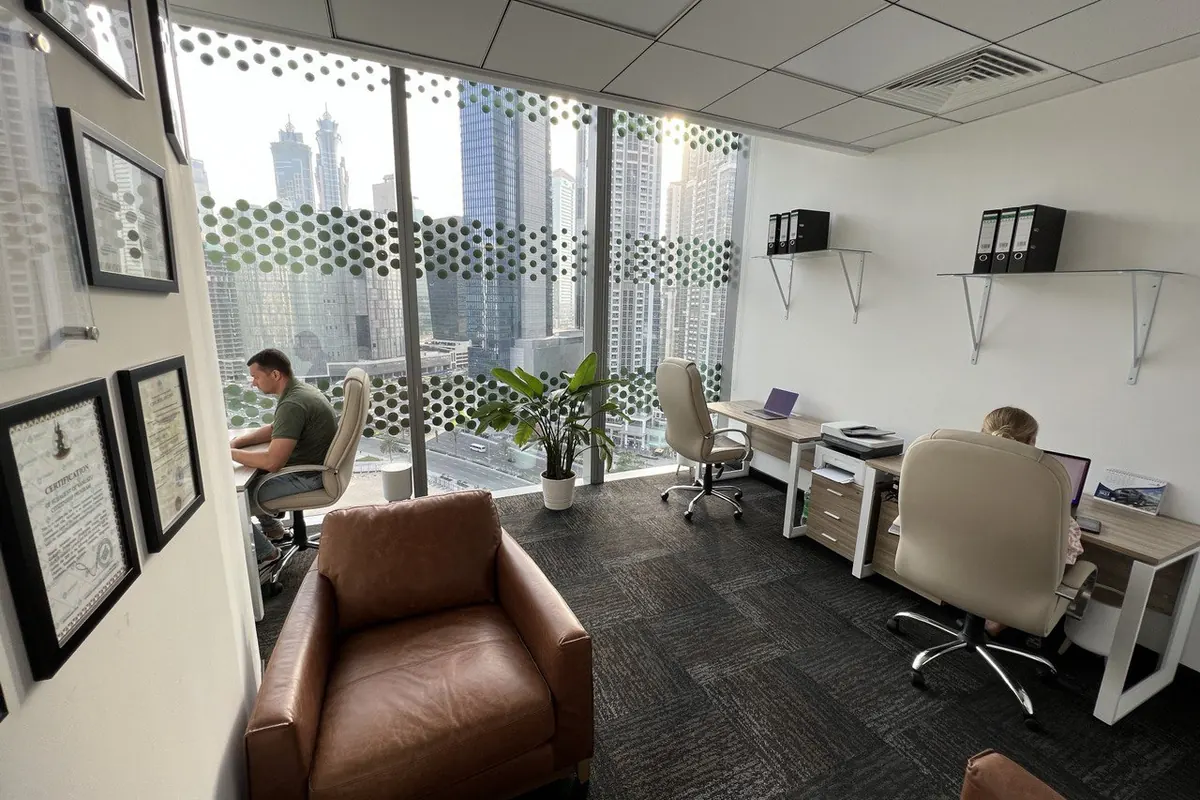
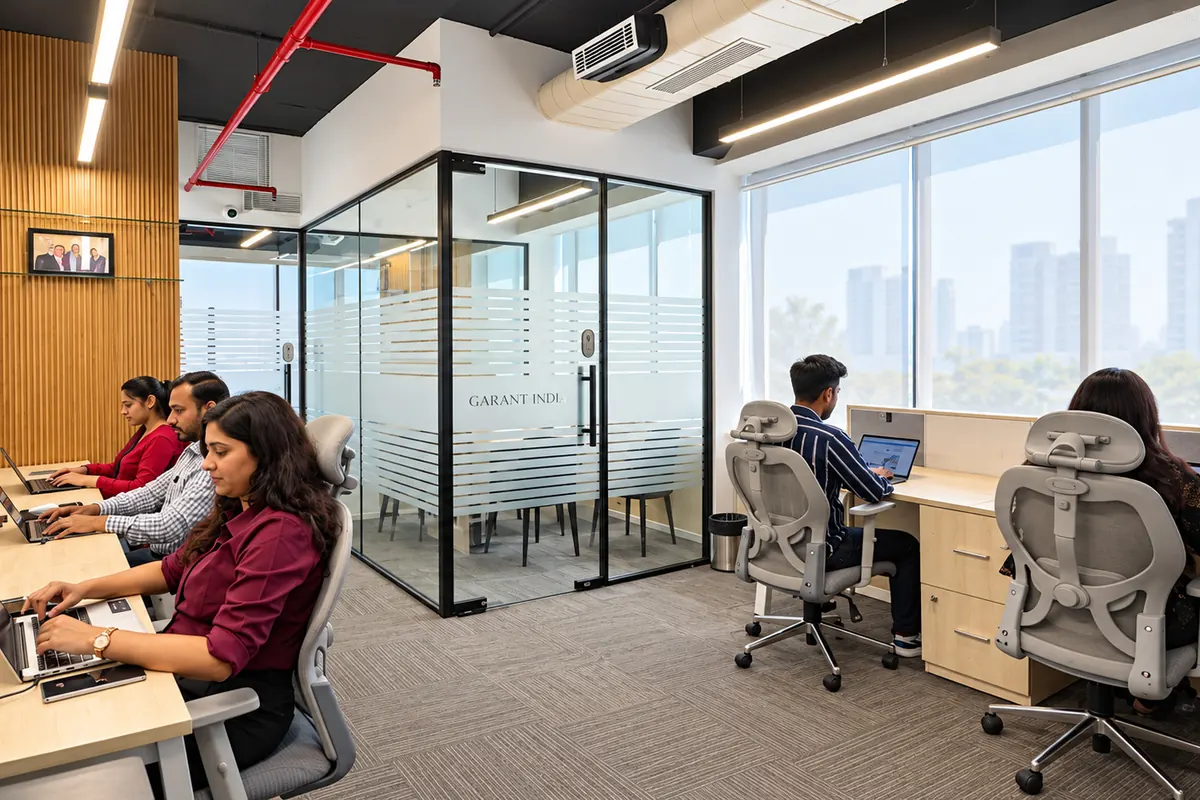
Moscow, Dubai, New Delhi and Mumbai. Visit an office and see who is working with you.

Garant IN is a member of the Investment Migration Council (IMC), the Geneva-based international association of the investment migration industry. investmentmigration.org →

Garant IN is a member of CCI France Russie, the French Chamber of Commerce and Industry in Russia. ccifr.ru →
International migration consultancy since 2015.
Two levels of quality control: Garant IN's migration consulting and case management department runs a rigorous pre-application compliance screening (Pre-Due Diligence) and prepares the document package to 2026 requirements, while the application in Spain is prepared and filed together with licensed local lawyers and authorised agents. This is how we minimise the risk of refusal at the preparation stage, before the documents reach the government authority.
They are two routes to the same status. The visa is issued by the consulate for your place of residence and is valid for up to 1 year; 60 days before it expires, you apply for the permit in Spain. The residence permit is issued for 3 years straight away if you are lawfully in Spain, including on a tourist visa or visa-free. Both give the right to live and work remotely, and time on both counts towards residence.
200 % of the Spanish minimum wage. In 2026 the minimum wage is EUR 1,221 a month in 14 payments (EUR 17,094 a year), so the threshold for the applicant is EUR 34,188 a year, or EUR 2,849 a month over 12 months. For the first family member add 75 % of the minimum wage (EUR 12,820.50 a year), for each further one 25 % (EUR 4,273.50). A couple with two children: EUR 55,555.50 a year.
As an employee, no: the employer must be outside Spain. A self-employed person may have Spanish clients, but for no more than 20 % of their total activity. If you plan to be employed by a Spanish company, that is a different type of permit.
If you spend more than 183 days a year in Spain, you become a tax resident and declare worldwide income. Employees have access to a special regime (known as the 'Beckham law'): 24 % on income up to EUR 600,000 a year and 47 % above that, for 6 tax periods. The condition is not having been a Spanish tax resident in the last 5 years. The application (Form 149) is filed within 6 months of starting work. Without the regime, the progressive scale applies. How Spanish residency interacts with your tax position in India or the UAE is something we look at before the move.
The teleworking provision in the law is tied to an employment relationship, so the self-employed generally do not qualify. There are exceptions for certain categories (for example entrepreneurs with an innovative project). We check this before filing so the tax plan does not come as a surprise.
A spouse or de facto partner, minor children, adult children and parents who depend on you. You can apply together or later. We check the family members' right to work separately in each case: practice under this provision is uneven, and we will not promise it in advance.
The permit is renewed for 2 years if the conditions hold: remote work for a foreign company, income not below the threshold on the renewal date, insurance, social security obligations. If income has fallen below the threshold, before applying for renewal you need either to restore it or to switch to another basis. The law sets no strict '183 days a year in Spain' requirement for renewal.
The general term is 10 years of continuous legal residence. Naturalisation requires renouncing your previous citizenship: the exceptions in the Civil Code apply only to Latin American countries, Portugal, Andorra, the Philippines and Equatorial Guinea. For Indian citizens there is a second side to this: India does not permit dual citizenship, so a Spanish passport means giving up the Indian one, with the OCI card as a separate status. We settle this question before the move, not after 10 years.
You file at the consulate for your place of legal residence: for UAE residents, the Embassy of Spain in Abu Dhabi. Police clearance is required from every country where you have lived in the last 2 years. UAE documents are legalised through the UAE Ministry of Foreign Affairs; Indian documents are apostilled by the Ministry of External Affairs.
Yes. Applications from India go to the Embassy of Spain in New Delhi or the Consulate General in Mumbai, depending on your state of residence. Indian documents (the Police Clearance Certificate, degree, marriage and birth certificates) are apostilled by the Ministry of External Affairs and translated by a sworn translator. If you are already lawfully in Spain, for example on a Schengen visa, we file for the 3-year permit directly with UGE-CE instead.
For the visa itself a Spanish account is not required: income is proven with statements and contracts. Residents of India remit money abroad under the RBI's Liberalised Remittance Scheme (LRS), which has a per-person annual cap, so larger transfers for the move are planned across family members in advance. Russian citizens, including UAE residents, should note the EU restriction: banks may accept deposits from Russian nationals only up to EUR 100,000 (Regulation (EU) 833/2014, Article 5b). We plan this ahead.
Employee: the employment contract, an employer's letter stating that the work can be done remotely, salary statements for the last 3 months and proof that the company has genuinely operated for at least a year (an apostilled registry extract). Freelancer: contracts with foreign clients, invoices and bank statements for 3 months, registration as a sole proprietor or self-employed in your home country. Business owner: incorporation documents, proof of your role in the company and of the payments. According to practitioners, since 2025 UGE-CE additionally asks for a 3-month history of inflows and proof of account ownership, and overly generic service contracts lead to refusals.
By law the permit in Spain is decided within 20 working days, and if there is no reply the application is deemed approved. In practice, because of the volume of applications, timelines currently sometimes stretch to 2–3 months: this is not a statutory term but the authority's workload in 2026. If a request for further documents arrives, you must answer within 10 working days or the file is closed, so we prepare answers to typical requests in advance. Consulates decide in 10 days by law, but appointments and seasonal workload stretch the path to 1–3 months.
By law: 10 days at the consulate or 20 working days in Spain. With document preparation, a realistic term from first meeting to visa is 2–3 months, and it depends on the workload of the specific consulate, appointment availability and requests for further documents. We do not promise 'two weeks'.
Yes. Article 62.4 of Law 14/2013 allows the spouse or partner, children and dependent parents. Adult children up to 25, with proven financial dependence and no marriage of their own; over 26, only with incapacity. Parents of the applicant or spouse, with proven dependence, presumed after 80. The family can apply with you or later.
To EUR 2,849 a month add EUR 1,068.38 for the first family member and EUR 356.13 for each further one. A couple: EUR 3,917.38 a month; a couple with two children: EUR 4,629.63. The main applicant proves the income; the official UGE documents do not add the spouse's income to the threshold. A shortfall can be covered with savings for the whole term of the permit.
Yes. If the application is refused through the fault of our team or an error in building the case, we refund the company's service fee less a minimal retention for costs actually incurred. Refund terms, the payment schedule and the rules on retaining service costs are fixed in the contract before work begins. Before we start, we check your documents and risk history free of charge and tell you about any risks in advance.
Message us in the messenger you prefer and you will receive an estimate for your family and route. We never message first: you send the first message.
Our fee depends on the family composition and the route. We send the quote in reply to your message.
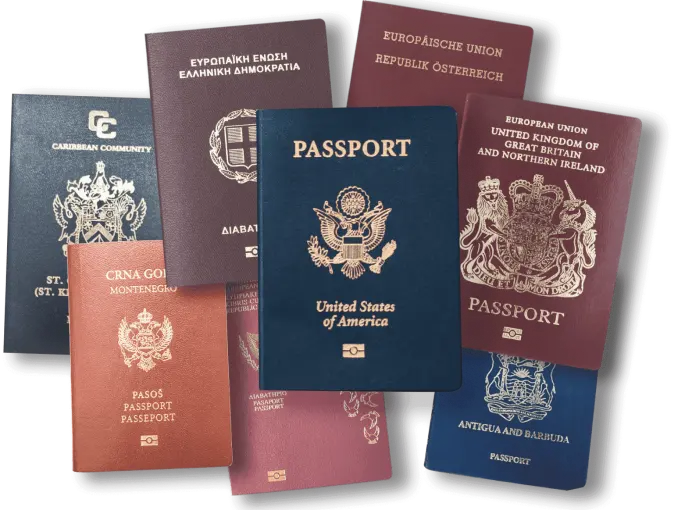
Programme updates and case breakdowns in our channels.
Figures and conditions on this page are checked against legislation and official pages. Last verified: .
Page updated: