
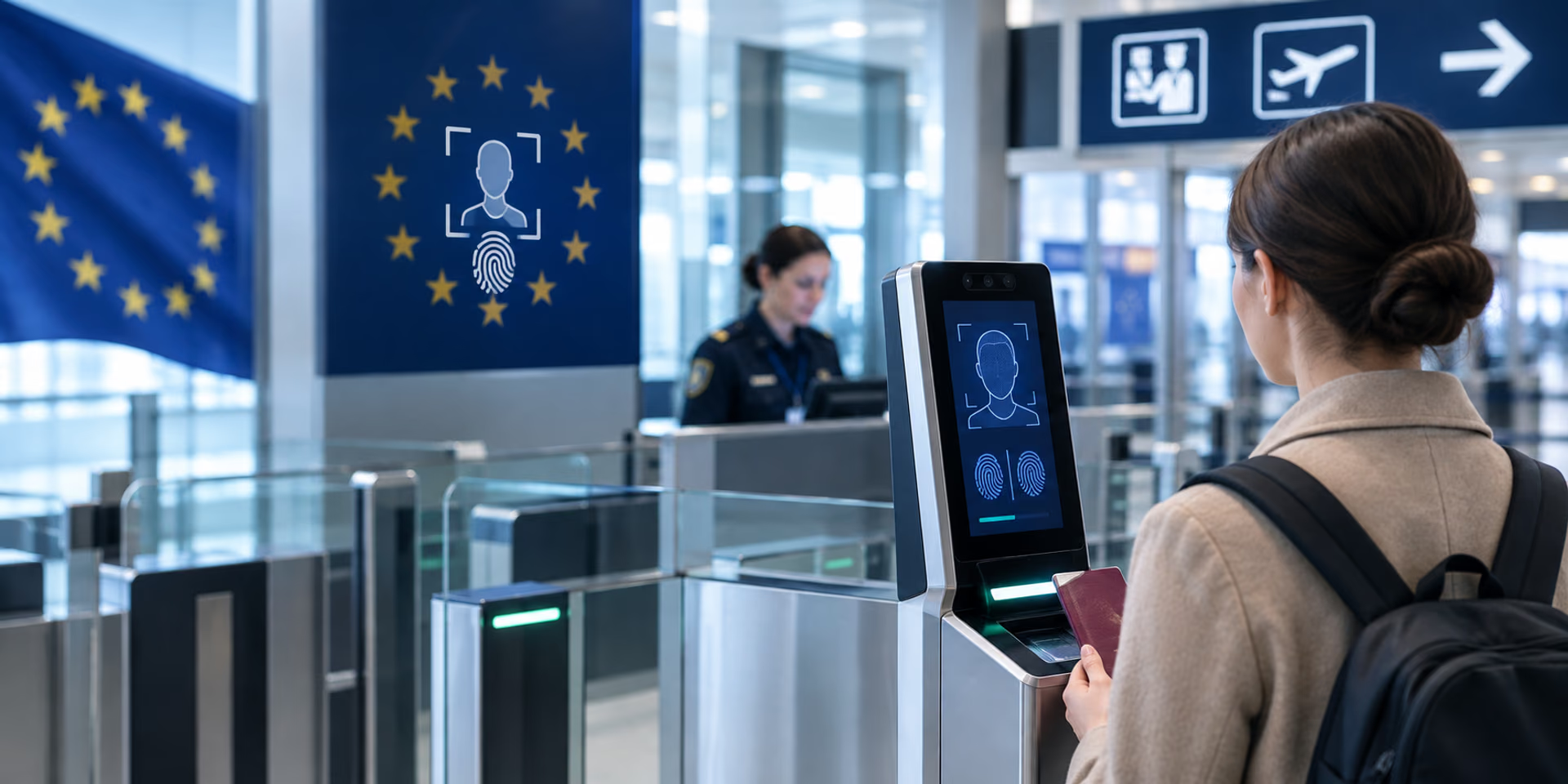
On 6 September 2026, the European Union's temporary flexibility measures came to an end — measures that, since April, had allowed border officers to suspend biometric collection at EES checkpoints during heavy congestion. Formally, the system is now supposed to operate without exceptions at all of Schengen's external borders.
In practice, the picture is mixed. The Commission declined to extend the flexibility regime, despite a letter from nine member states, including Greece, Italy and Portugal. In France, registration kiosks remain unstable because of software problems on the EU's side. Legally, the transition is over; in practice, the rules are being applied unevenly even within a single country.
EES (Entry/Exit System) is a single EU-wide electronic database that automatically registers every entry and exit of third-country nationals at Schengen's external borders. It replaces manual passport stamping and calculates the length of stay itself, capturing biometric data — fingerprints and a facial image — at the first border crossing.
Who Is Covered by the System
EES applies to third-country nationals entering Schengen for up to 90 days in any 180-day period:
travellers on a short-stay visa;
visa-exempt travellers, including UK citizens;
transit passengers crossing any external border;
property owners in the EU who hold no residence permit.
The system does not apply to EU/EEA/Swiss citizens, holders of a residence permit issued by an EES-participating country, or family members of EU citizens holding a residence card. One nuance: a residence permit from Cyprus or Ireland does not count as an exemption — those two countries do not operate EES themselves.
Category | Covered by EES |
|---|---|
Short-stay visa / visa-free entry | Yes |
Residence permit from an EES-participating country | No |
Residence permit from Cyprus or Ireland | Yes, via another country |
EU/EEA/Swiss citizen | No |
Family member of an EU citizen with a residence card | No |
Stamps, Data, and the 90/180 Calculation
Residence permit holders have nothing to worry about: they go through a separate lane with their residence card, though at congested checkpoints they are sometimes mistakenly directed into the general queue. The system also stores the date and place of every border crossing and does not take fingerprints from children under 12. The 90/180 rule is now calculated automatically — no more manual counting from stamps.
Parameter | Before | Now |
|---|---|---|
Proof of entry | Passport stamp | Electronic record |
90/180 calculation | Manual | Automatic |
Trip record retention | Not centralised | 3 years after exit |
Overstay record | — | Retained for 5 years |
What This Means for Future Visa Applications
Consulates check EES data when reviewing a new visa application. An overstay record does not trigger an automatic refusal, but it does mean closer scrutiny. That is not the same as an entry ban — a ban is a separate decision, entered into the Schengen Information System for up to five years. Once ETIAS launches (expected in the last quarter of 2026), these records will carry even more weight.
What to Do Now
Allow extra time at borders on routes with known problems (especially via the Channel).
Residence permit holders should present their residence card together with their passport.
Remember: a residence permit from one country does not exempt you from EES when entering via another, if only the passport is shown.
Before applying for a new visa, check your own entry-exit history for any discrepancies.
FAQ
Do I already need ETIAS to enter the EU? No, the launch is planned for the last quarter of 2026.
Are passports still being stamped anywhere? No, not for anyone covered by EES, since 10 April 2026. Technical glitches don't bring back stamps — they just temporarily pause biometric collection.
Does a residence permit from one Schengen country exempt me from EES across the whole zone? Only if the residence card itself is presented together with the passport.
Conclusion
What ended on 6 September wasn't the EES transition itself — the system has been running since April — but only countries' right to temporarily suspend biometrics during congestion. Those entering on a short-stay visa or visa-free should expect a less flexible process and delays on some routes. Residence permit holders aren't formally affected, but they're the group most likely to run into routing errors at the border. Borderline cases are best worked through with an immigration lawyer in advance, not at the checkpoint.
