
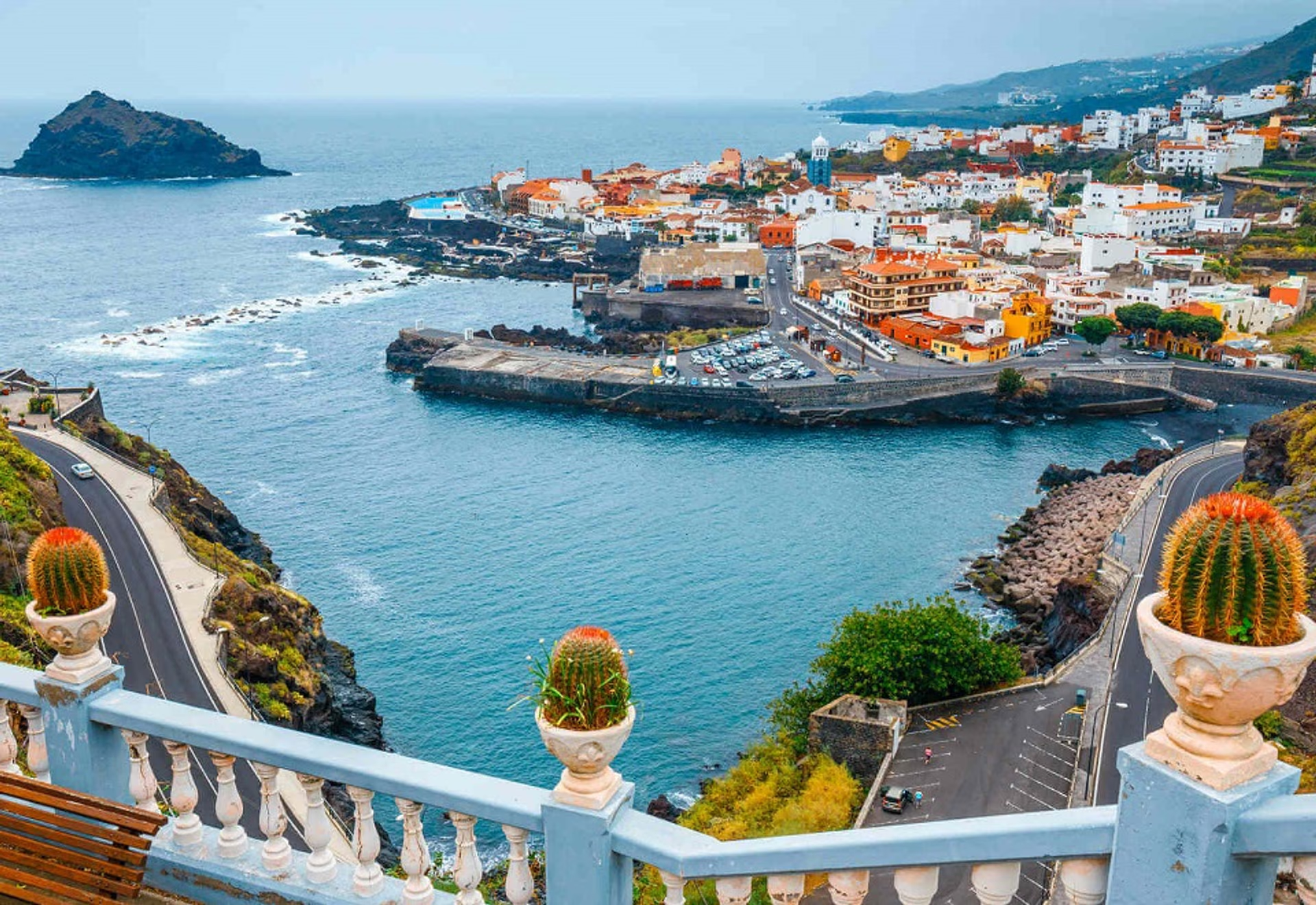
It is well-known that among the most popular countries where Russians and other citizens of the former Soviet Union acquired Golden Visas, Spain consistently ranks high. The most common method they choose is the purchase of Spanish real estate.
Statistics show that investors from Russia prefer properties on the mainland. Russian citizens make about 75% of their deals there. At the same time, approximately one in four applicants find their "ideal" property in Spain’s island regions—namely the Balearic Islands and the Canary Islands.
Recently, market analysts have noted an increased interest from foreign investors in island real estate, largely driven by the COVID-19 pandemic. Wealthy individuals are increasingly seeking homes that offer both seclusion and comfort.
Given these trends, we can expect a surge in interest from Russians in Canary Islands real estate, which has traditionally attracted investors from Eastern Europe.
A Brief Introduction to the Canary Islands
The Canary Islands are an autonomous community of Spain, an archipelago in the Atlantic Ocean located northwest of Africa. The archipelago comprises 13 islands, 7 of which are inhabited. The largest island is Tenerife (2,057 km², slightly larger than St. Petersburg).
Although the nearest Canary Island is only 130 km from mainland Africa, the climate here differs greatly from the scorching Sahara. The air is cooled by the Atlantic waters, so the local weather is often described as "eternal spring." The islands do not experience scorching summer heat or winter cold; the temperature fluctuates only slightly throughout the year. The water temperature also remains close to 20°C year-round.
It's important to note that all the islands are volcanic, so they should not be imagined solely as beach destinations. The terrain is predominantly mountainous, especially on the larger islands, with peaks exceeding 3,500 meters. On such slopes, there is altitudinal climatic zonation, and snow even falls in some areas. Because of this, geographers sometimes refer to the Canary Islands as "miniature continents."
Why You Should Buy Property in the Canary Islands
There are several reasons, both natural and economic, that make the Canary Islands an attractive place to buy property.
Climatic Reasons. The subtropical oceanic climate provides comfortable living conditions almost year-round, which is rare in Europe. The diverse landscapes, closely juxtaposed, create ideal conditions for a wide variety of tourism types, which can be offered year-round without a traditional off-season. The islands have well-developed infrastructure, catering to a high standard of living. For a long time, this autonomous community was virtually exempt from tariffs, which led to the development of trade, services, and transportation. The local markets are abundant with high-quality products at prices lower than on the mainland.
Owning property in the Canary Islands is considered a sign of prestige; affluent citizens from the wealthiest and most developed European countries often purchase homes here.
Regional Differences
Although the Canary Archipelago is relatively small, the islands exhibit certain differences in natural conditions, tourist popularity, and real estate prices. Let's briefly overview some of these distinctions.
The Island of Tenerife
Before the pandemic, Tenerife attracted 3 to 5 million tourists annually. In addition to numerous beaches, visitors are drawn to Mount Teide, a 3,718-meter-high volcano—the highest point in the archipelago. Due to the mountain's influence, the northwest part of the island has a cooler and more humid climate, while the south and southeast are relatively hot, even arid in some months.
The price range for real estate on the island varies significantly. You can find both the most expensive properties (over €3,500 per m²) and relatively cheap ones (around €1,200 per m²). The most expensive properties are found in the north, near Puerto de la Cruz, and in the south, near Costa Adeje.
The island is easily accessible, with two international airports, including direct flights from Moscow. The capital, Santa Cruz de Tenerife, is always lively and hosts an annual carnival similar to the legendary Brazilian one.
A large number of Russians temporarily or permanently reside in Tenerife, likely second only to Germans in number.
The Island of Fuerteventura
The second largest island after Tenerife, Fuerteventura has the most beaches in the Canaries. The island is closest to Africa, so the weather can get quite hot, with strong winds from the Sahara creating high waves, making it a favorite among surfers.
Unlike Tenerife, Fuerteventura is known as a quiet and peaceful place. Despite its size, it is less densely populated than the other islands and is famous for its vast, mostly empty beaches. However, in recent years, several large real estate development projects have started, mainly along the coast, while the island’s interior remains largely uninhabited.
The largest resort is Morro del Jable in the south, with another popular resort, Costa Calma, nearby. In the north, the well-known resort is Corralejo.
The international airport is near the island's main town, Puerto del Rosario. Real estate prices on the island are about 10-12% lower than the average for the Canaries.
The Island of Gran Canaria
Gran Canaria ranks third in size among the Canary Islands. It has the mildest and calmest climate in the archipelago, making it a preferred choice for Russian property buyers in recent years.
Gran Canaria is more densely populated than any other Canary Island. The south is especially popular, with high demand and limited space driving up property prices: it's more expensive here than the archipelago’s average. In Maspalomas, the largest resort on the island, some villas are priced above €5 million, and even modest bungalows and cottages cost from €80,000.
The island has both bustling modern towns and quiet provincial ones with colonial architecture.
Las Palmas, the island's capital, is Spain's eighth-largest city by population. Its commercial airport is one of the busiest in the country, with flights mainly to mainland Spain, although charter flights also go to other European countries.
The Island of Lanzarote
Lanzarote, the fourth-largest and northernmost island in the archipelago, is dotted with small volcanoes—about 300 in total. The last major eruptions occurred about two centuries ago. The island has little greenery and is covered with solidified volcanic lava.
Lanzarote is less suited for permanent residence but is an excellent place for a temporary stay. Even the Spanish king, Juan Carlos, owns a villa here.
The main resorts are on the southeast coast, around the town of Arrecife. A great villa here can be bought for €250,000-300,000, while a good apartment costs about €80,000. Prices are even lower than in neighboring Fuerteventura. The island has its airport.
The Island of La Palma
La Palma is slightly smaller than Lanzarote. Unlike the latter, La Palma is considered the greenest island in the Canary archipelago, with nearly a third of its area covered by forests of local pine and laurel trees.
The forests are located on mountainous slopes, which cover almost the entire island. There’s little space for extensive beaches, which has resulted in underdeveloped tourist infrastructure. A decent resort is Puerto Naos on the west coast. The island has no airport. La Palma attracts few foreign property investors, except for some retirees looking for peace and warmth (sunny days are almost guaranteed here).
The other islands in the archipelago, though they attract some tourists, are of little interest to foreign property buyers, so we will not discuss them further.
The Cost of Real Estate in the Canary Islands
First, let’s look at the following table, based on reports from the Idealista portal.
| Region | Average Price (€ per m²) as of January 2021 | Year-over-Year Change |
|---|---|---|
| Spain (overall) | 1,786 | +1.6% |
| Canary Islands | 1,856 | +0.3% |
| Balearic Islands | 3,108 | +1.5% |
In this table, we compare the Canary Islands with Spain as a whole and with the Balearic Islands—another island region popular with tourists and investors.
It’s clear that the Canary Islands lag significantly behind the Balearic Islands in terms of price but still outperform the national average. It's worth noting that the Balearic Islands, led by Mallorca, have topped the price rankings in the Spanish real estate market for several years. However, the Canary Islands also rank among the top five most expensive Spanish regions. For example, in 2019, they were behind only the Balearics, Madrid, the Basque Country, and Catalonia.
The second column indicates how the selected regions fared during the challenging “coronavirus” year. Real estate in the Balearic Islands and Spain, in general, managed to show some price growth, albeit modest. The Canary Islands also didn’t see a decline, though their growth was minimal. In other words, property prices here in 2020 remained almost unchanged from the previous year.
The latest data shows that the pandemic significantly slowed the growth momentum the Canary Islands had gained in recent years, as seen in the following graph.
Who Buys Property in the Canary Islands and Why
If we exclude Spanish citizens and focus only on foreign investors, most of them are from “wealthy” Europe: Scandinavians, Britons, Germans, and French. Typically, they buy homes on the islands for personal use, not as investments. Many buyers are retirees from these countries.
Interestingly, about 10% of Tenerife’s population are German citizens, followed by Britons.
Another large group of investors comprises applicants for Spain’s Golden Visa from non-EU countries. Among them, a significant share of transactions is made by Russian and Ukrainian citizens. Our compatriots buy homes both for personal use and with the aim of renting them out. Investors who rely on rental income are mostly interested in the larger, more popular islands of Tenerife and Gran Canaria. Those who are more inclined to invest in their personal comfort often opt for Fuerteventura and Lanzarote.
Conclusion
Purchasing real estate in the Canary Islands should not be considered exclusively an investment decision. While renting out your property can generate significant income, especially in a favorable year, it’s best to rely on your savings and not depend on rental income as your main source of revenue.
